


The Namib, oldest desert on Earth, stretches out in an endless silence, harsh and timeless. In the late 18th century, it was almost entirely untouched by human hands, save for a few scattered settlements. Here, the Ovahimba and Herero tended their herds in the north, while the Nama roamed the central plains, their lives bound to the rhythm of the desert.
The rock engravings at Twyfelfontein, declared a UNESCO World Heritage Site in 2007, are estimated to be between 2,000 and 6,000 years old. They were primarily created by the San, or Bushmen, whose artistry etched stories of their lives and beliefs into the desert’s sandstone.
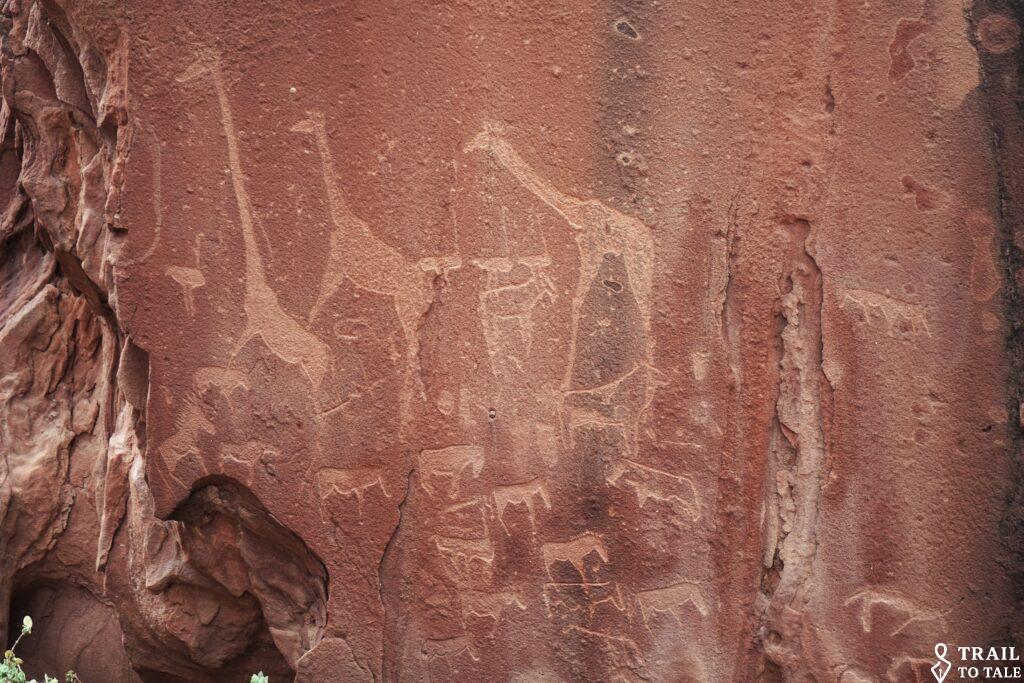
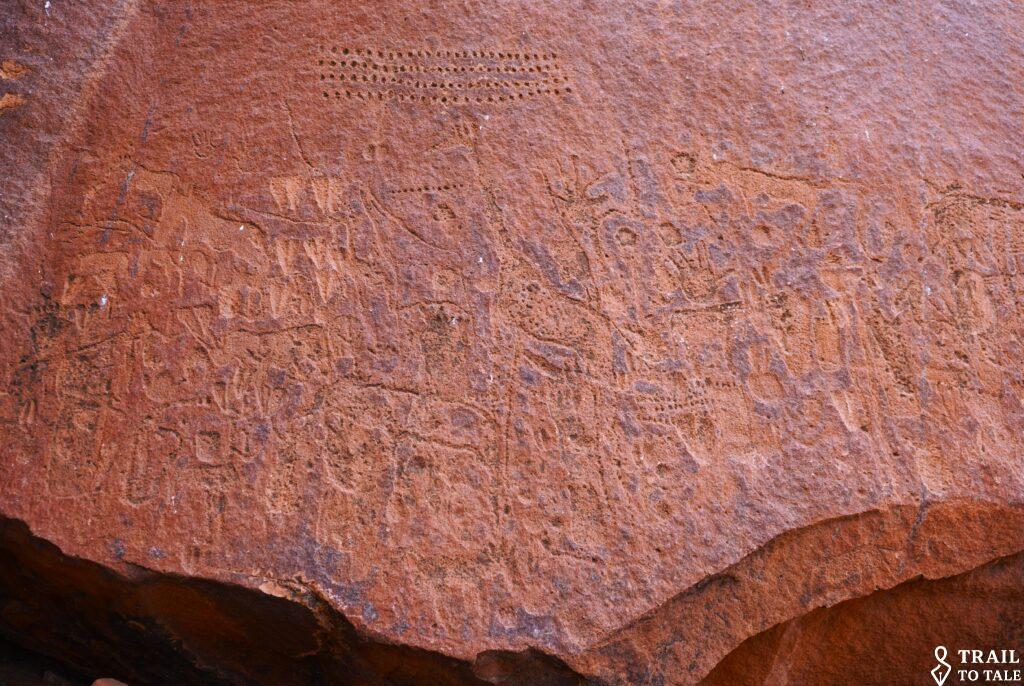
So who from the ‘outside’ world saw the Namib Desert first?
- In 1486, Portuguese seafarer Diogo Cão placed a cross at Cape Cross—about 100 km north of present-day Swakopmund—before continuing his voyage.
- In 1488, Bartholomeu Dias discovered a sheltered bay he named Angra Pequeña—today’s Lüderitzbucht—before continuing his journey toward Asia.
- In 1652, Dutchman Jan van Riebeeck bypassed the 1,500 km-long coastline and continued on to Table Bay—today known as Cape Town.
- By 1795, the British considered the land north of the Oranje River less valuable and instead took control of the Cape Colony.
- In 1882, German merchant Adolf Lüderitz requested official protection from the German Chancellor for a small coastal settlement he intended to establish in this desolate land. That settlement, Lüderitzbucht, became Germany’s first colonial foothold in South West Africa.
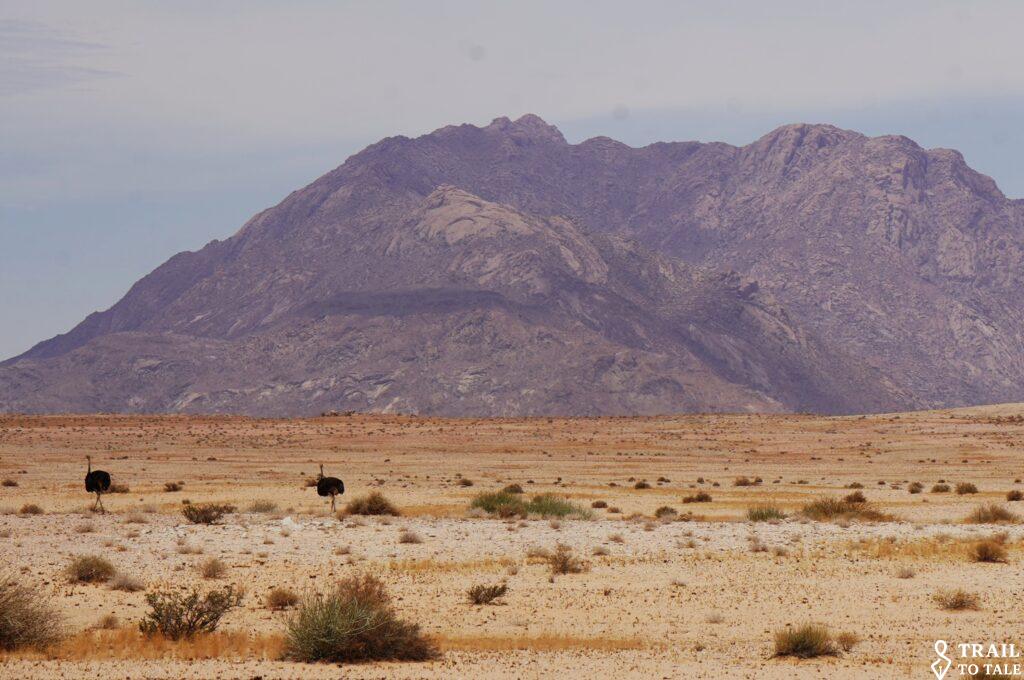
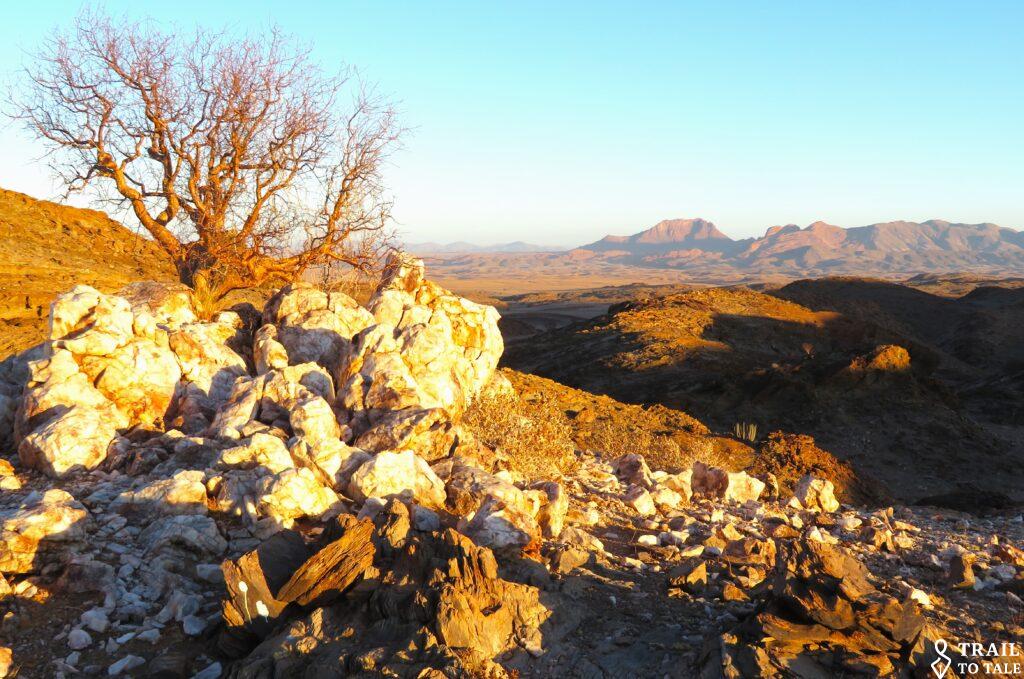
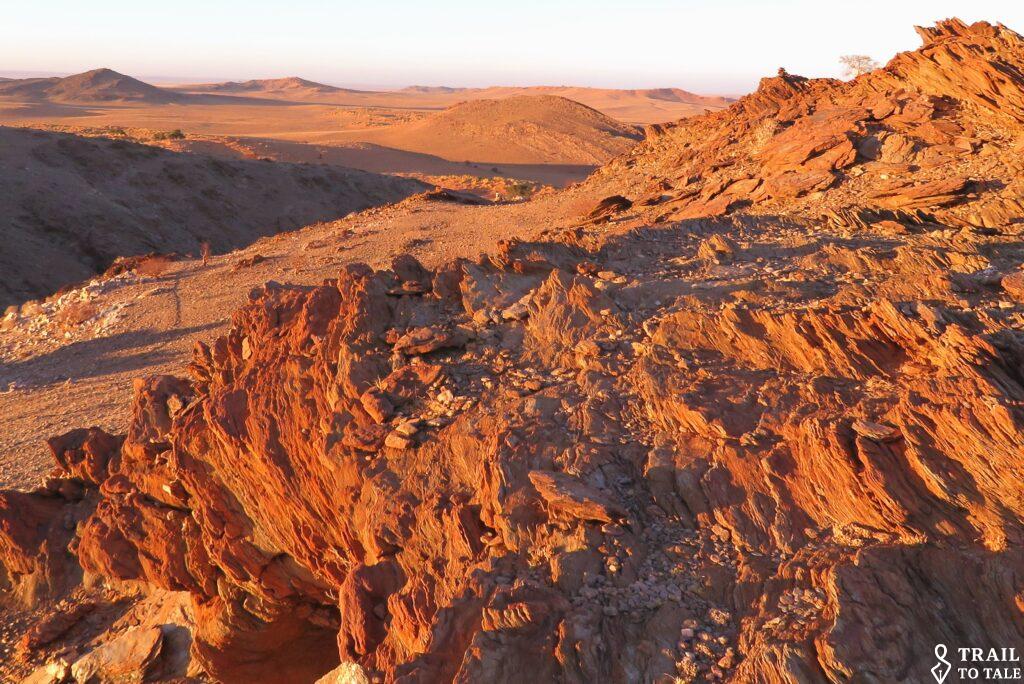
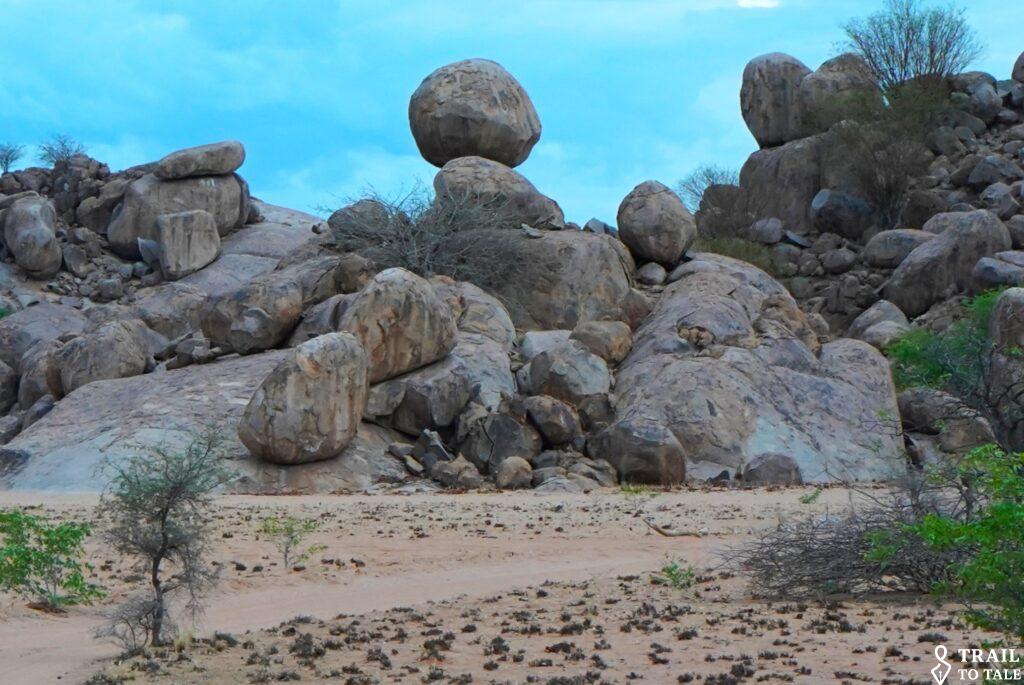
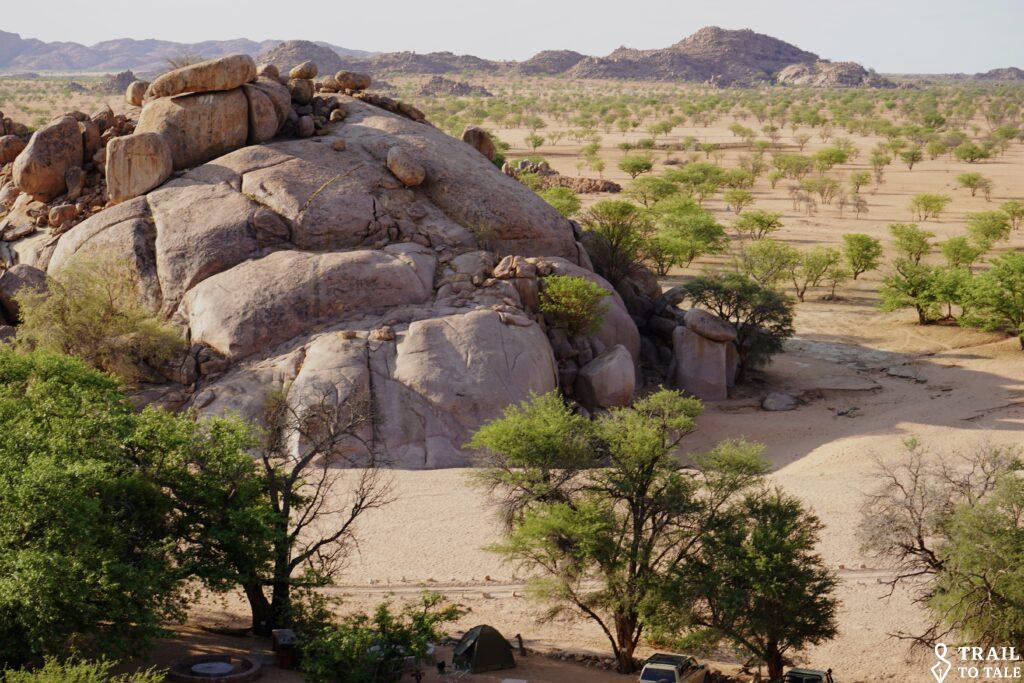
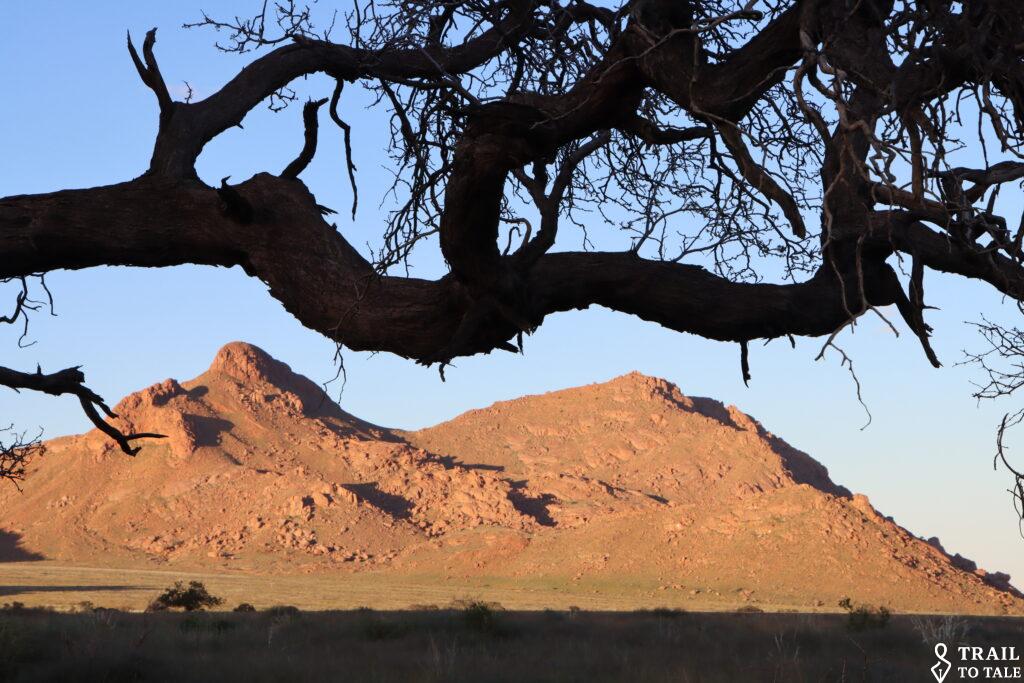
In this part of the country, the giant Brandberg Massif can be seen from afar, rising dramatically above the Namib Desert floor from an elevation of about 500 m to a plateau at roughly 2,000 m above sea level.
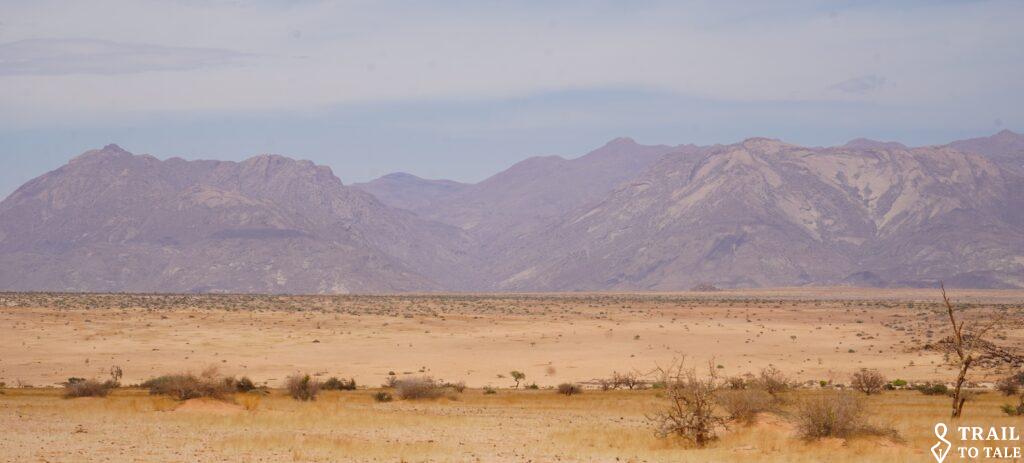
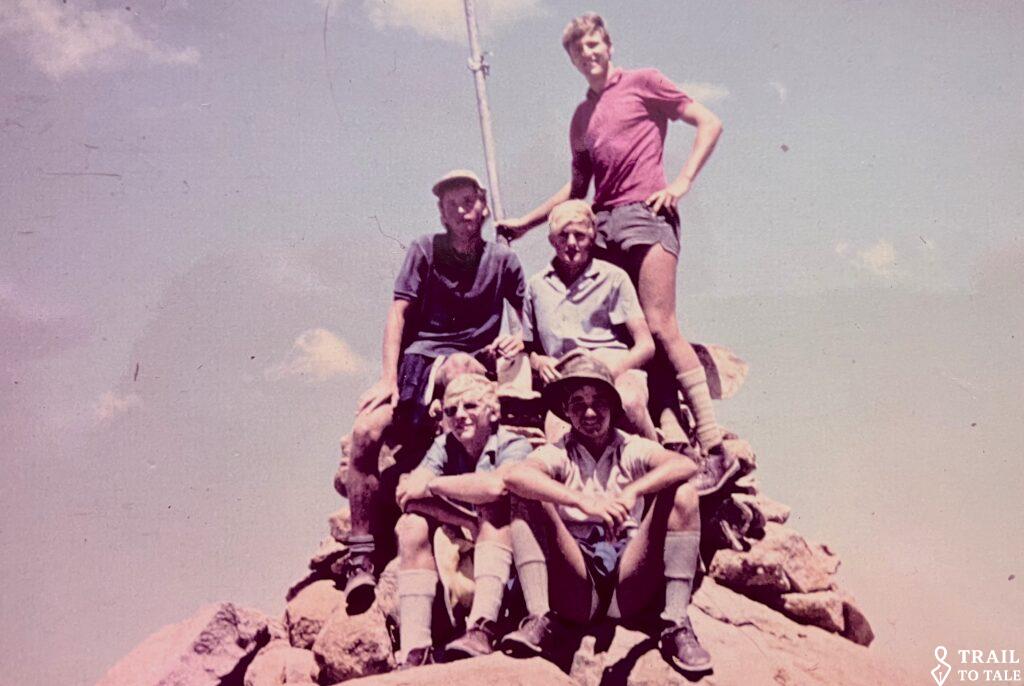
From here, several higher peaks are visible, including Aurusberg Kopf, Aigub, Numasfels, Horn Zisabspitze, and the Königstein, which at 2,573 m is the highest point in the country. With no trails and hardly any water, the right gear, sufficient food and water, and a good level of physical fitness are essential to enjoy the steep trek. As a Boy Scout, the author (in a blue top) and his friends made several trips to this vast, coarse-grained, pinkish granite massif.
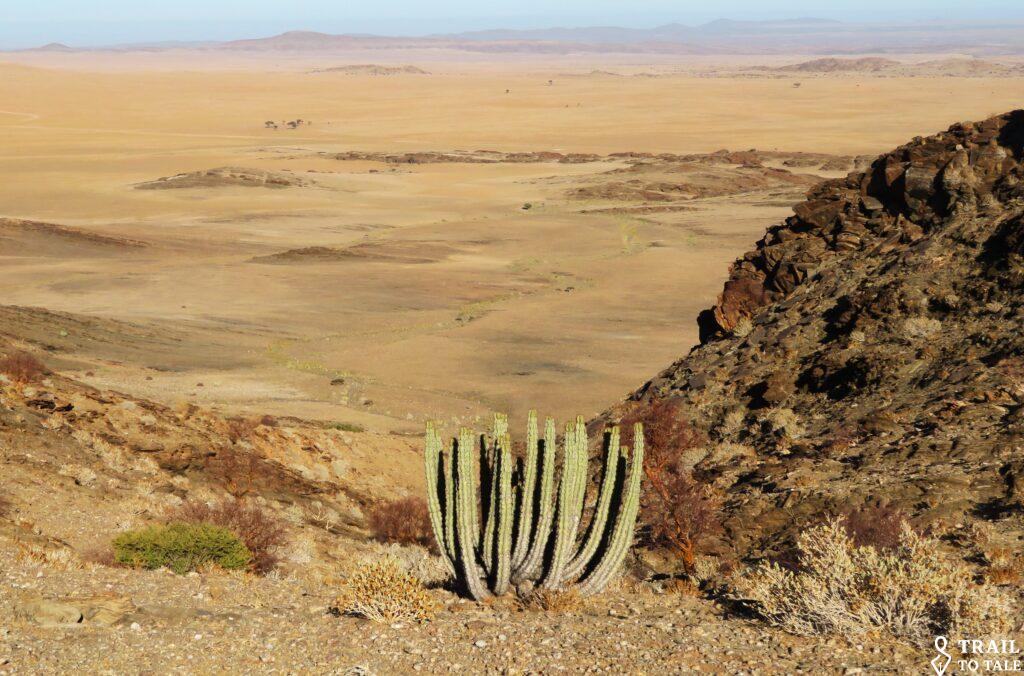
In the south of the Namib, beyond the bare mountains and rocky stretches, vast expanses of deep sand dominate the landscape.
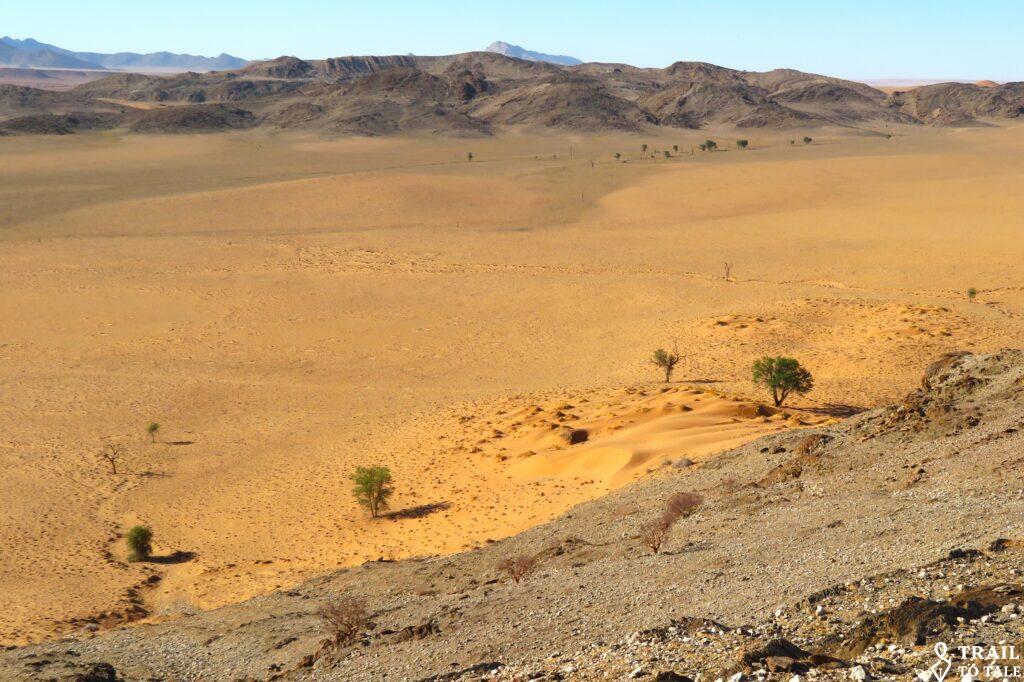
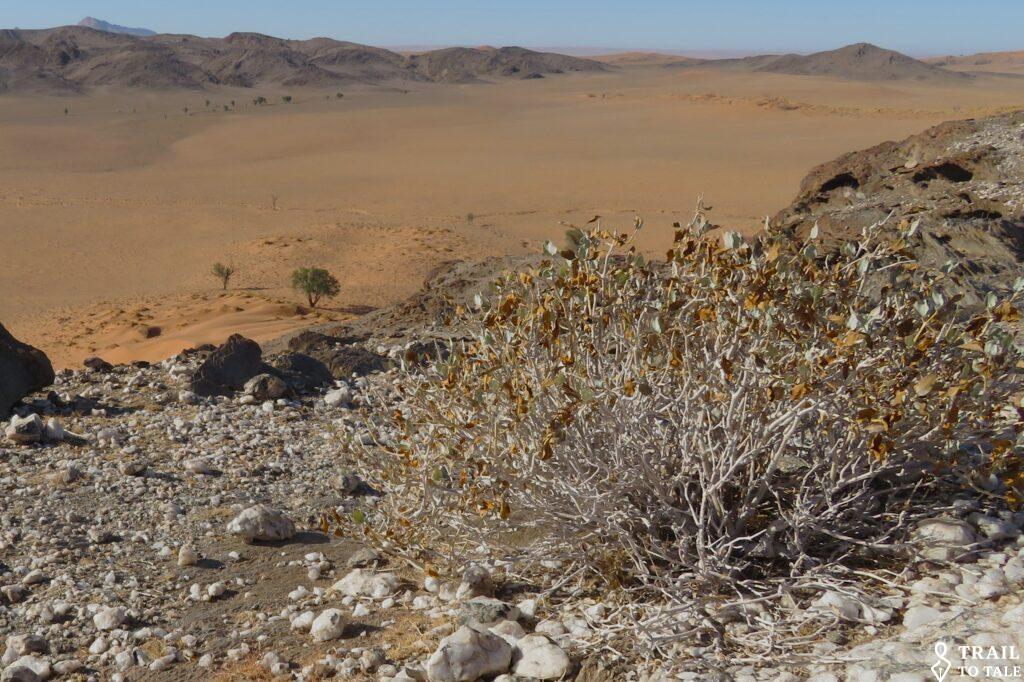
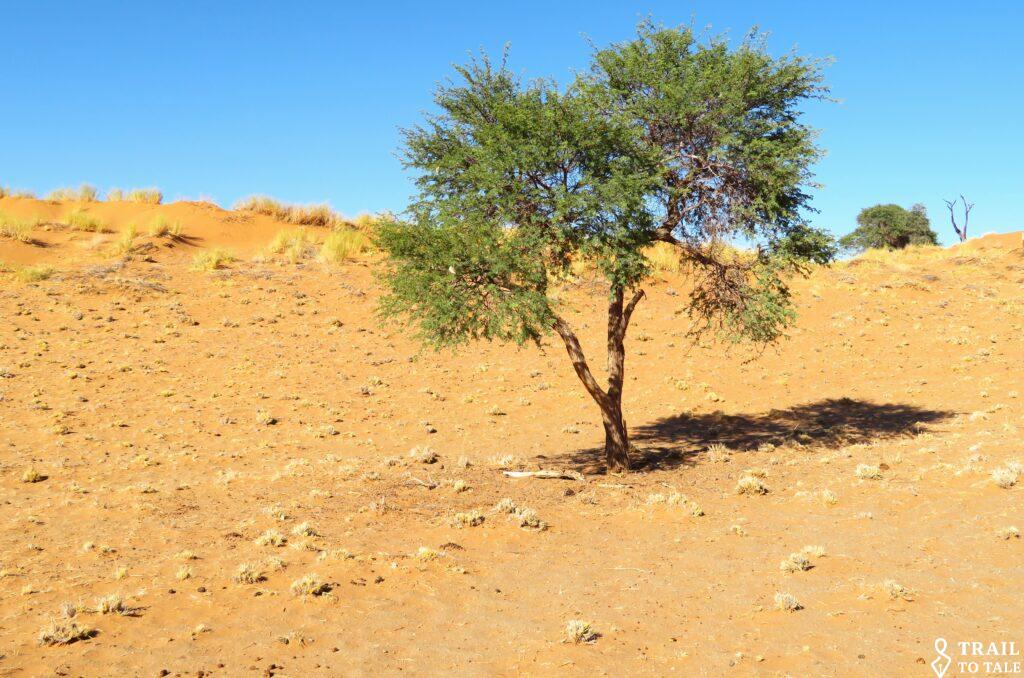
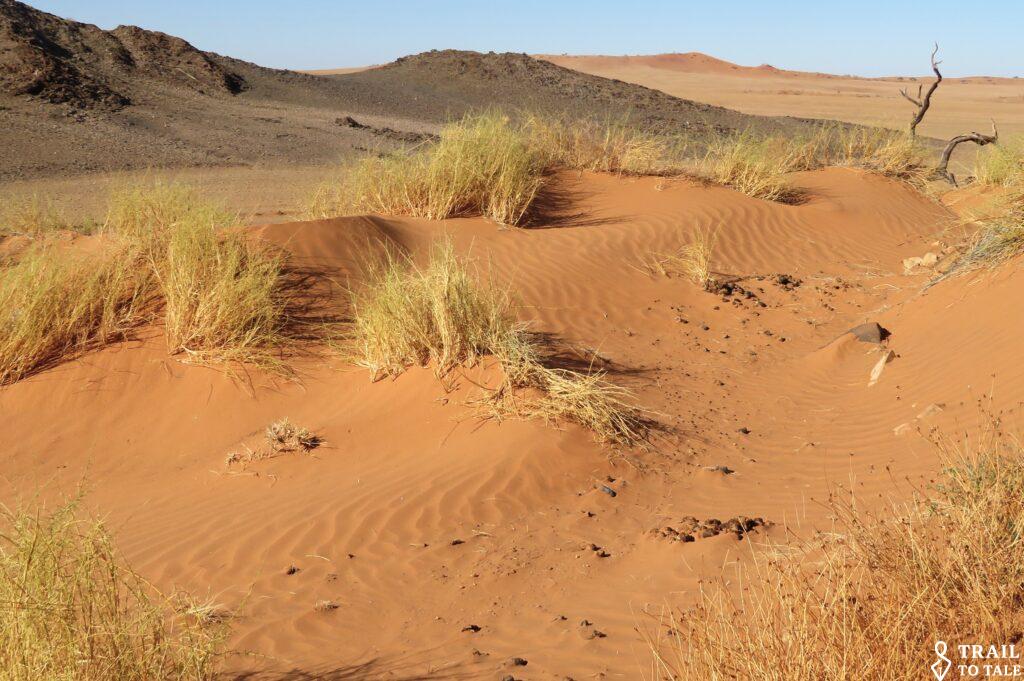
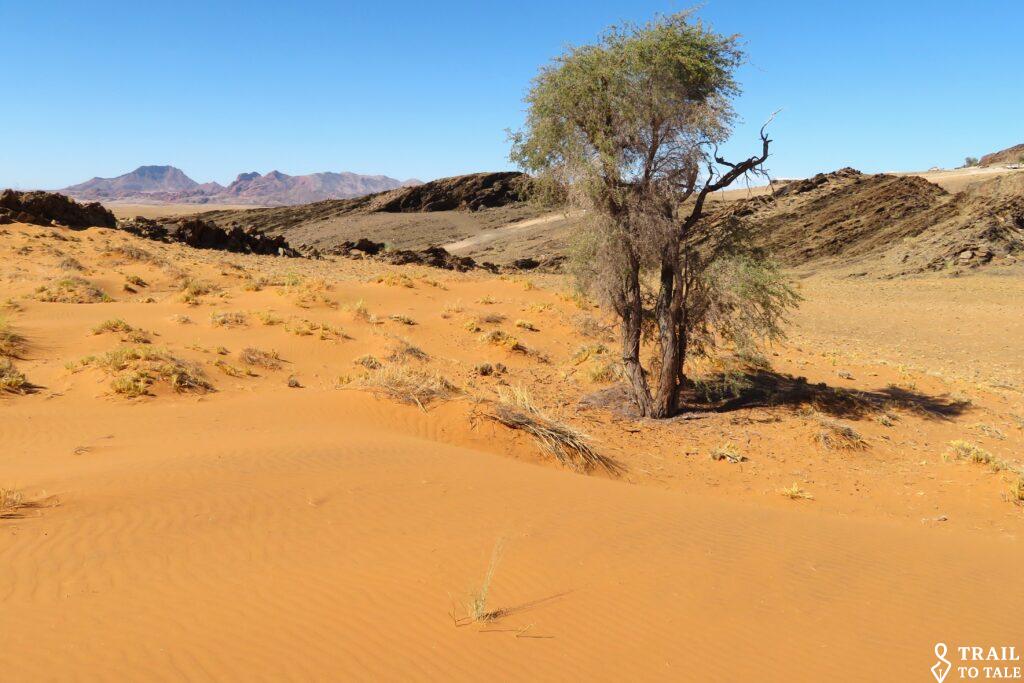
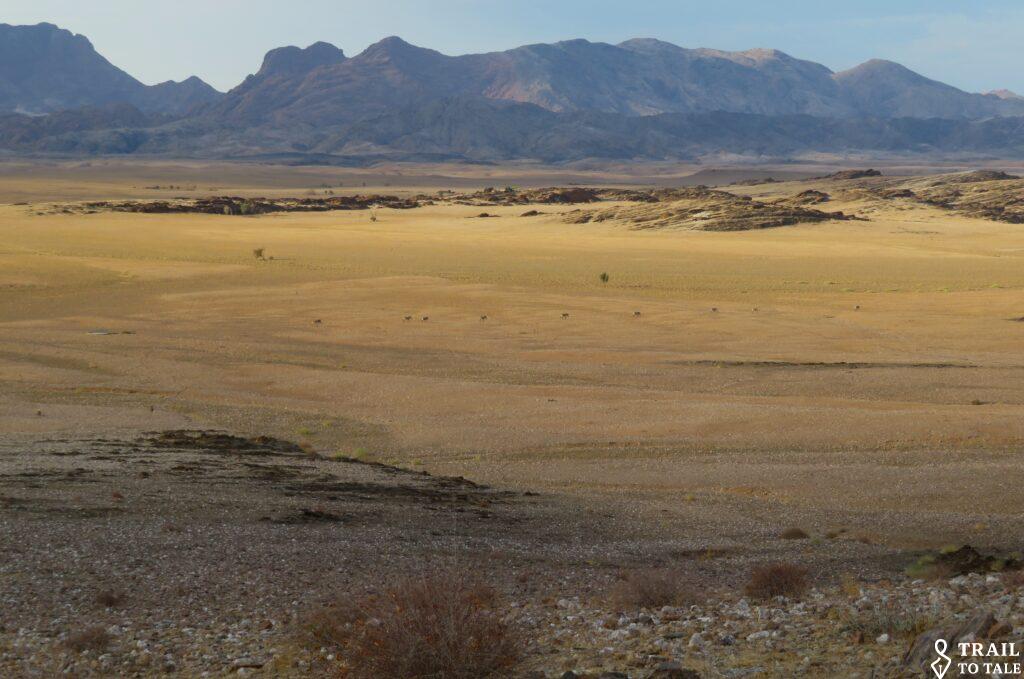
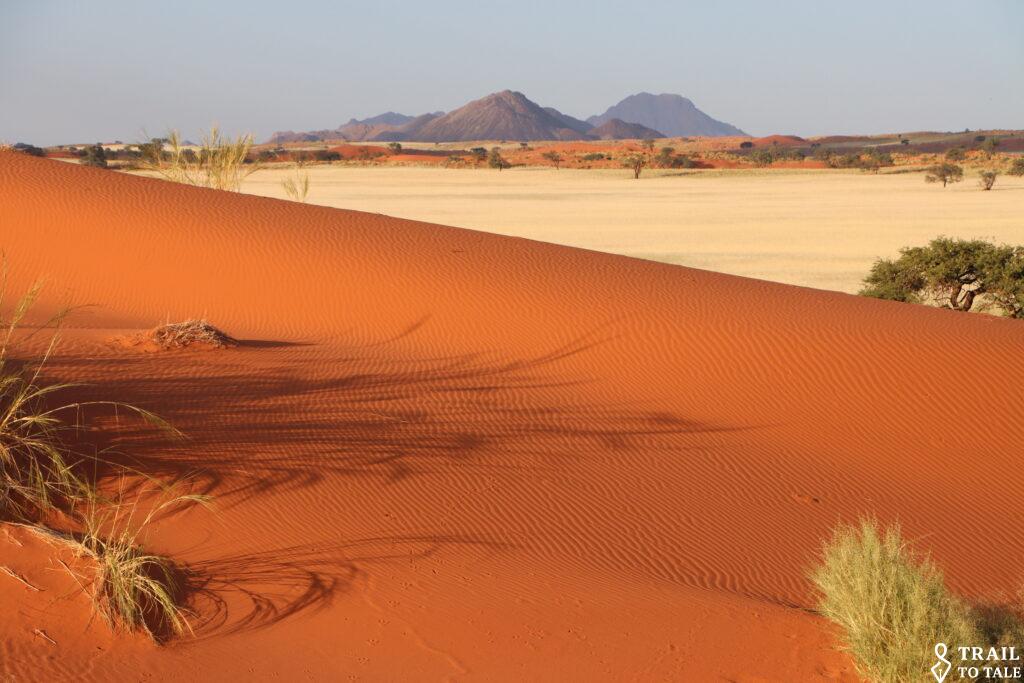
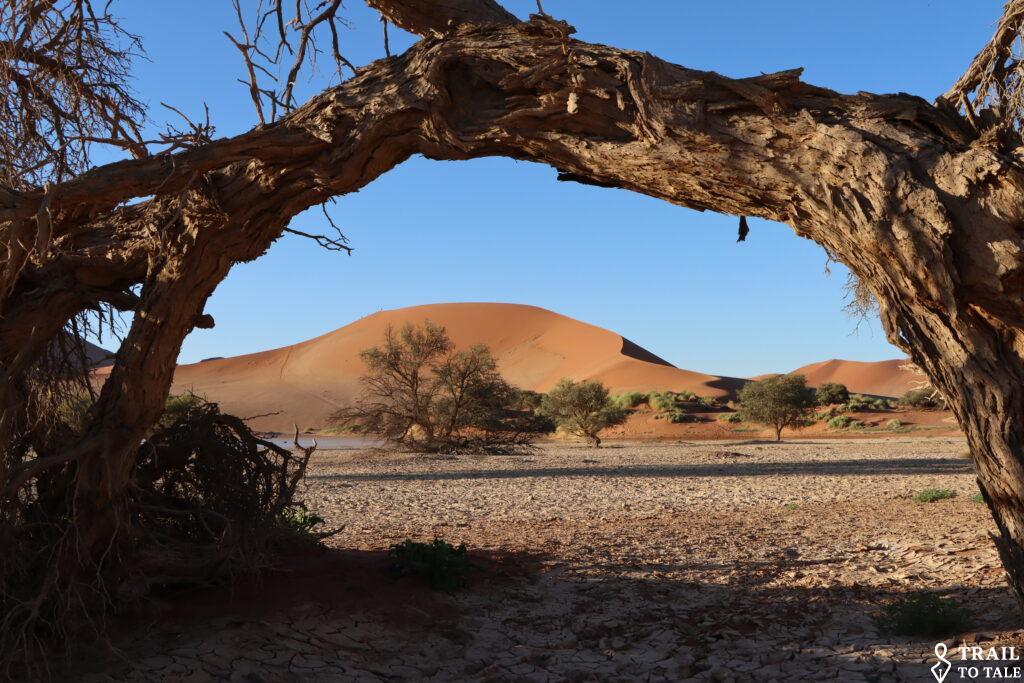
A considerable part of the southern Namib consists entirely of sand dunes. Among them is the world’s tallest, at around 380 m, stretching from the coast many miles into the interior. This region is also known as the “Diamond Area” and is officially called the Sperrgebiet (German for “Prohibited Area”), a vast restricted desert zone.
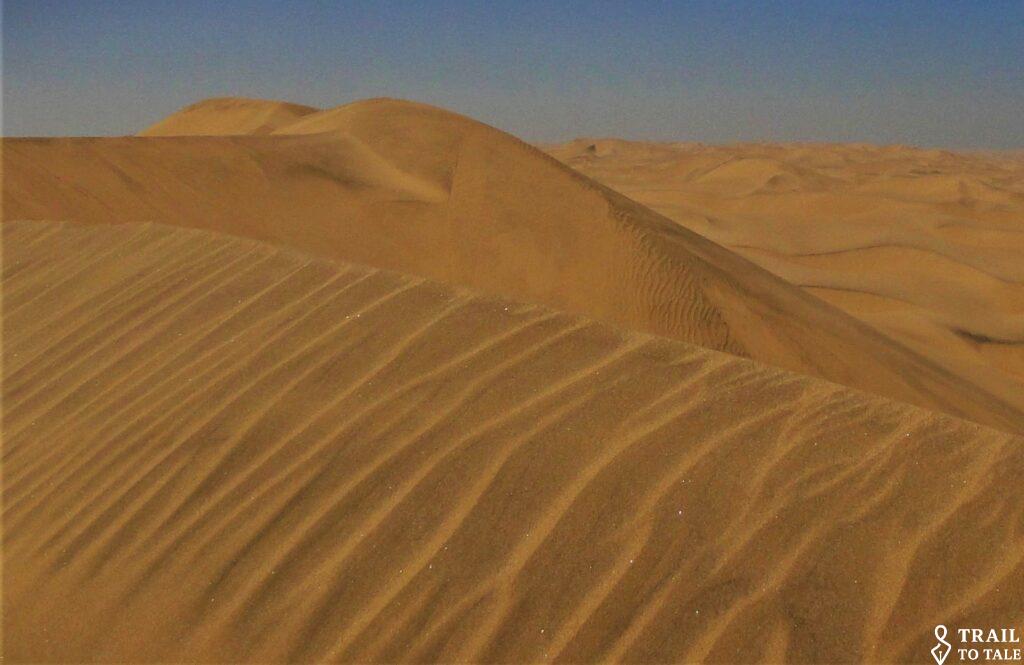
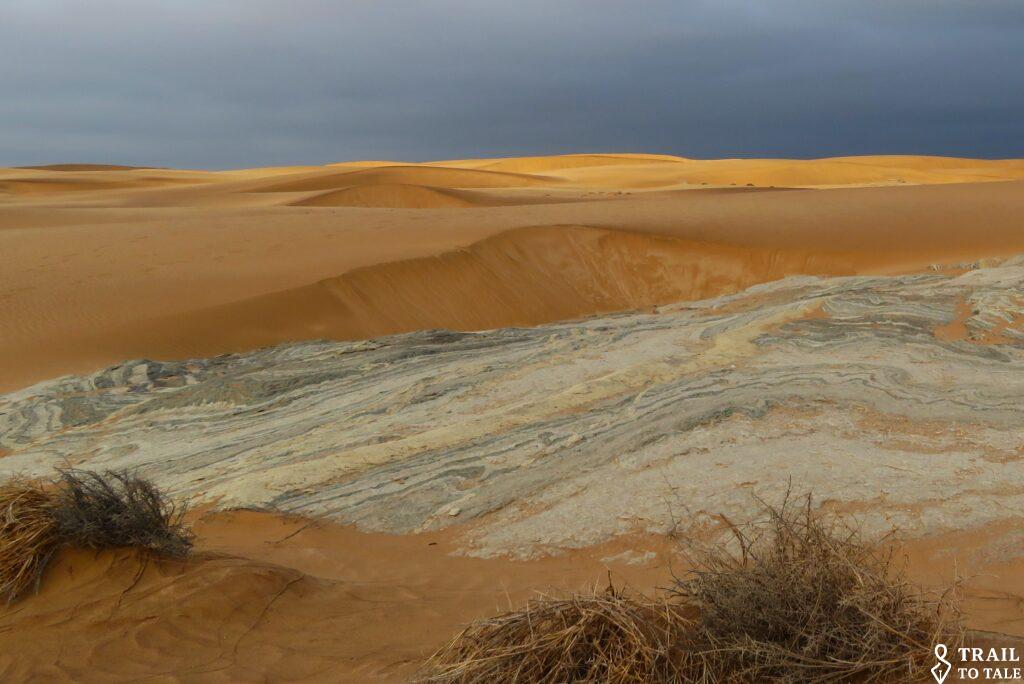
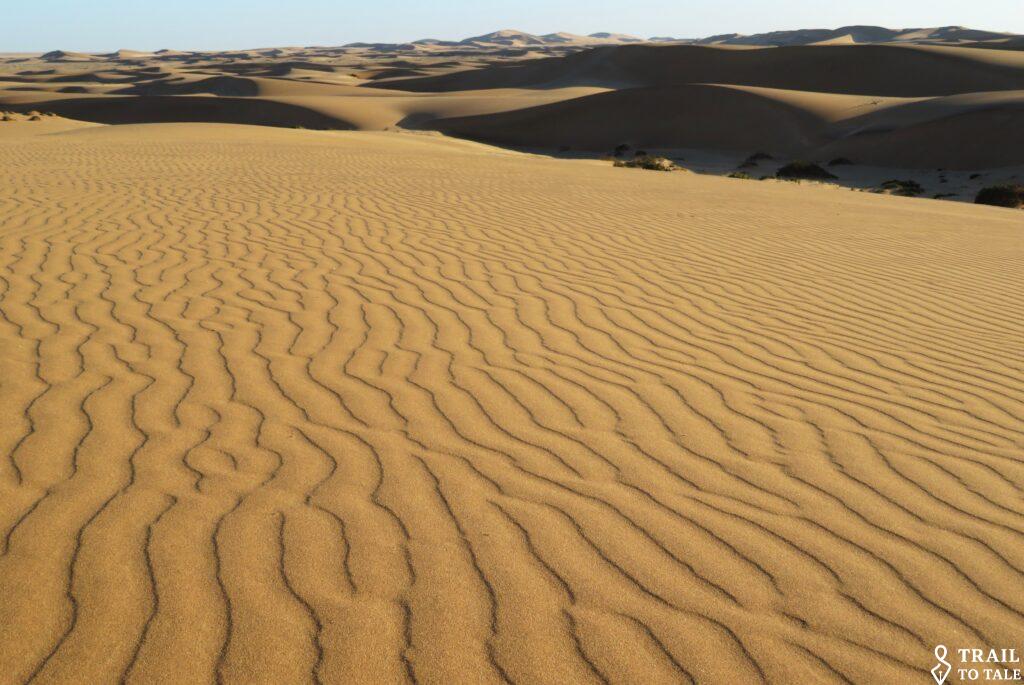
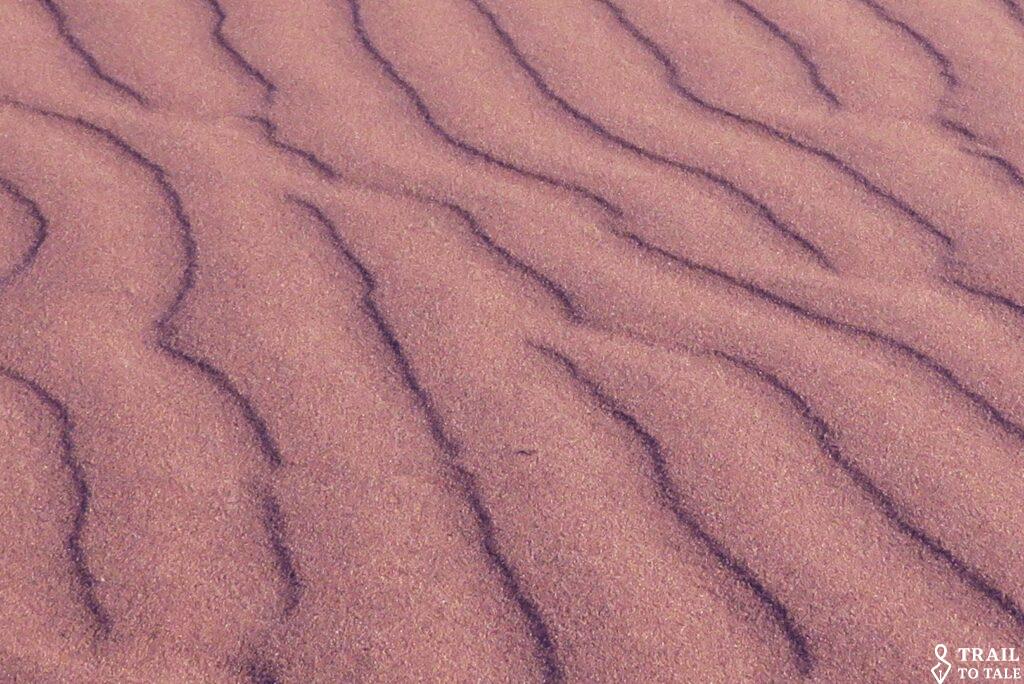
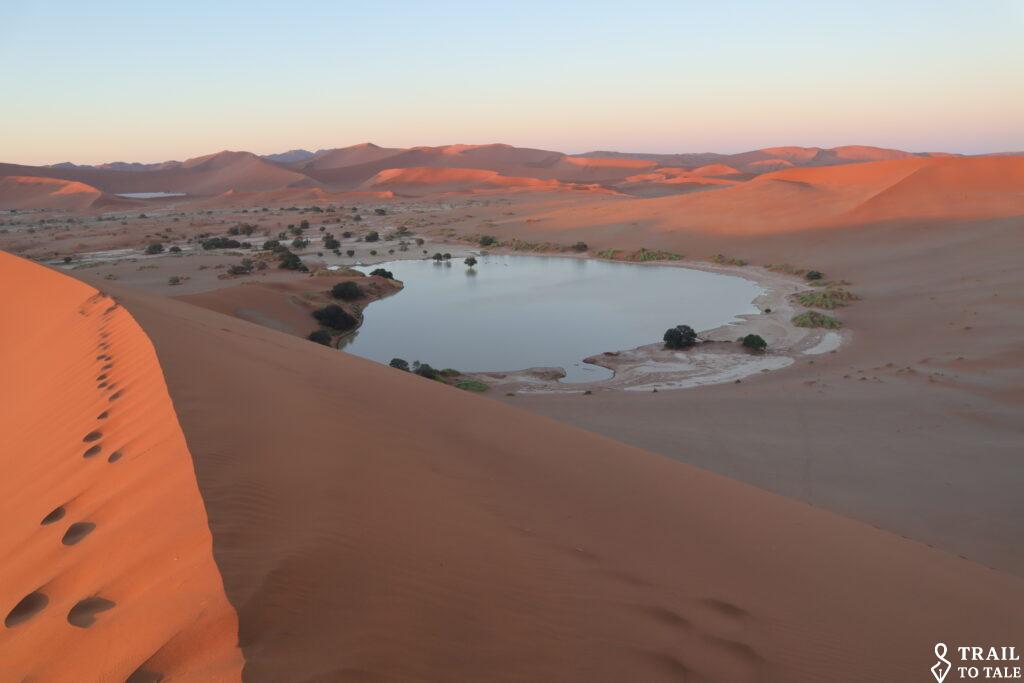
The salt and clay pans, such as Sossusvlei, are surrounded by dunes and are normally dry.
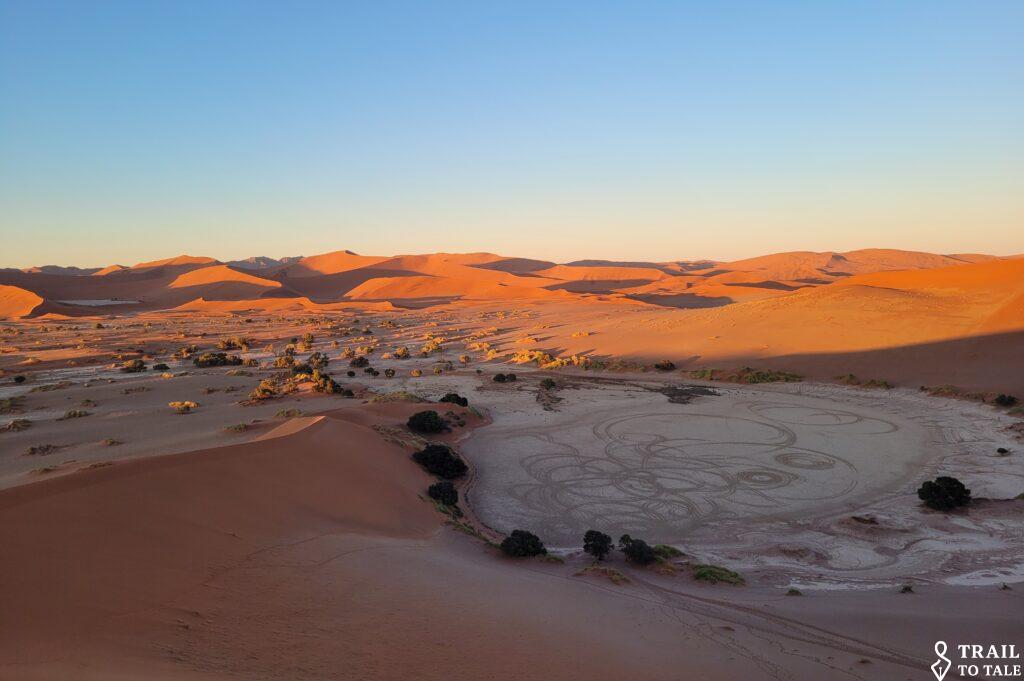
It happens only rarely, but during the occasional flash flood, the clay pans may fill with water.
Throughout the year Namibia’s river beds are dry and run only after rare rains upcountry.
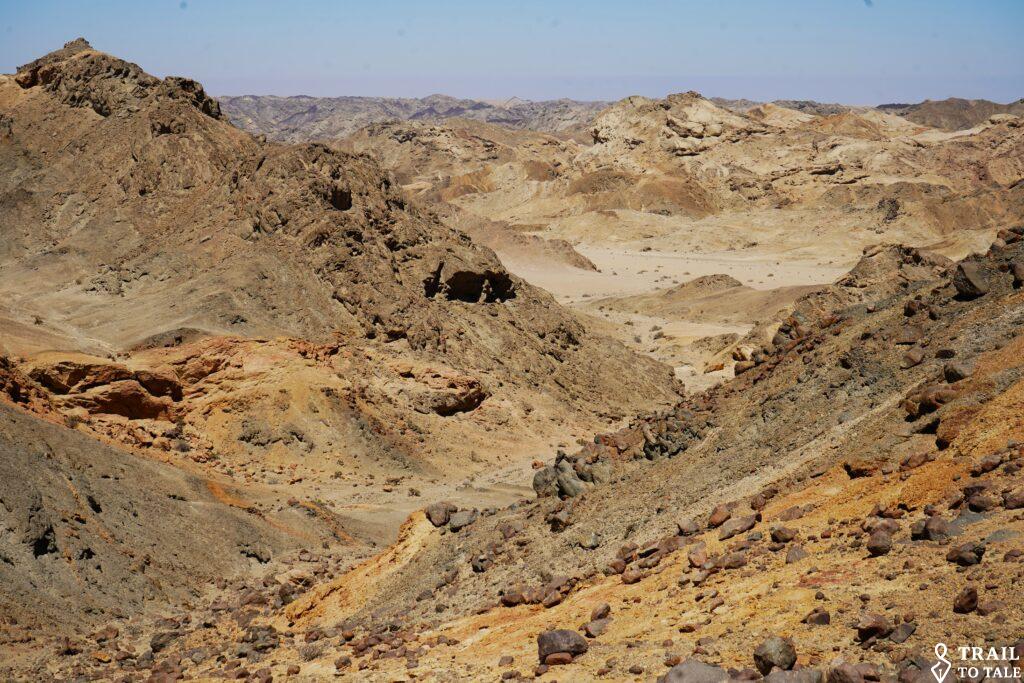
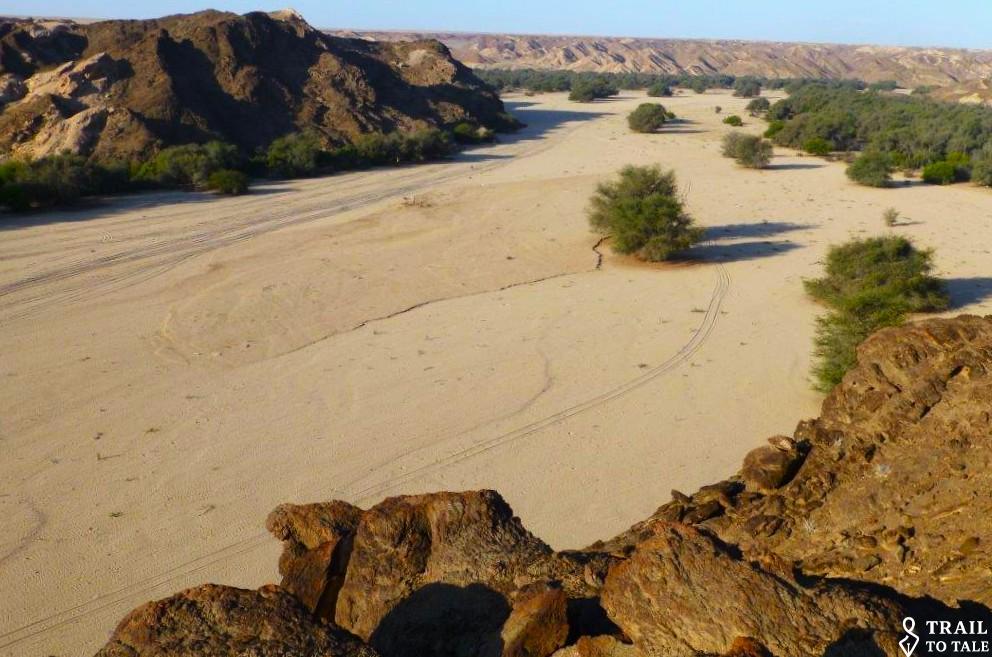
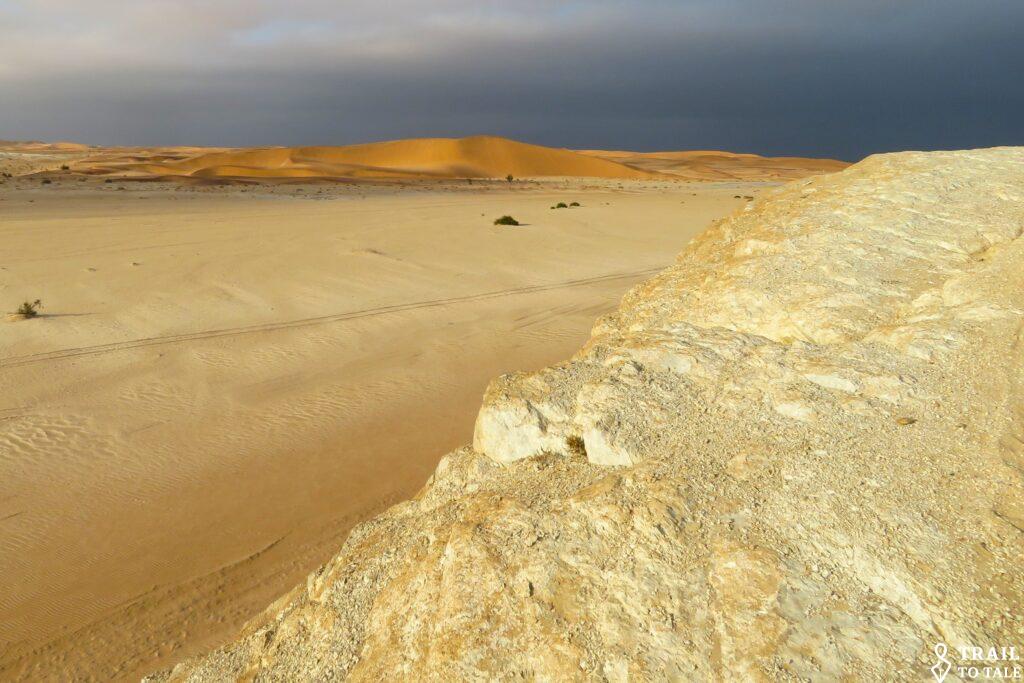
Only after ongoing precipitation in the highlands do these rivers begin to appear above ground as they cross the Namib Desert.
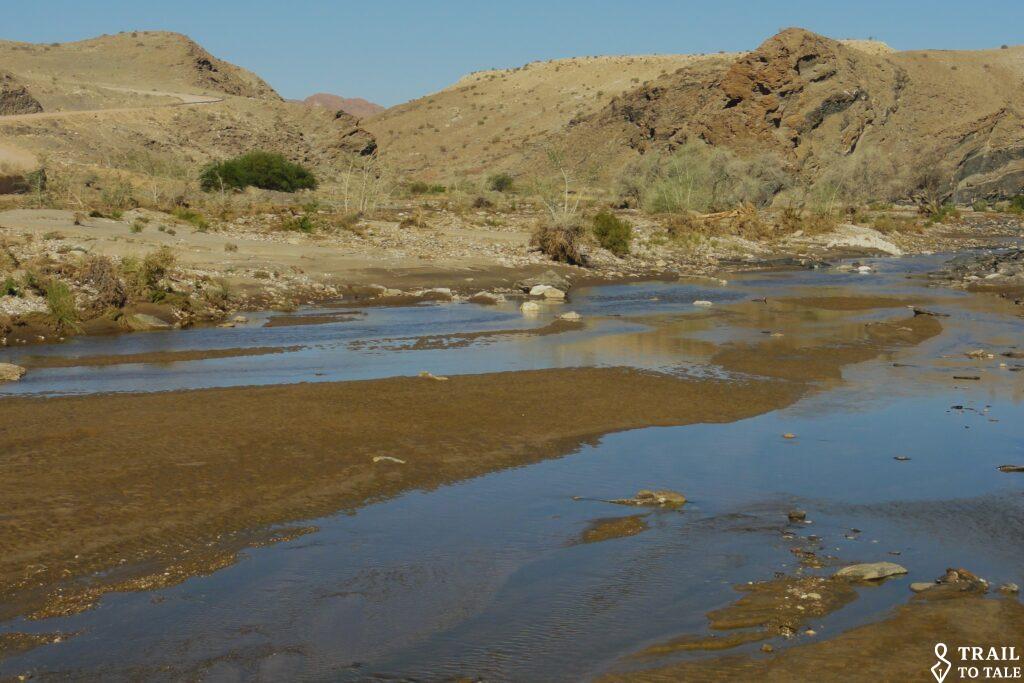
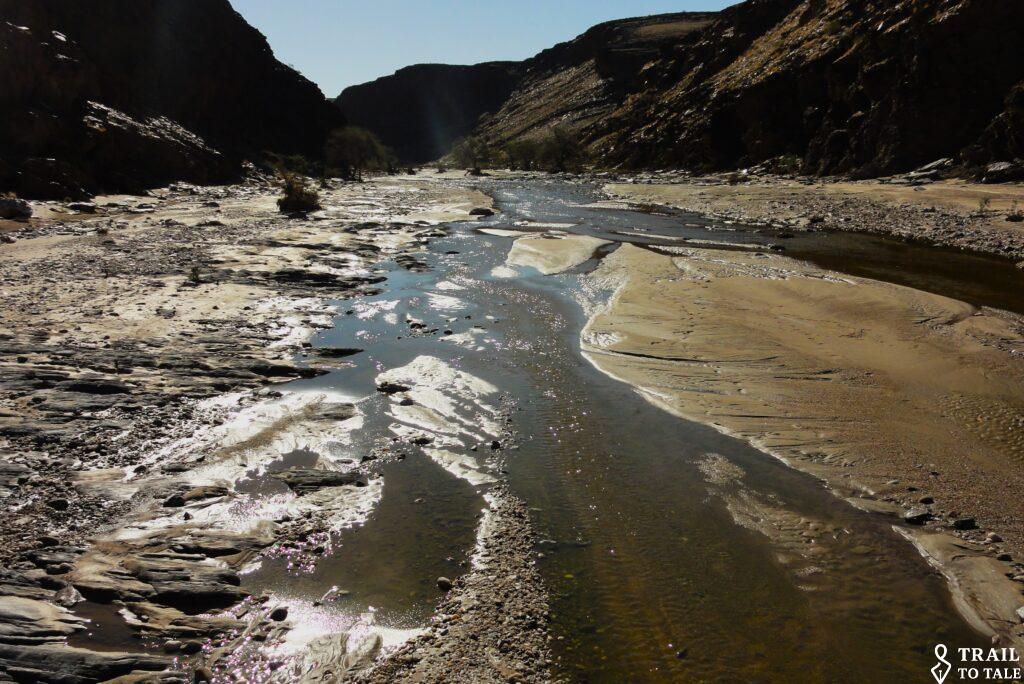
Only after sufficient downpours over several weeks is there a chance that these waterways will actually reach the ocean. When this happens, it is immediately reported in the media as ‘Breaking News’. The rare spectacle brings a surge of muddy water filled with vegetation such as bushes and trees, along with dead animals and debris. During this time, the ocean beaches and waters are far from inviting for swimming.
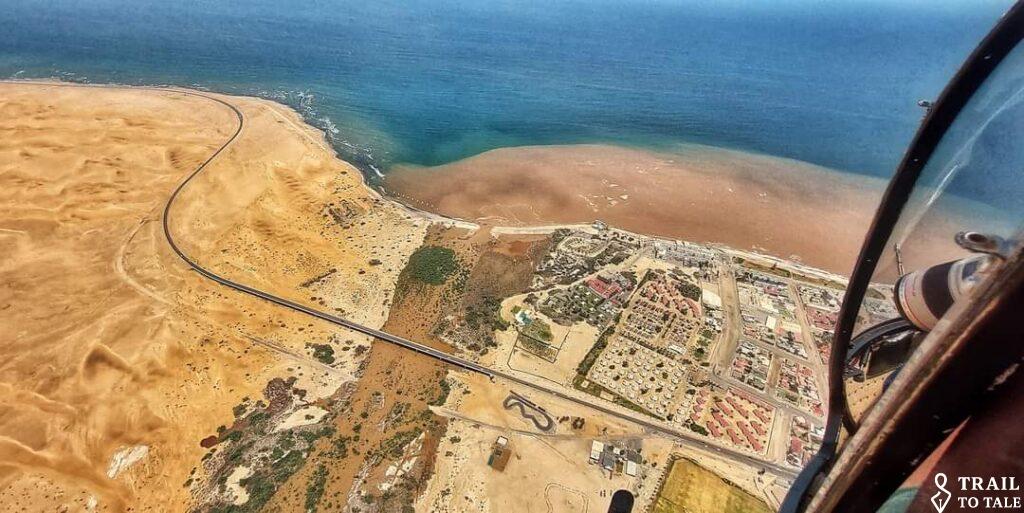
Where the rivers groundwater level is shallow bush and even trees do grow.
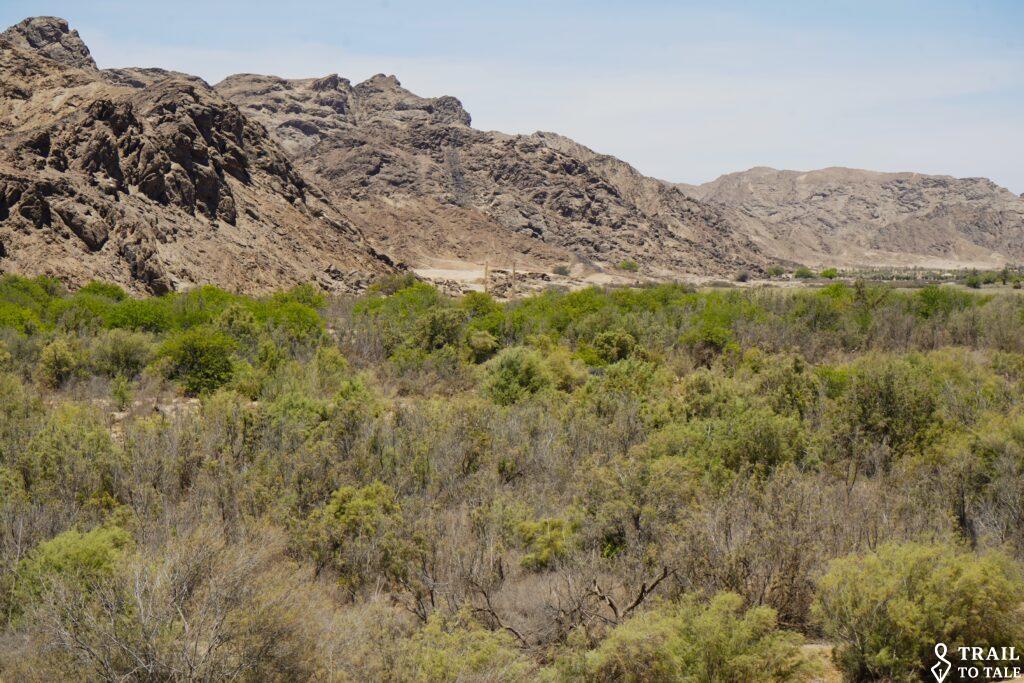
In the best of years, the central, northern, and eastern regions of the country receive an average of 250 to 500 mm of rainfall. By contrast, the Namib Desert gets between 0 and less than 100 mm annually. Often the only source of moisture sustaining life here comes from the Atlantic coastal fog.
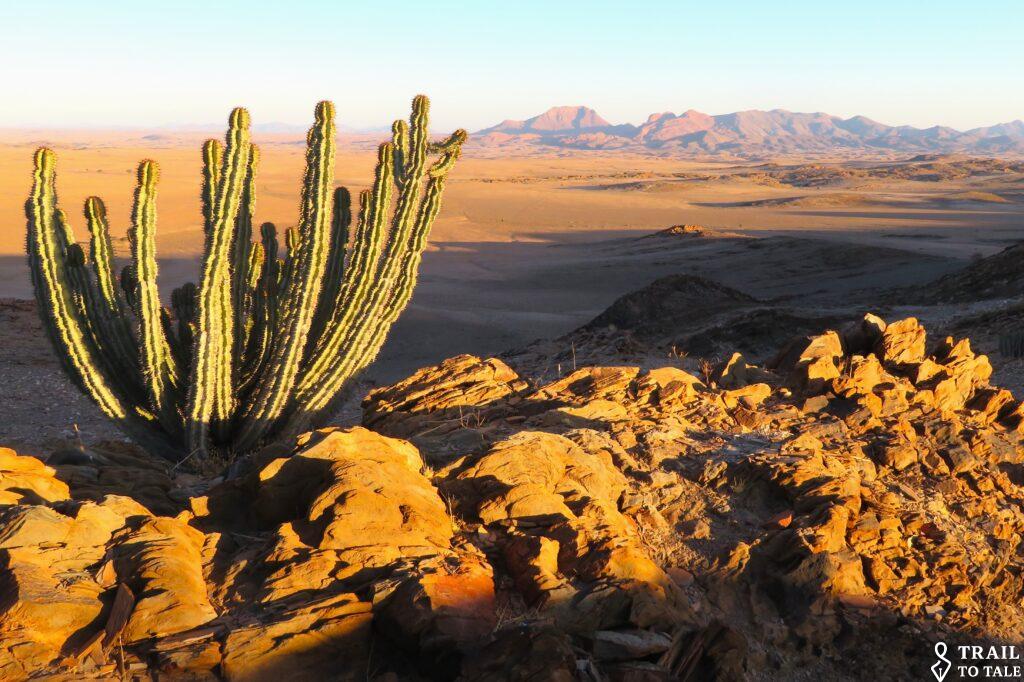
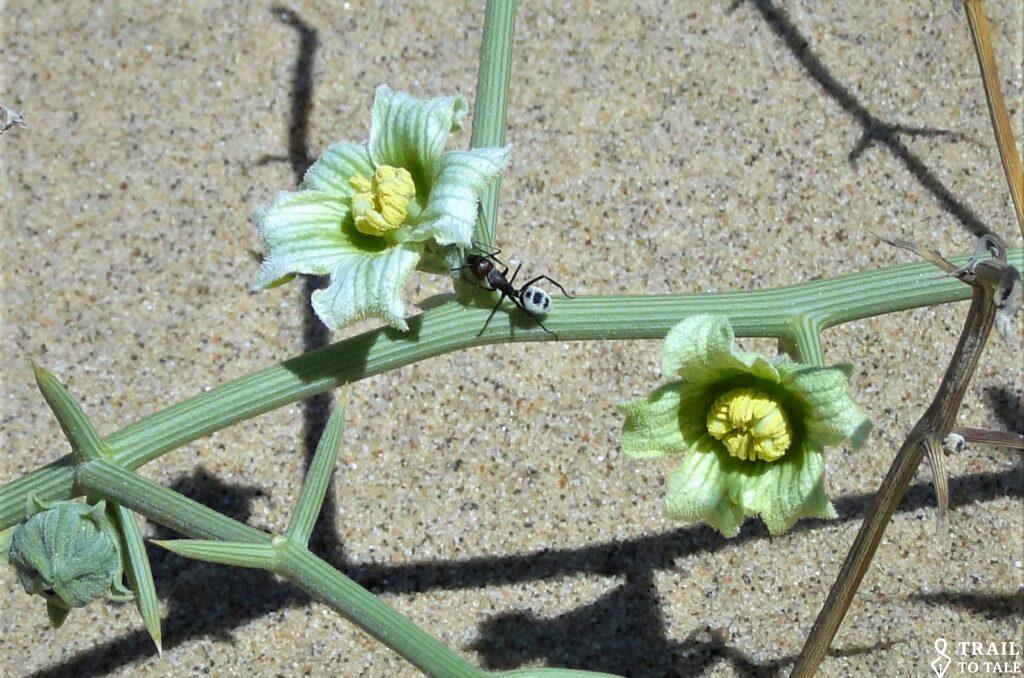
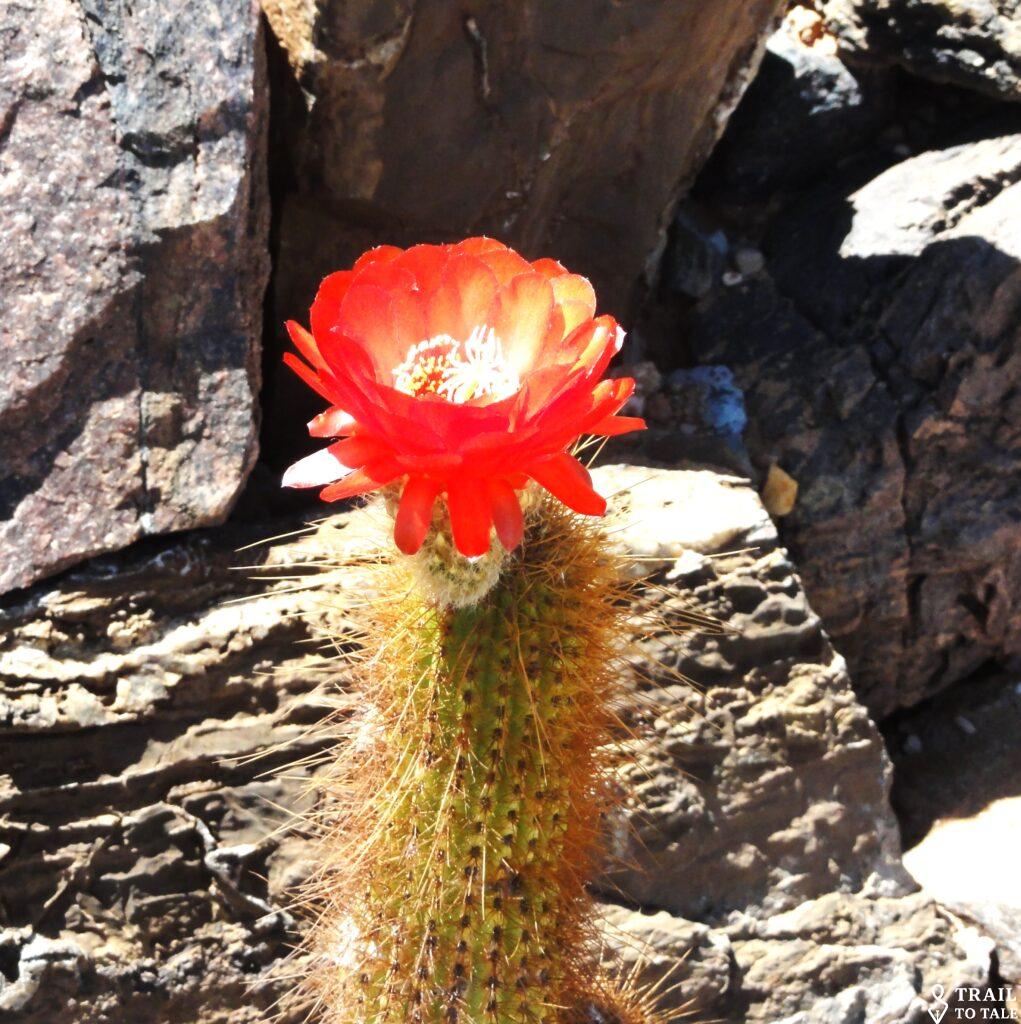
One of the most extraordinary and ancient plants in the world is the welwitschia, Namibia’s national plant. Native to the coastal regions of Namibia and southern Angola, it produces only two leaves in its lifetime, which continue to grow and split as they age. Its deep taproot system allows it to draw moisture from underground, helping it survive in one of the driest climates on Earth. Some specimens are estimated to be between 1,000 and 1,500 years old, earning the species the nickname “living fossil.”
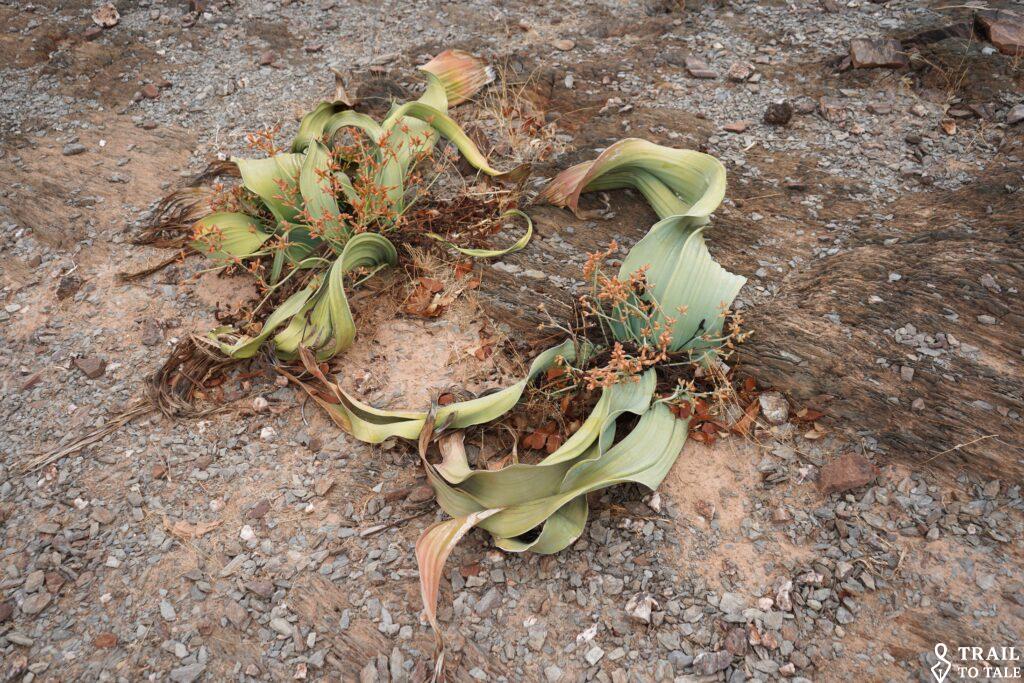
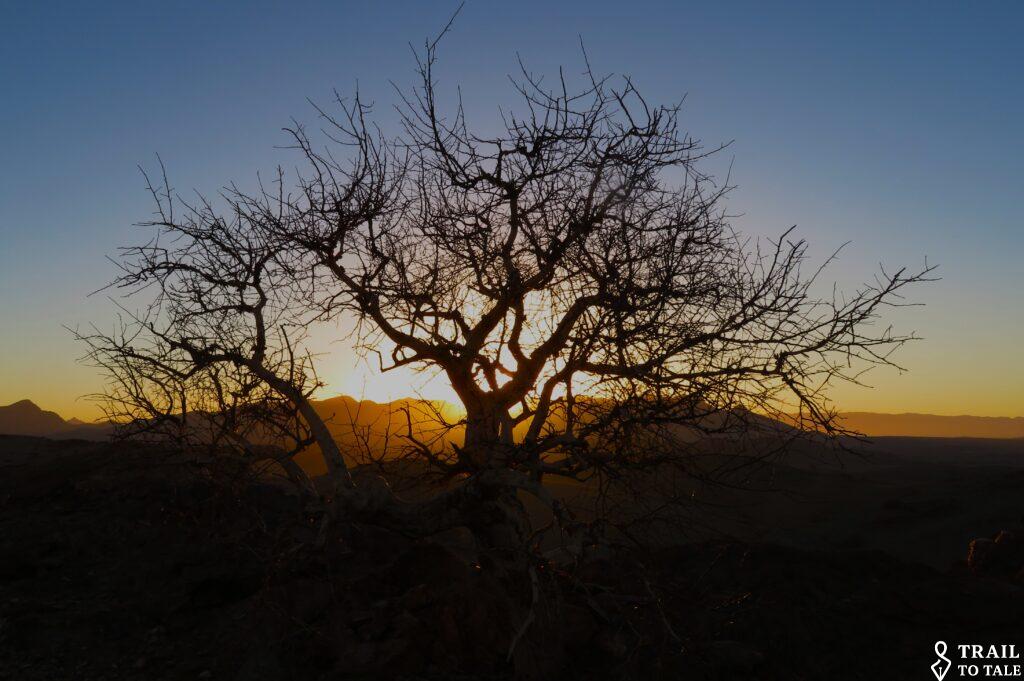
Only the toughest and adapted plants and animals manage to survive in this unforgiving terrain.
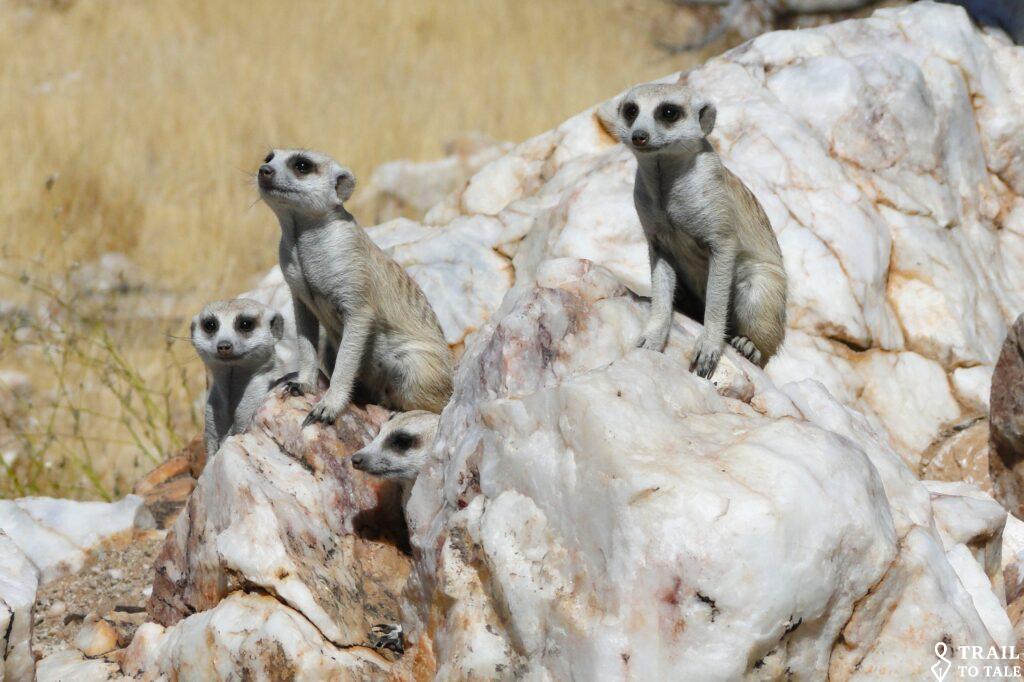

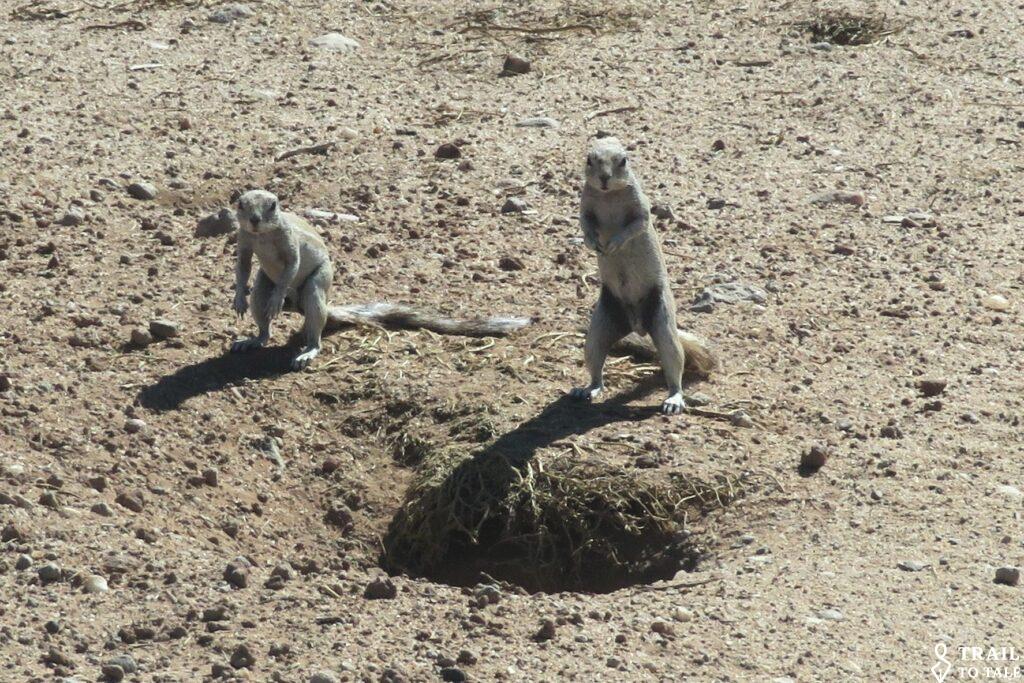
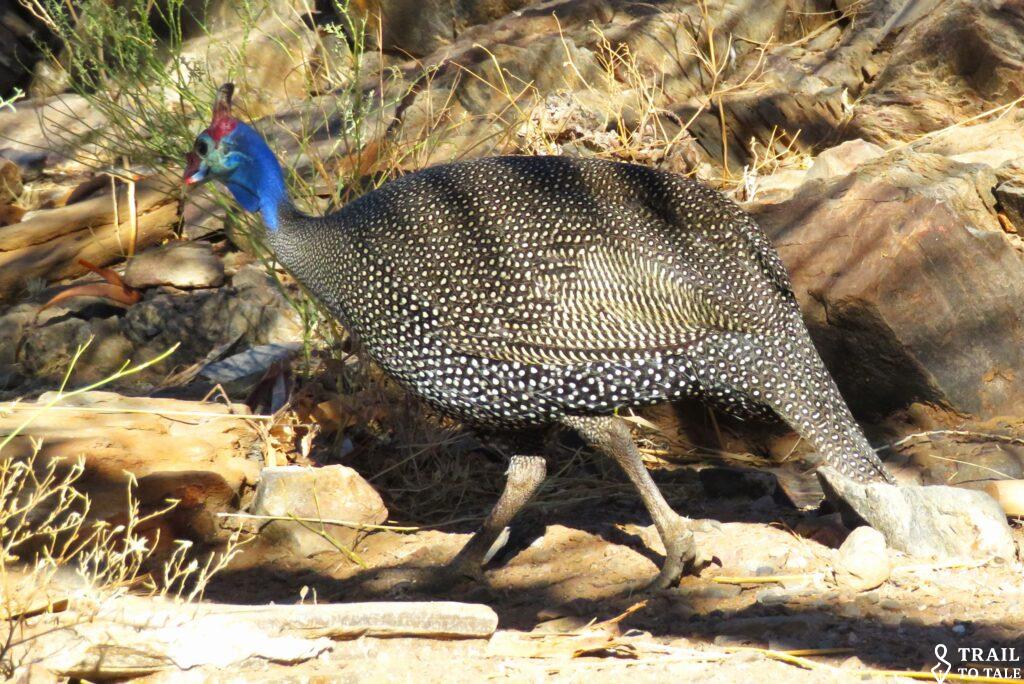
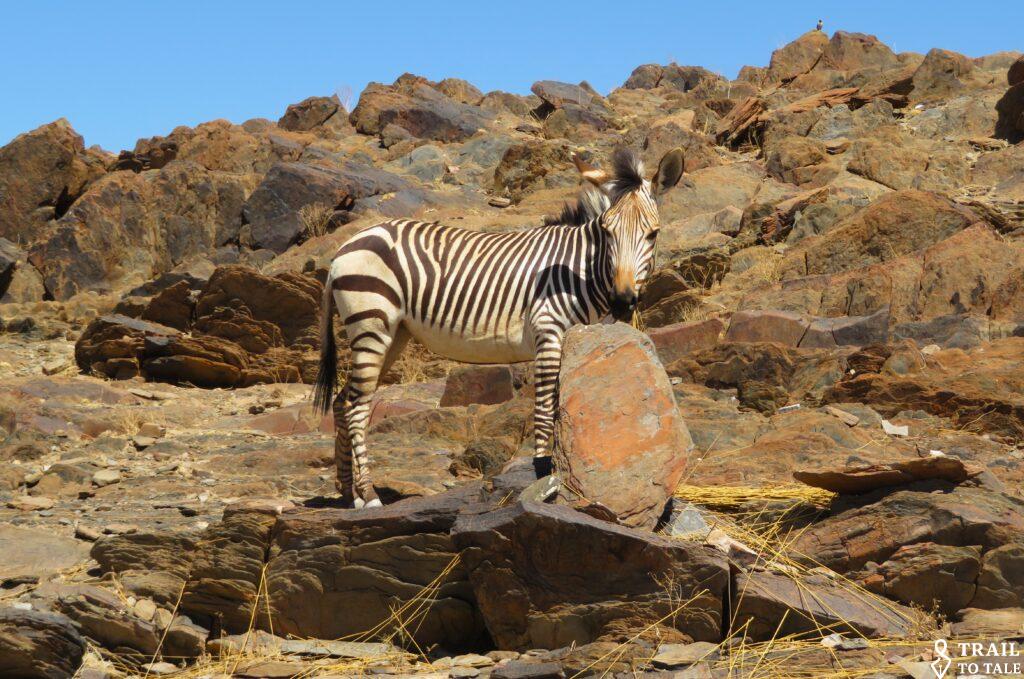
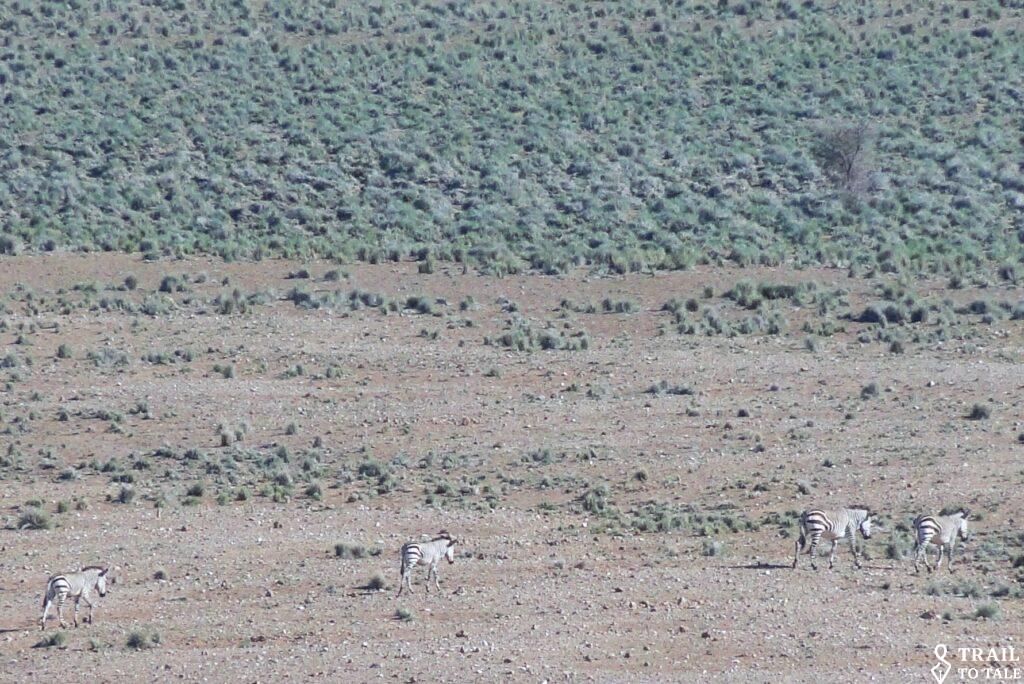
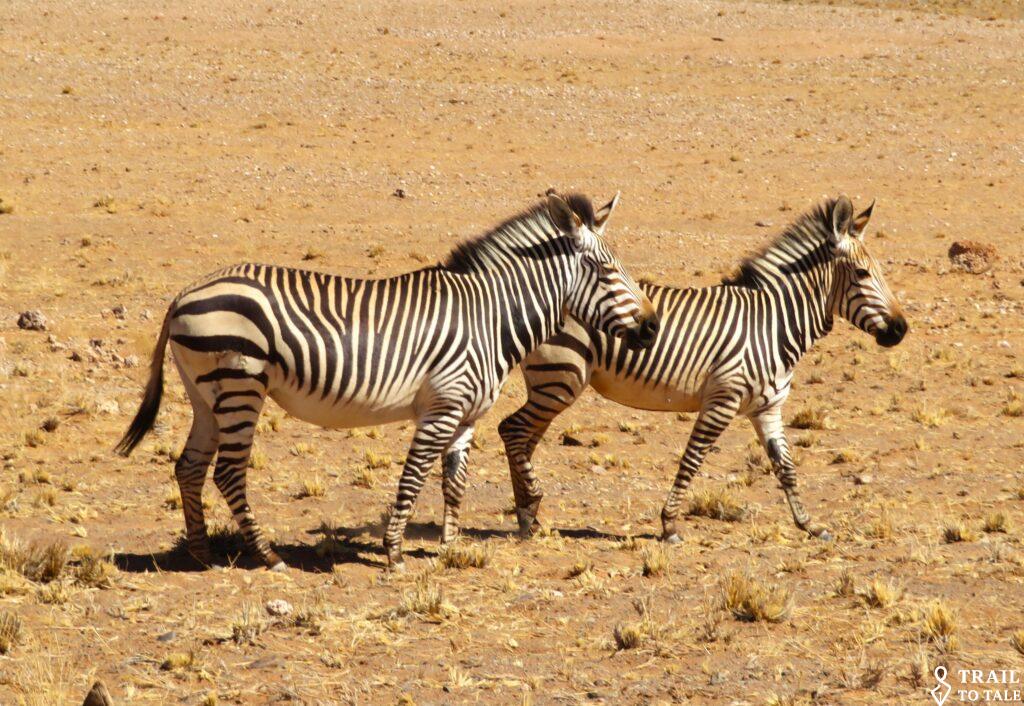
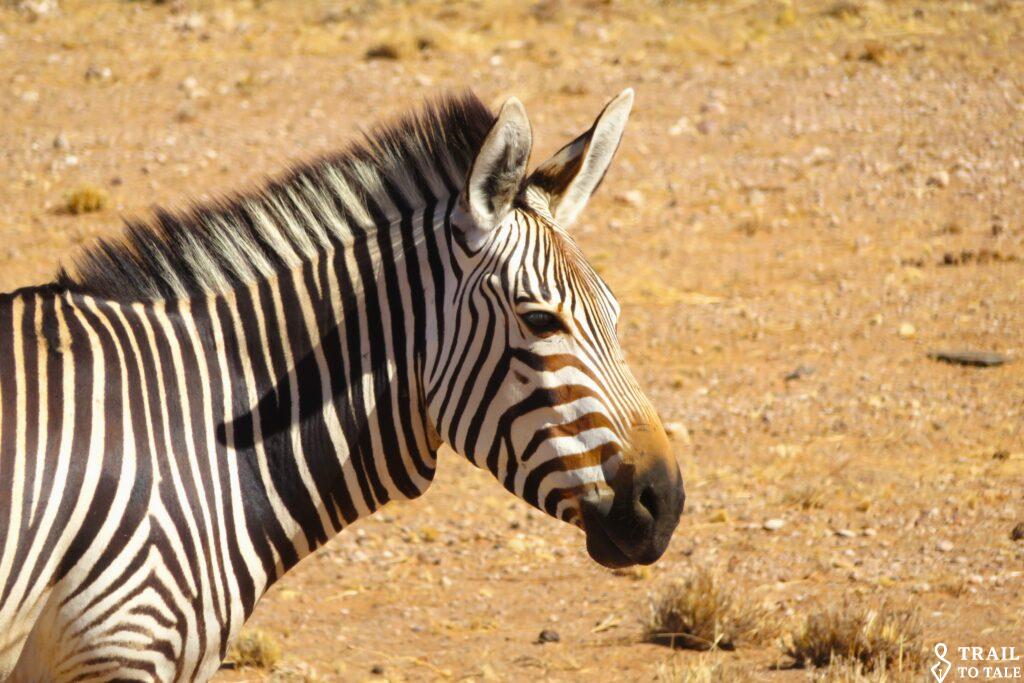
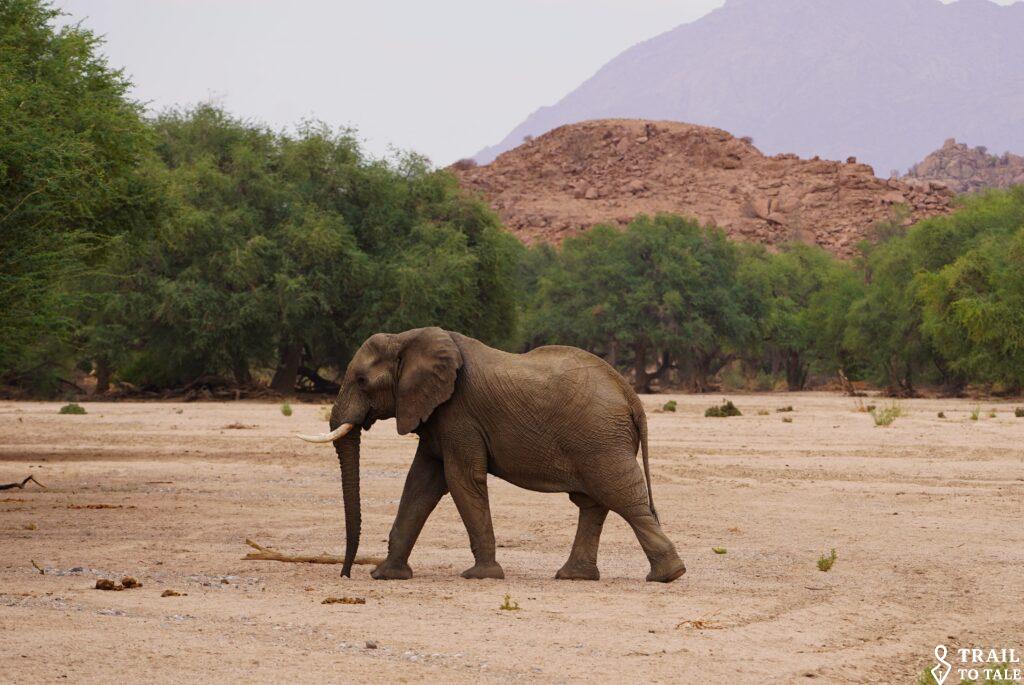
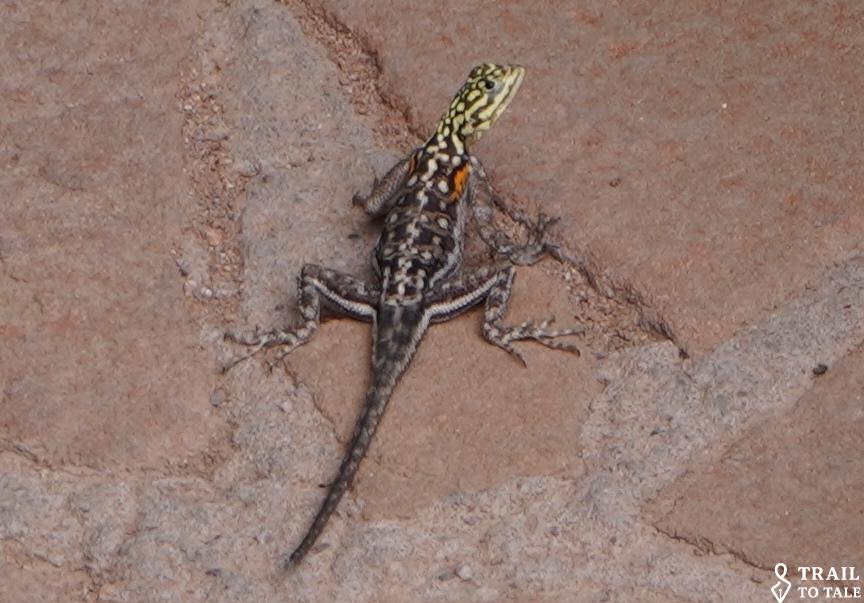
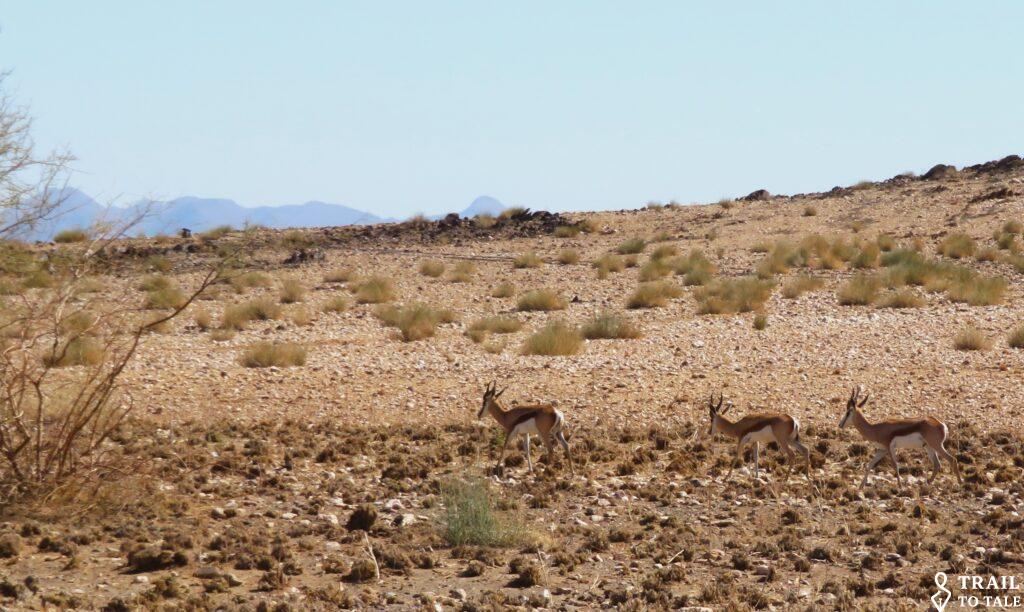
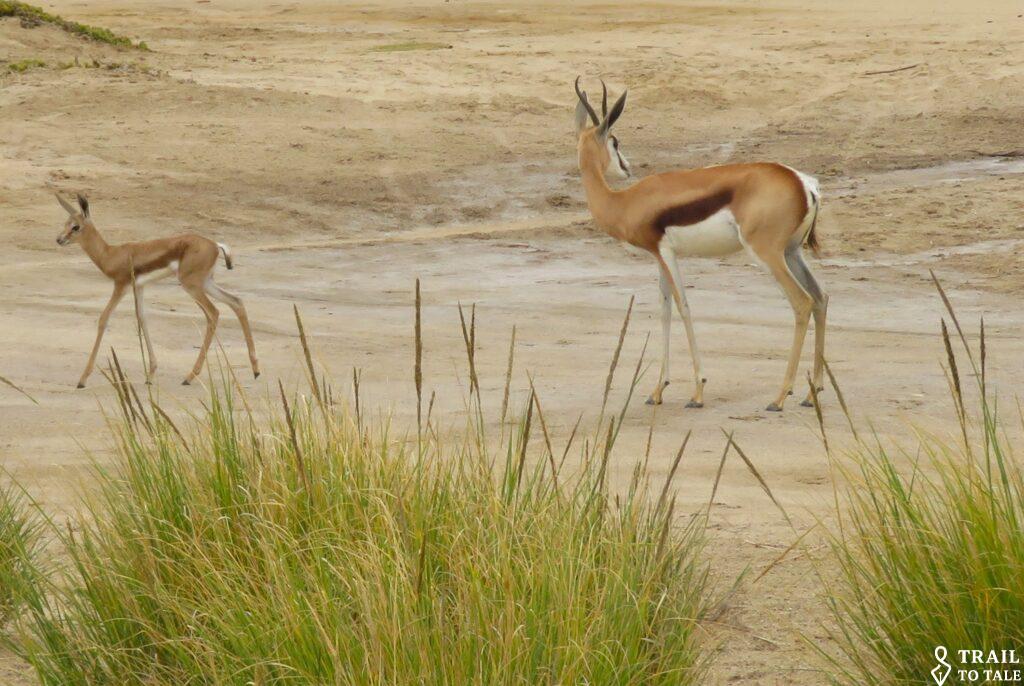
The Namibian Oryx antelopes is one of the most iconic and well-adopted animals of the Namib desert due to a set of remarkable physiological, behavioural and anatomical adaptions:
- It can tolerate internal body temperatures of up to 45°C without damage to vital organs.
- Specialized nasal passages cool the blood flowing to the brain, using selective brain cooling to prevent heat stroke.
- It can survive without drinking water by extracting moisture from food sources such as wild melons, roots, and grasses.
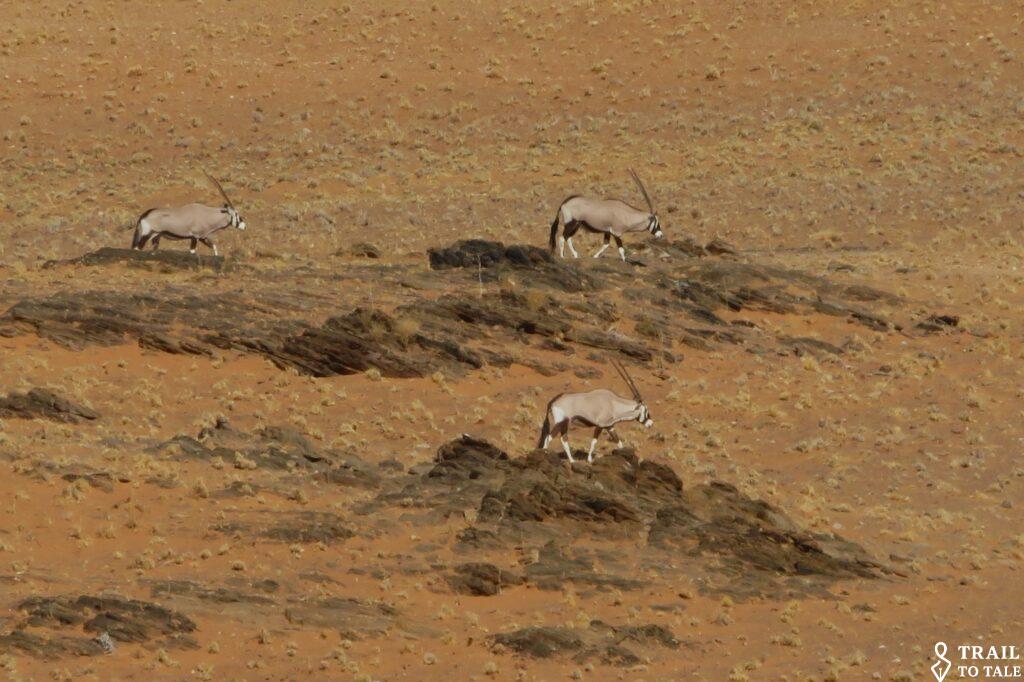
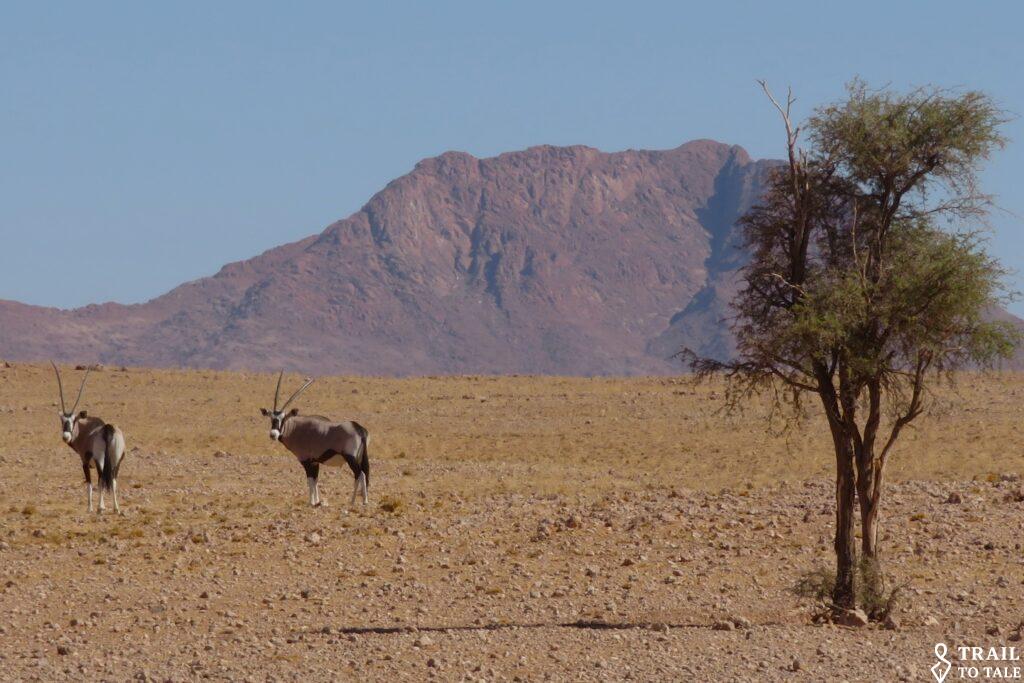
It’s remarkable how even the smallest amount of rain can trigger an ‘explosion’ of life, covering the often-dry land with a thin green carpet of grass.
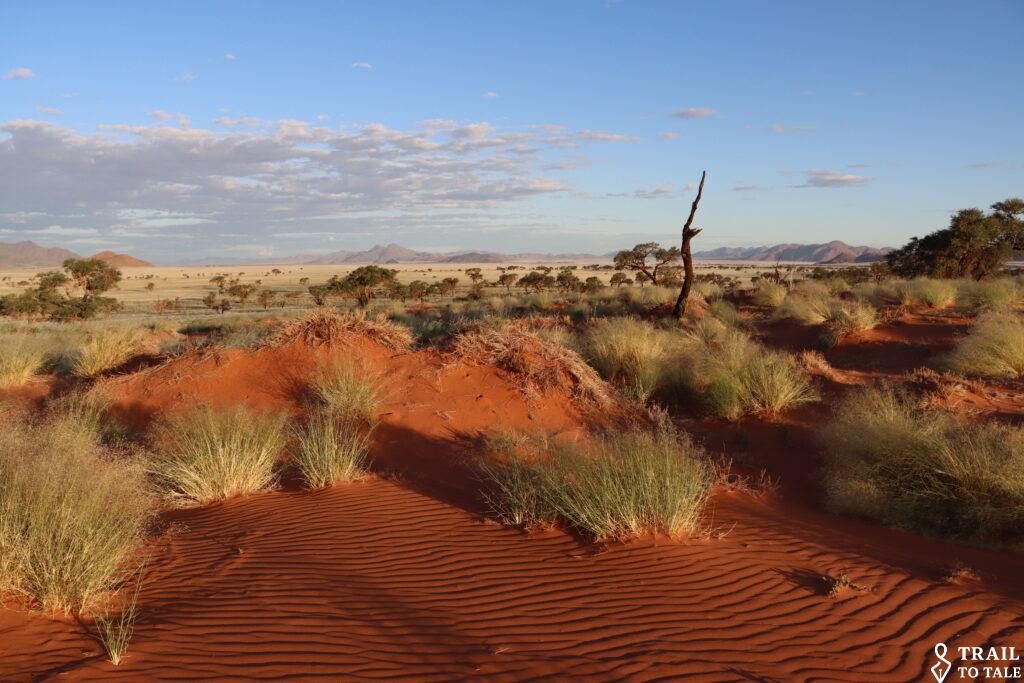
The Kuiseb is an ephemeral river that usually disappears into the dunes. During periods of heavy rain in the Khomas Hochland, however, it can reach the Atlantic Ocean at Sandwich Harbour (a UNESCO World Heritage Site) after filtering beneath the tall sand dunes for more than 30 km.
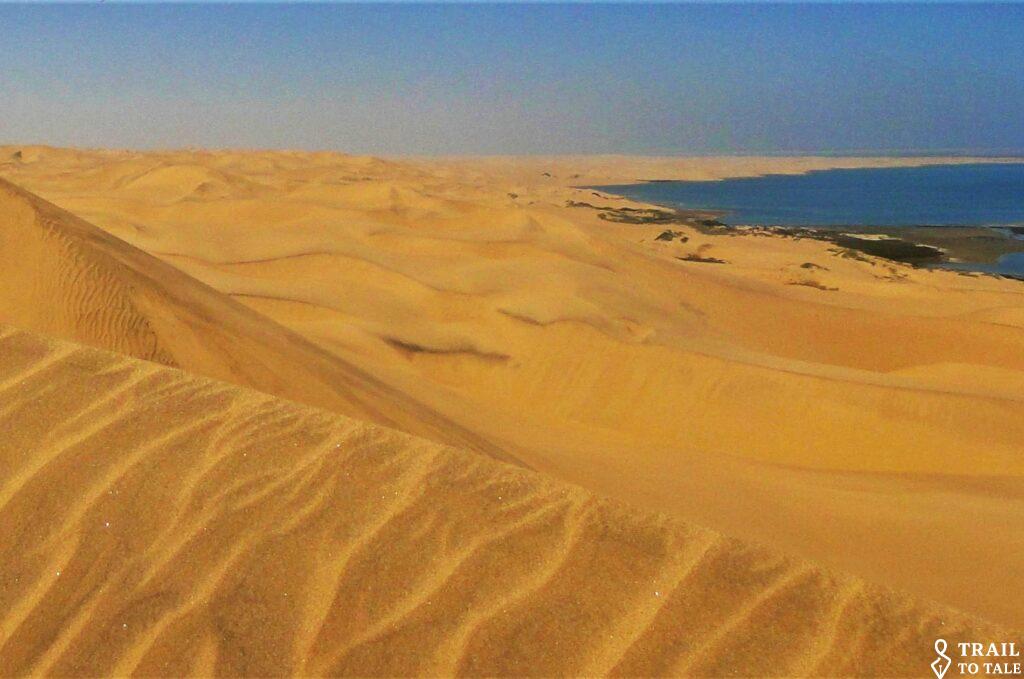
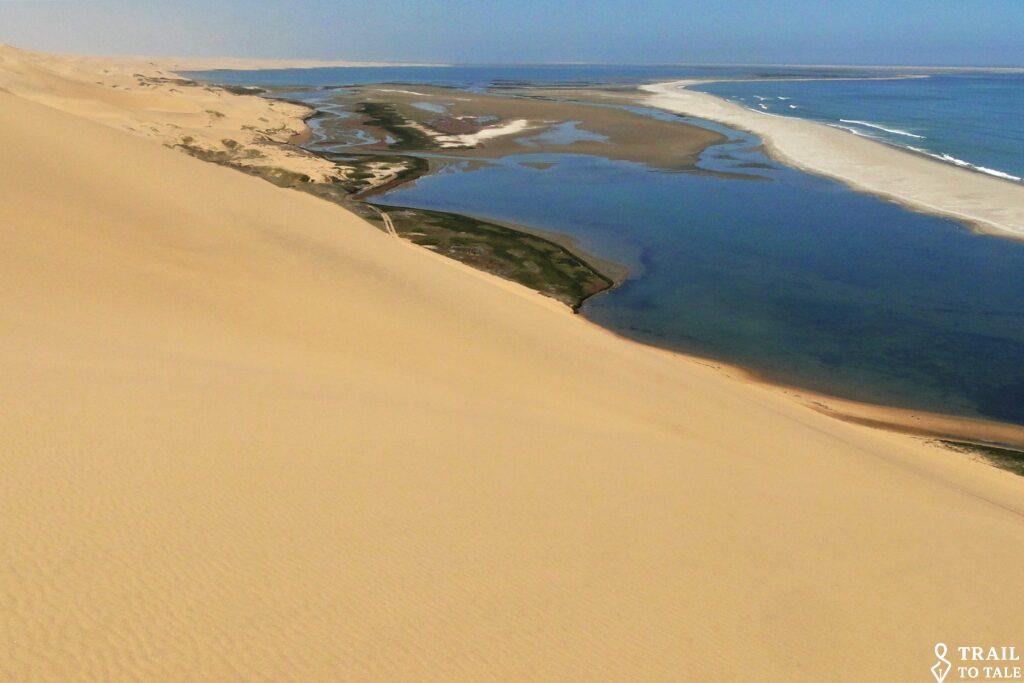
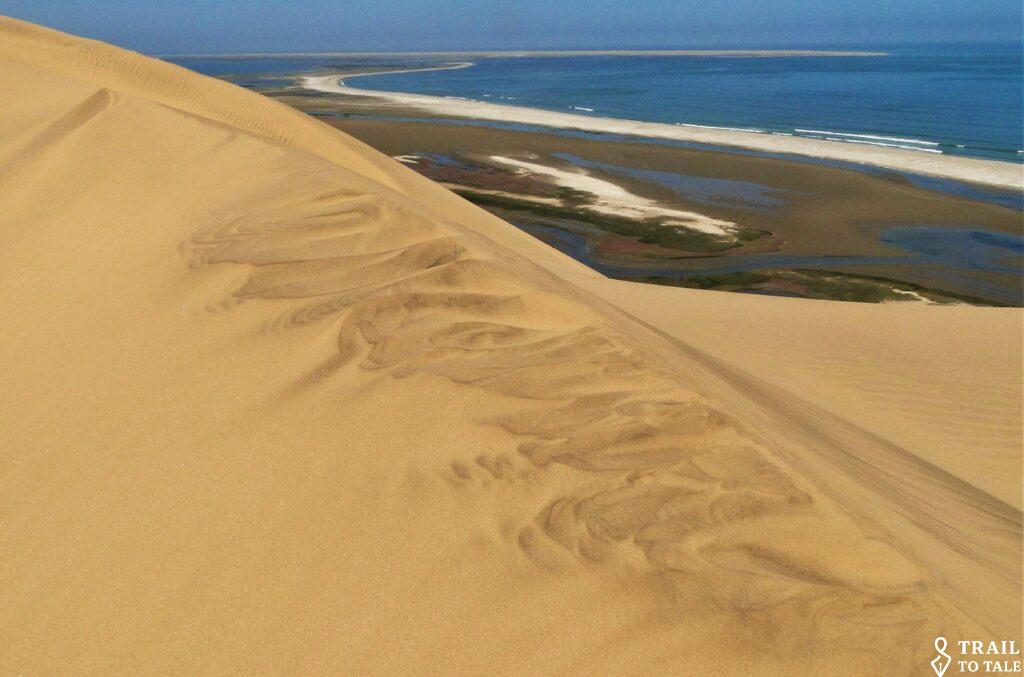
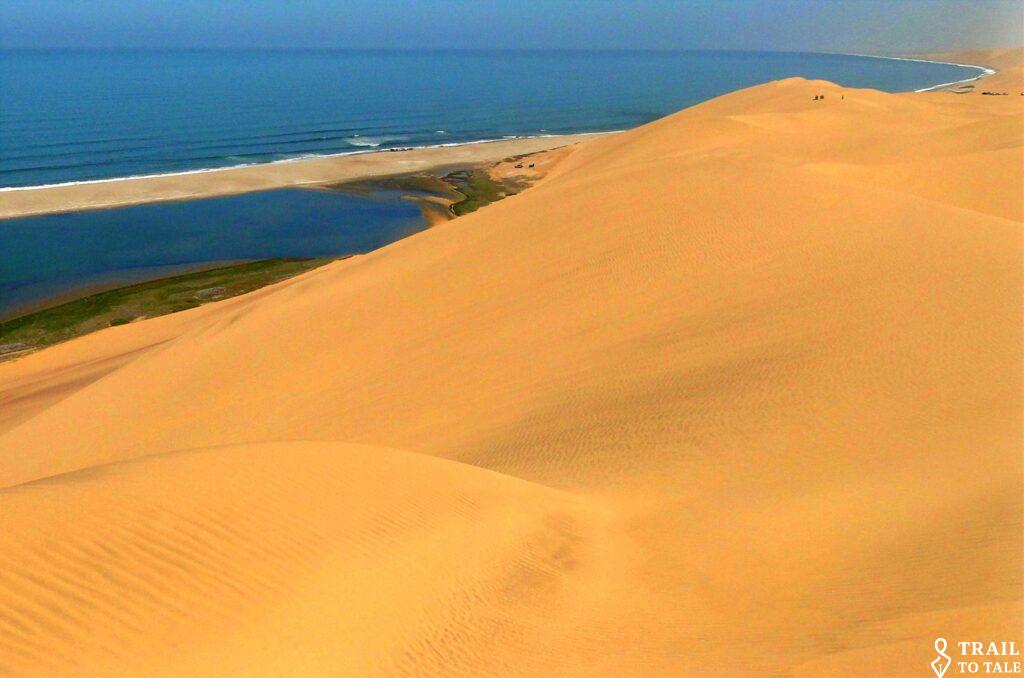
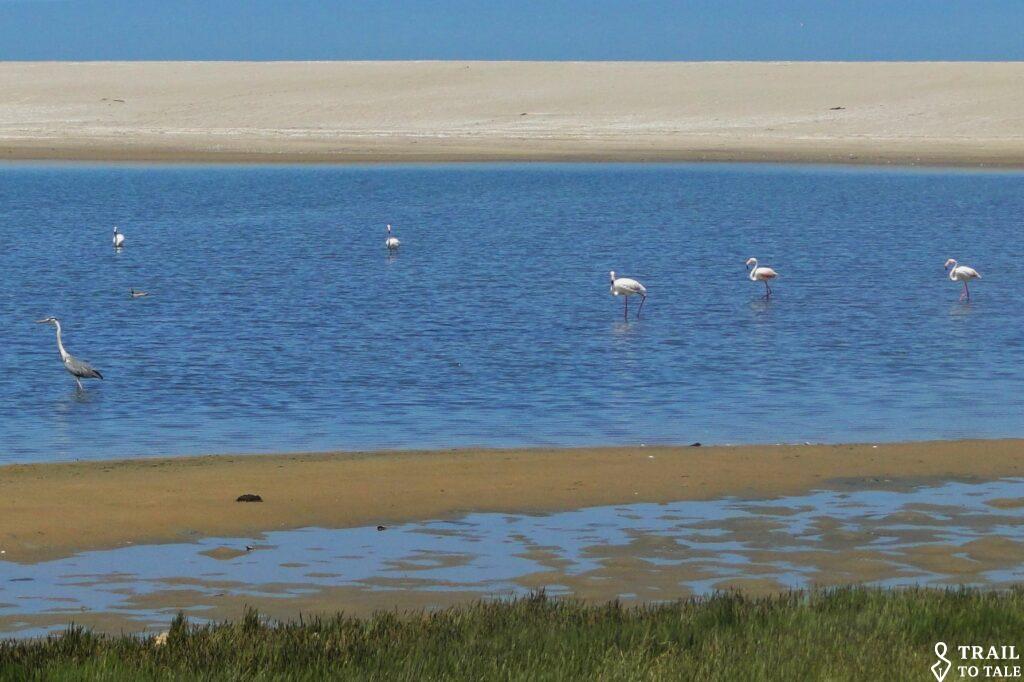
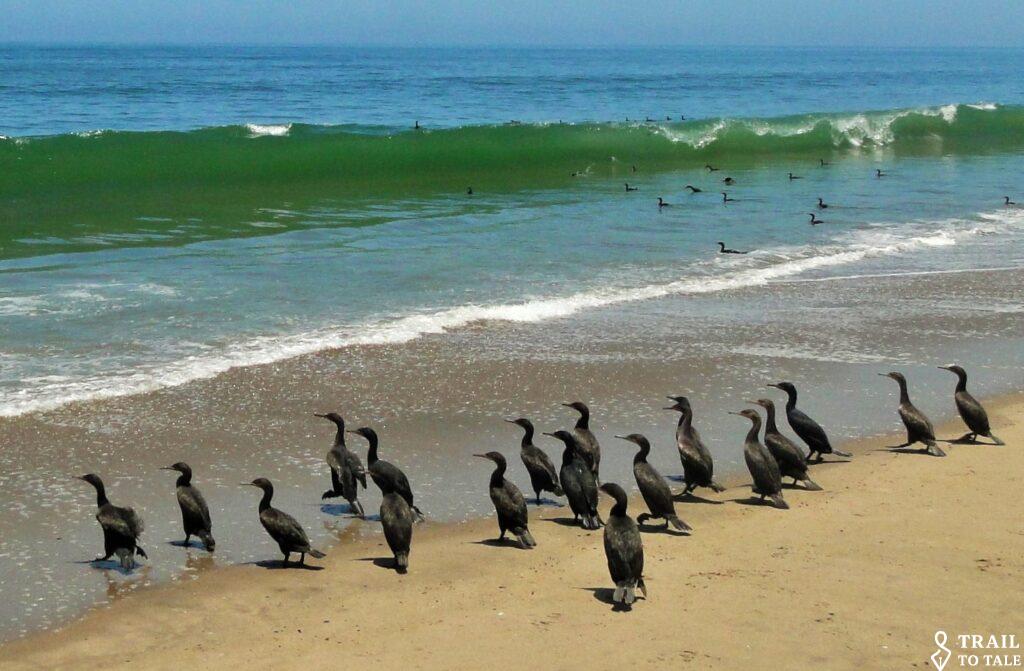
This creates a stunning wetland with bird life.
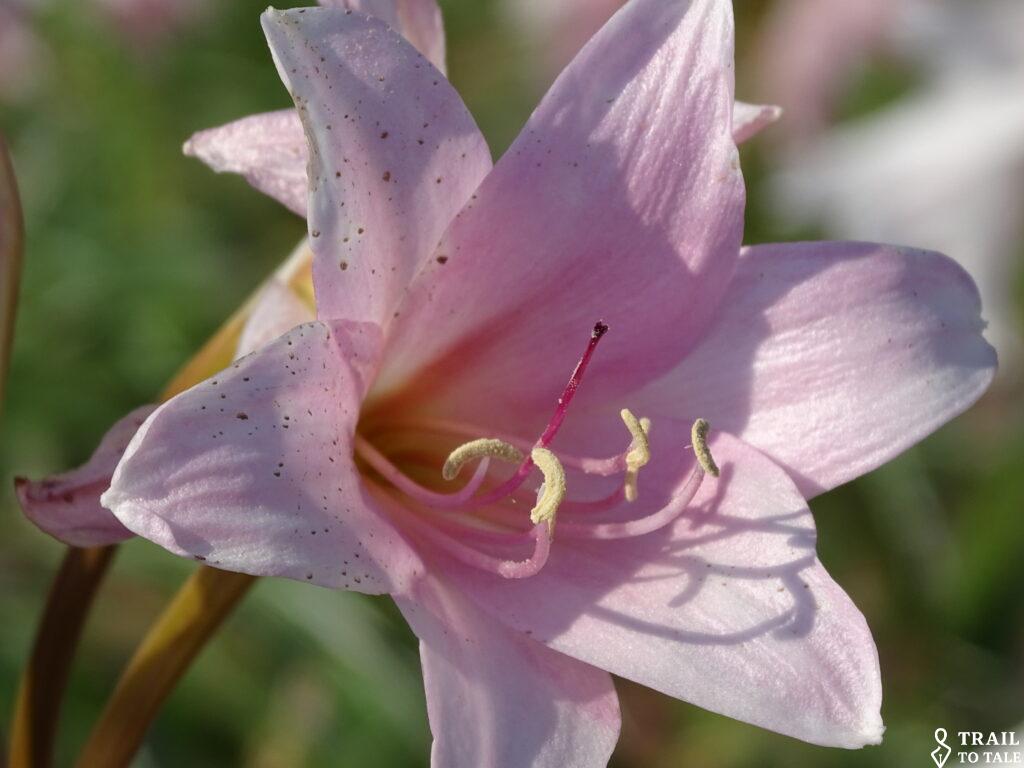
The famous bushveld lilies are a native to the Sandhof Farm area near Maltahoehe in the south of Namib Desert.
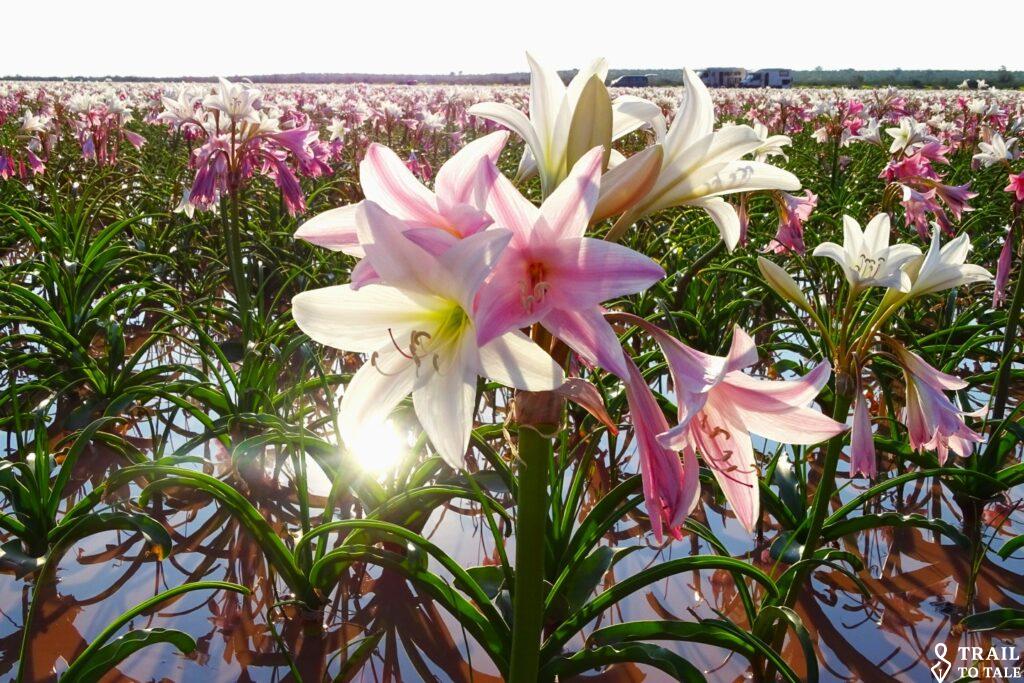
Blooming happened only every few years, depending on rainfall patterns, typically in January of February after a heavy rainfall filling a large clay pan with 15 – 30cm. Once triggered the display unfolds rapidly as the plants emerge and flower within 5 – 7 days.
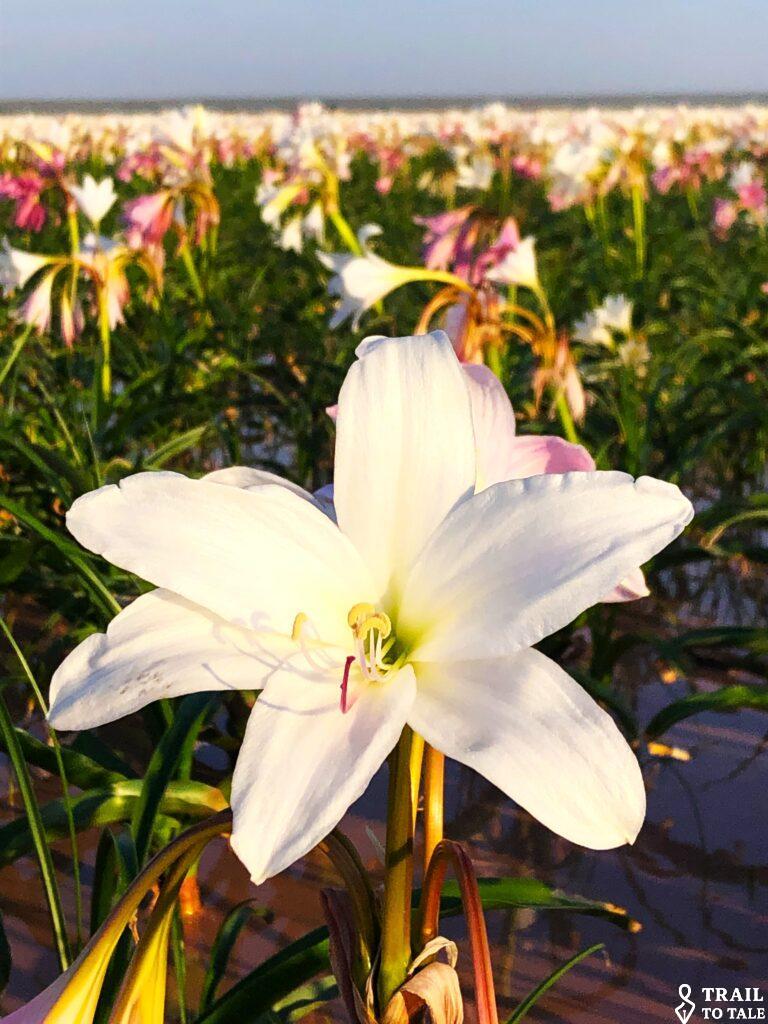
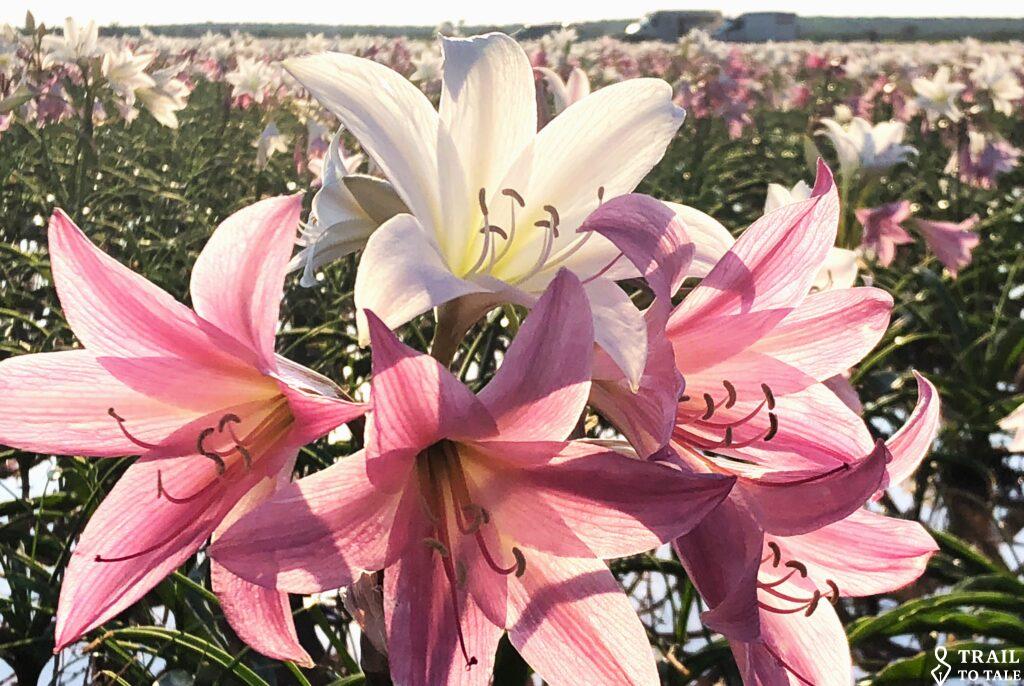
The trumpet-shaped bloom lasts only four to eight days, making it one of Namibia’s most fleeting natural wonders.
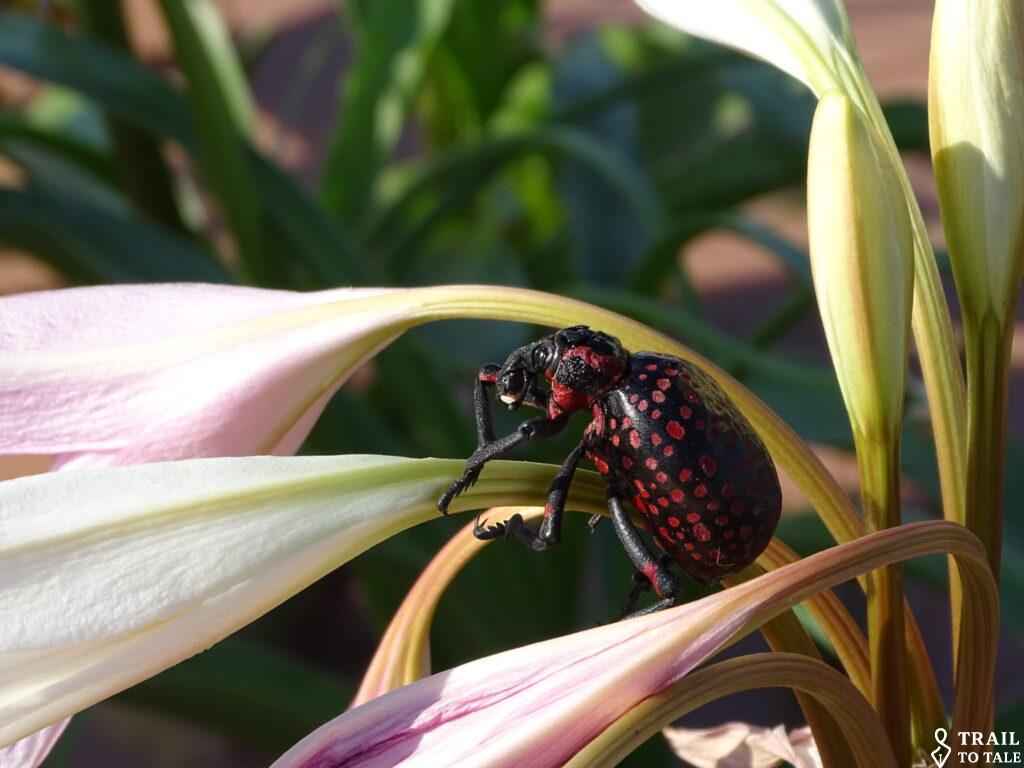
The striking ‘Red Palm Weevil’ is sometimes nicknamed ‘elephant bug’ based on its elongated snout that resembles a little elephant trunk.
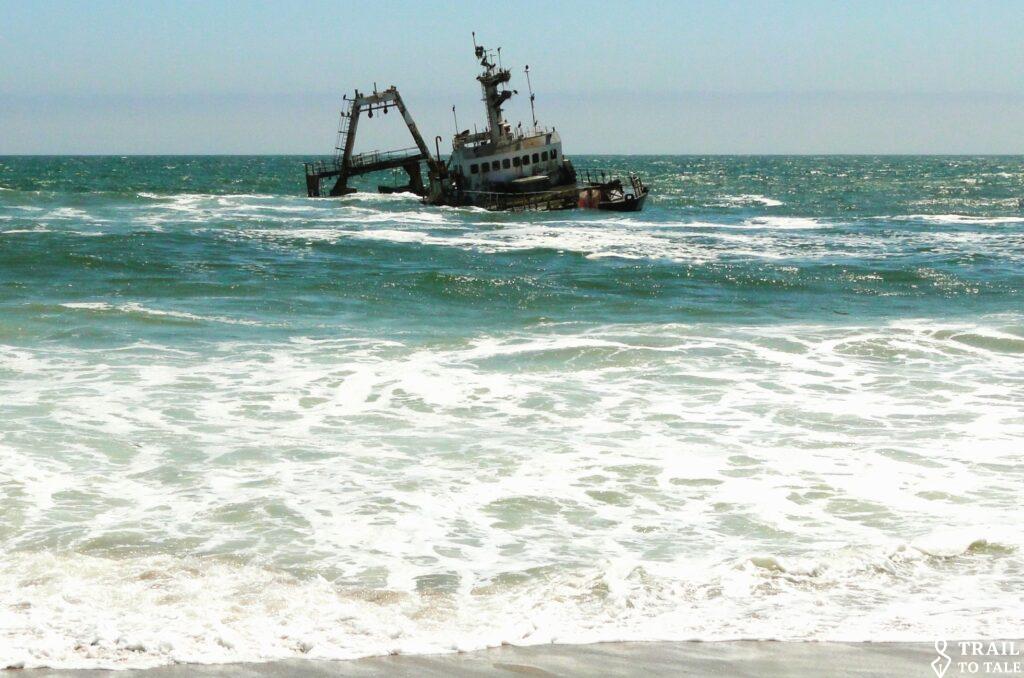
In earlier days of navigation, it was not uncommon for ships to run aground, as evidenced by the numerous shipwrecks along the Skeleton Coast on Namibia’s northern shores. Even in more recent times, vessels have underestimated the force of the Benguela Current and the shallow offshore rocks, resulting in what sailors grimly call an “unintended permanent mooring.”
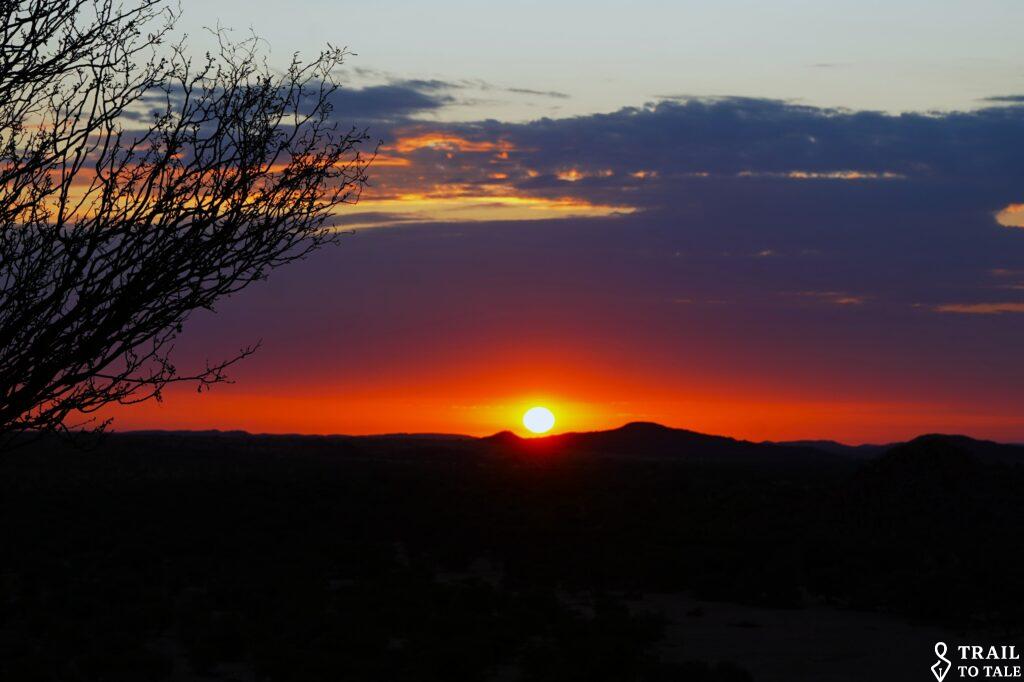
The author, who grew up in Swakopmund, tucked between the Atlantic and the edge of this vast desert (and still proudly calls it ‘home’), has deep admiration for the spirit of the early settlers and adventurers. Their ability to endure searing heat, temperatures dropping below 0 °C after sunset in winter, bone-dry landscapes, and a daily struggle for water is something he still finds humbling.
- * Curtesy of childhood friend Wiltrud Patzner
- ** Curtesy of childhood friend Uwe Harms
Leave a reply
You must be logged in to post a comment.