


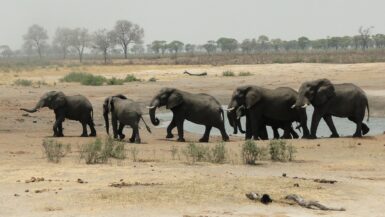
The Ugab River Region in northwestern Namibia is one of the very few places in the world where desert-adapted elephants can be found. They are rare and they are fascinating.

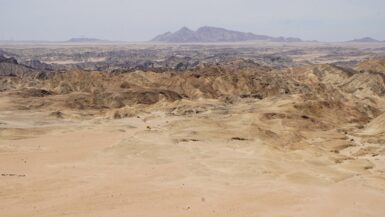
This part of Damaraland features dramatic landscapes, rocky plains, and dry valleys—its riverbeds remain bone dry for most of the year.


Desert elephants are not a separate species but a subpopulation of African elephants uniquely adapted to survive the harsh, arid environments of Damaraland and the Kunene region. Their adaptations include:
• Longer legs, enabling them to cover distances of up to 70 km a day in search of food and water.
• A smaller body mass, helping them retain moisture and manage heat.
• Behavioral changes, such as feeding mainly at night.
• Digging for underground water in the sandy riverbeds of the Ugab and Huab Rivers.
Like most waterways in Namibia, the Ugab is an ephemeral river, it flows only briefly after heavy rains, which may not occur for years.

Yet, the underground water sustains vegetation, forming a fragile but vital lifeline for these resilient elephants.


Leave a reply
You must be logged in to post a comment.