


Arunachal Pradesh, surrounded by Bhutan to the west, China/Tibet to the north, Myanmar to the east, and the Indian state of Assam to the South, is one of the most sparsely populated states of India and one of the world’s least-explored regions. Being the easternmost state of India, Arunachal Pradesh is truly the place where the sun first rises. It is the largest of the northeastern states and much of it has hardly been explored or catalogued. Ethnic and linguistic diversity in the state may be the highest, not only in India, but perhaps in any comparably-sized Asian region.
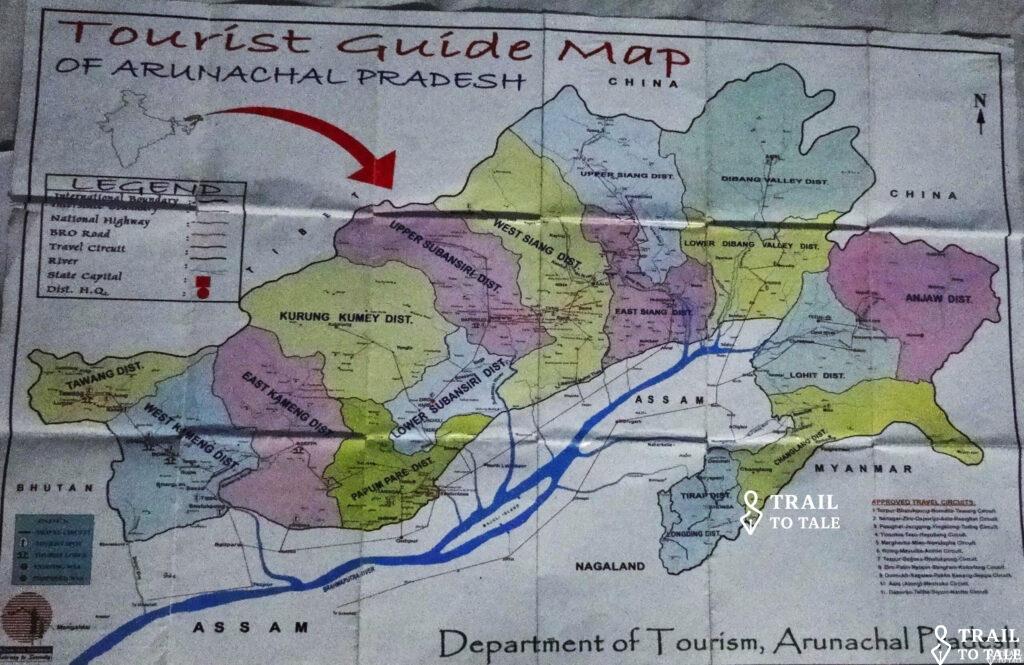
Although the British annexed the area in 1858, the exact boundary between Tibet and India remained undefined until 1914 when British and Tibetan authorities signed the Shimla agreement. The international border is also known as the McMahon Line, after Henry McMahon, a British administrator. However, the McMahon Line has never been fully recognized as an international border by China. During the short 1962 war with India, China briefly occupied parts of Arunachal Pradesh but then unilaterally withdrew its armed forces beyond the Line. China today claims Arunachal Pradesh as part of its territory, resulting in very close control over access to the region by the Indian Border Police Force.
The land is mountainous with Himalayan ranges along the northern borders, and other large mountain ranges running North-South. These ranges divide the state into five major river valleys with the Siang River being the largest contributor to the Tsangpo River, which takes the name Brahmaputra as it enters Assam.
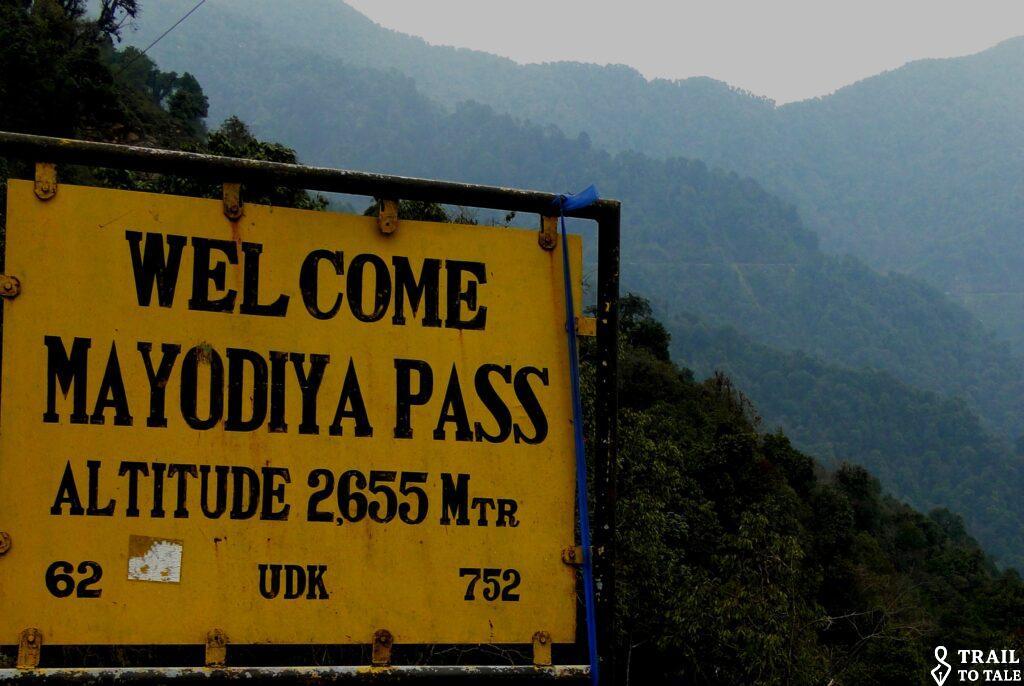
Arunachal Pradesh may also have the greatest biodiversity in India, with as many as 600 species of orchids and 1/3 of the plants of India, along with the same proportion of mammals and over half of India’s 1300 birds. However here, just as in other parts of the Indian subcontinent, biodiversity is threatened by numerous factors, including development of infrastructure such as roads and hydroelectric dams, agricultural expansion into forest areas, and ineffectual resource governance. All of this promotes a feeling of urgency to explore the region, one of the last remote parts of the world.
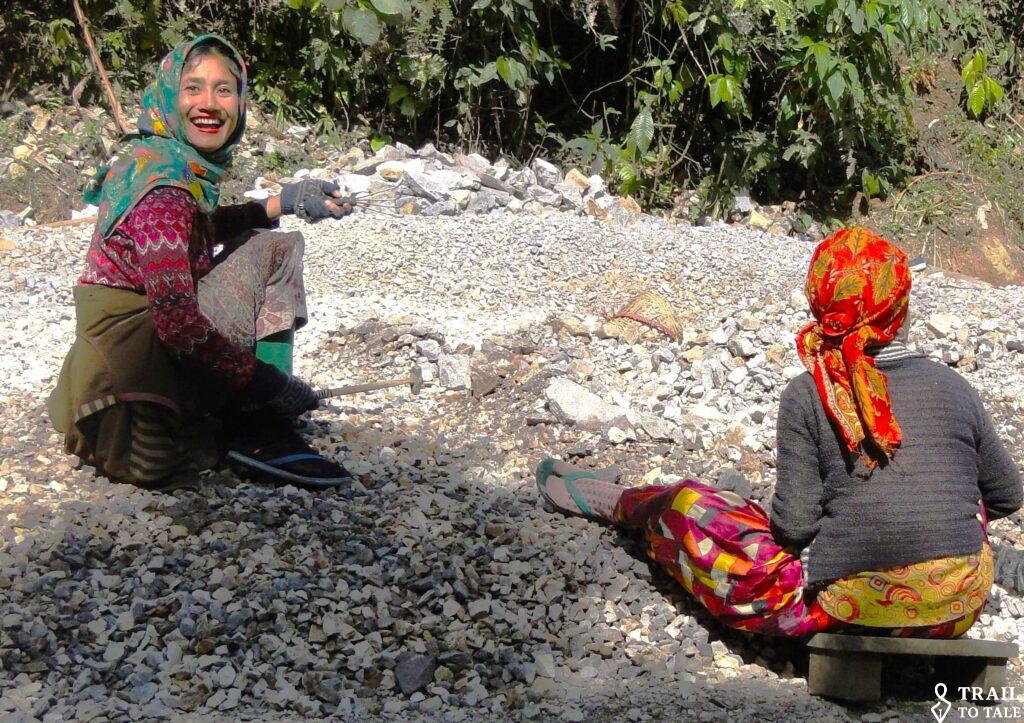
With no airport and with a mandatory requirement for foreigners to have a special Protected Area Permit and to be continuously accompanied by a certified guide, a domestic airport in Assam is the easiest place in which to arrive, make arrangements, and travel on.
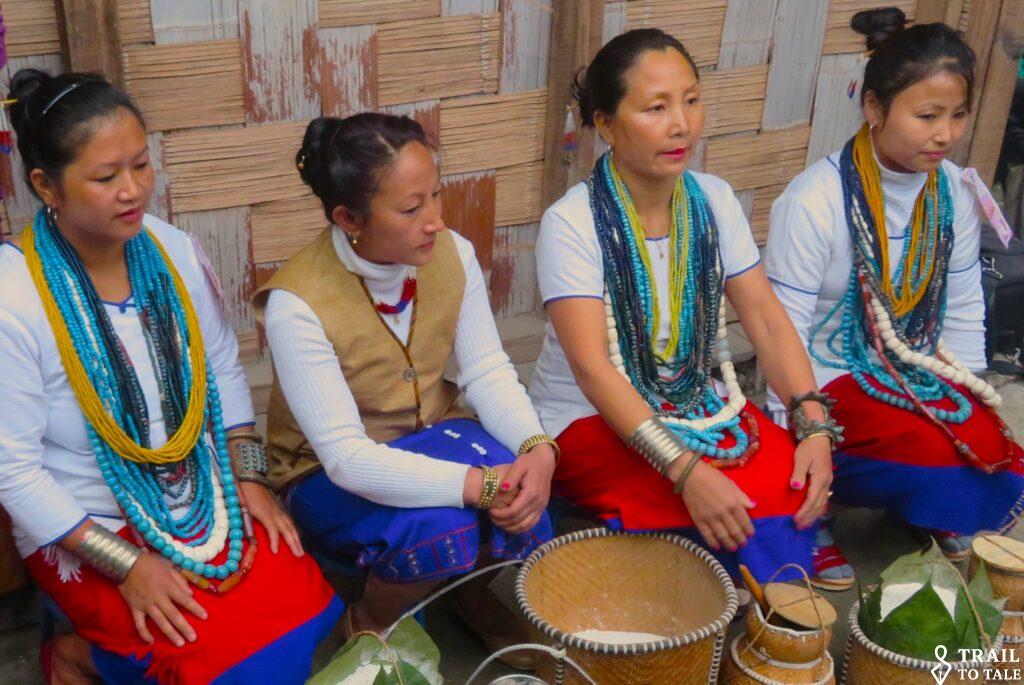
The people of Arunachal Pradesh can be grouped into four broad ethnic groups based on geographical, cultural, and linguistic affinities. In the western section adjoining Bhutan live the Monpa, immigrants from Tibet.
East of here lies the territory of the Nyishi, the most numerous. Amongst the Nyishi live the Apatani. The central part is dominated by Galo people.

At higher elevations of the central region, the majority of the tribes are animists having a strong feeling for the spirituality of nature or a belief in the Sun and Moon as supreme Gods. In the lower valleys, the influence of Christian missionaries from southern India is witnessed.
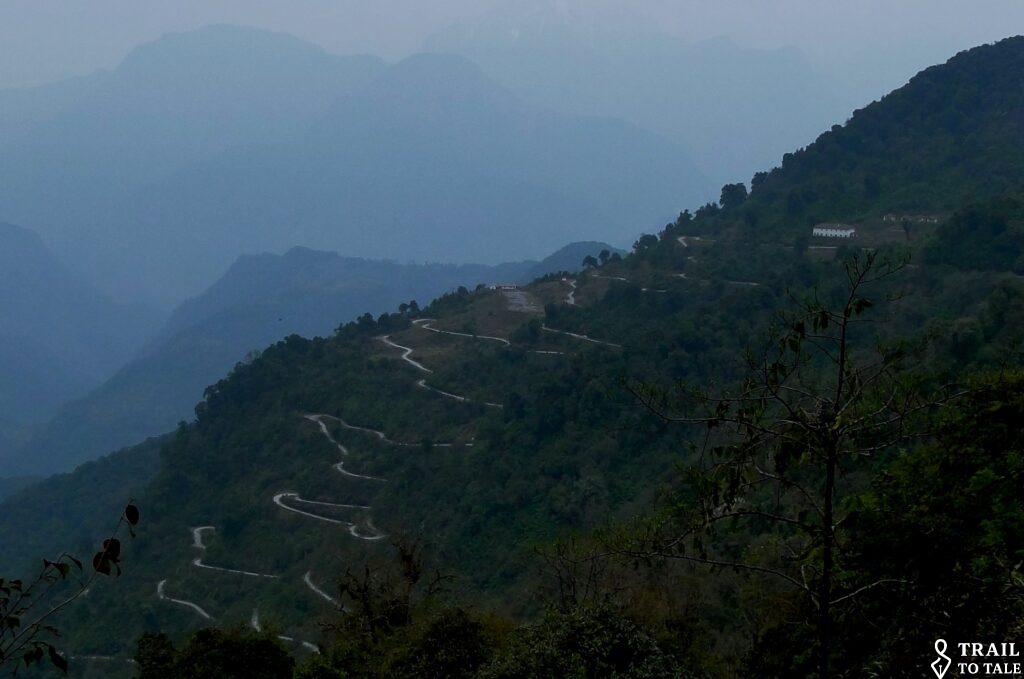
Experiencing some of these diverse ethnic communities, consisting of 26 major tribes and a number of sub-tribes, requires long hours in a Jeep (with a skillful driver) as the roads are not in the best condition and are very vulnerable to landslides. Driving up endless narrow valleys, winding roads, and crossing the occasional snowy mountain pass is required in order to search for different local tribes still living and following the lifestyles of their forefathers.

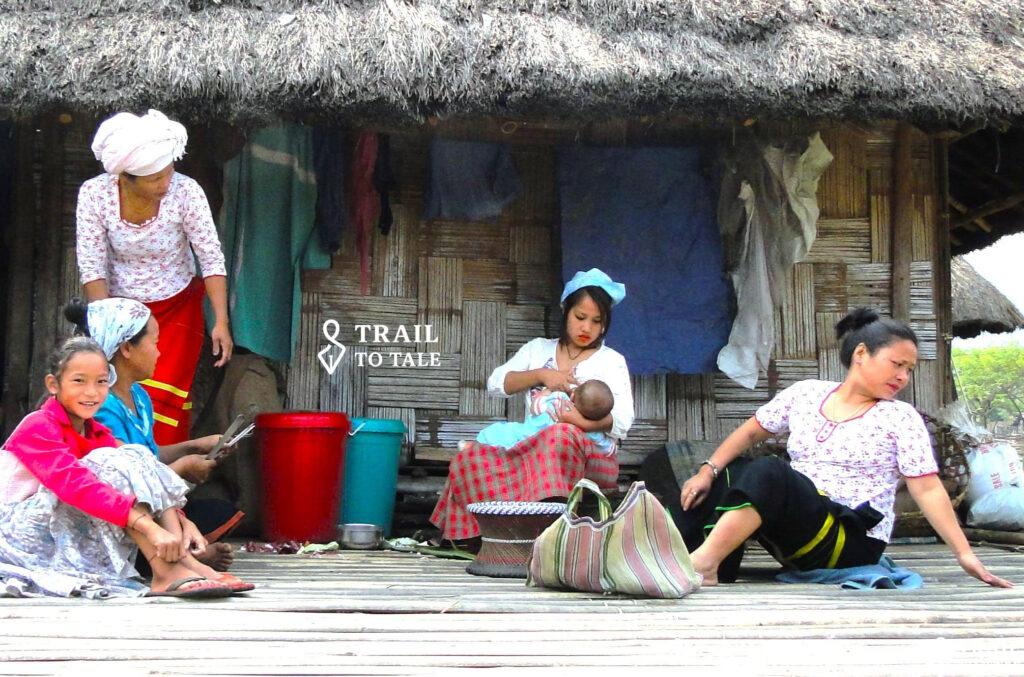
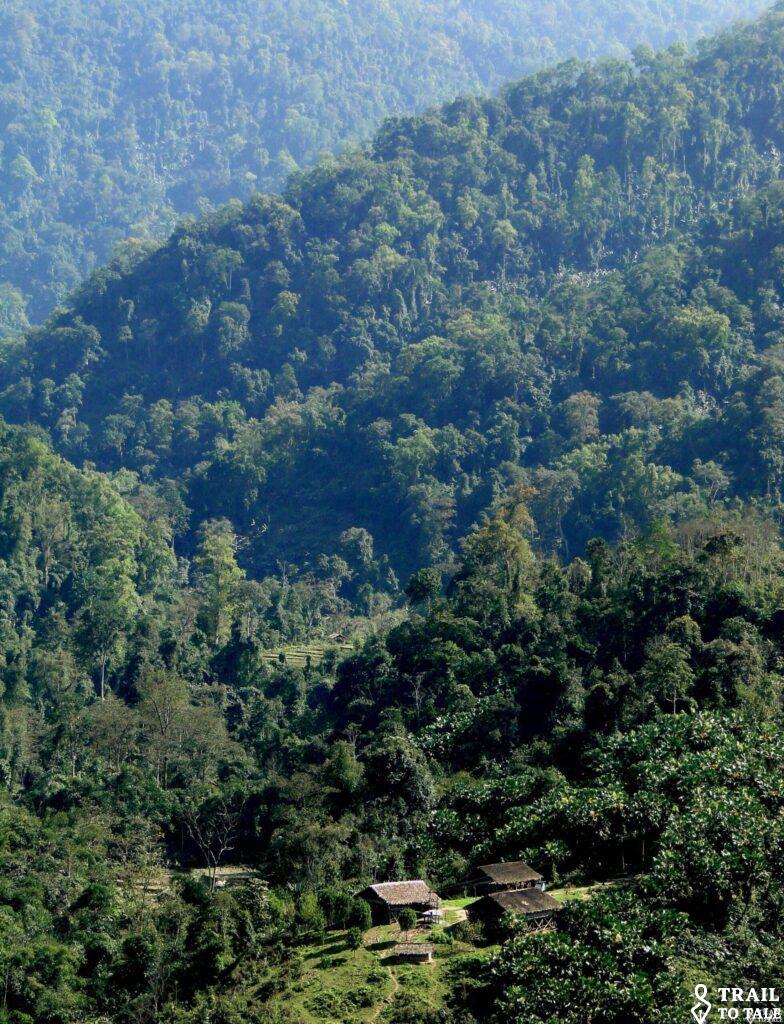
On our visit, whenever a cluster of wooden, thatched-roof houses on stilts was seen, the journey was interrupted to hike up steep paths or cross cold rivers on dodgy suspension bridges to visit and explore these remote “estates”.
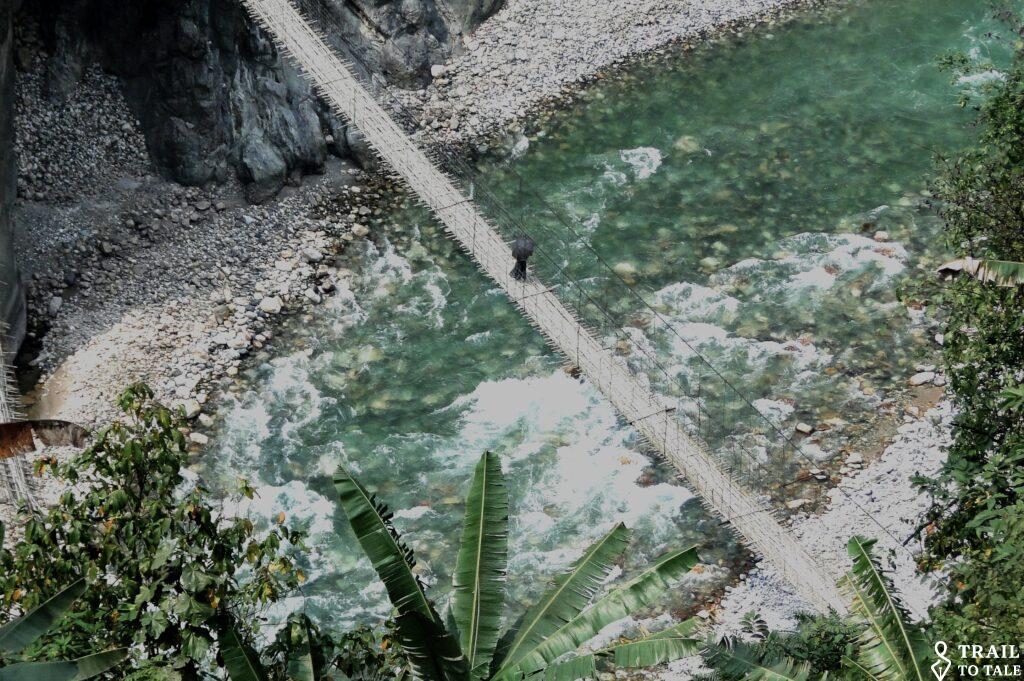
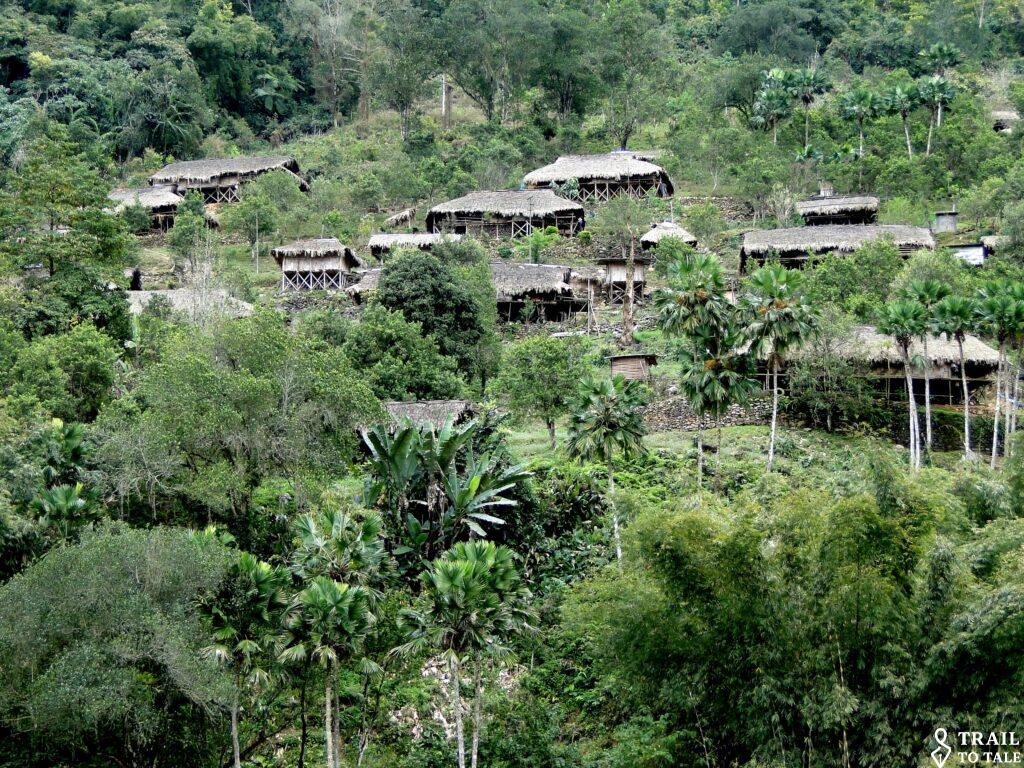
While we were greeted with initial skepticism by many older people, we met with more child-like curiosity from the younger ones. However, with the help of an experienced guide and humble small talk, the ice was soon broken and often followed by an invitation into houses where tea and sometimes snacks like pieces of ginger or fruit were offered.
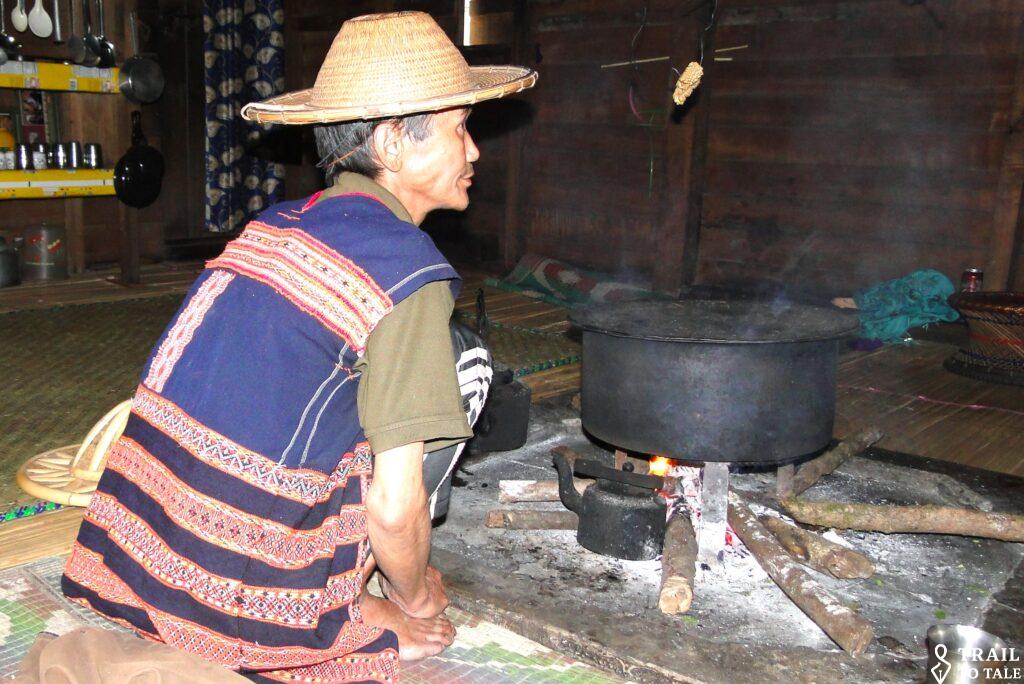
On special occasions “home-brewed” rice beer that had been fermented in a funnel made from banana leaves was served. The epicenter of a tribal home, the kitchen fire, is not only used for cooking but helps to keep the house warm and dry. It also allows for the smoking of meat, usually kept on a rack above. Occasionally a collection of Mithun heads sacrificed for ceremonial feasts adorn the walls of tribal homes.
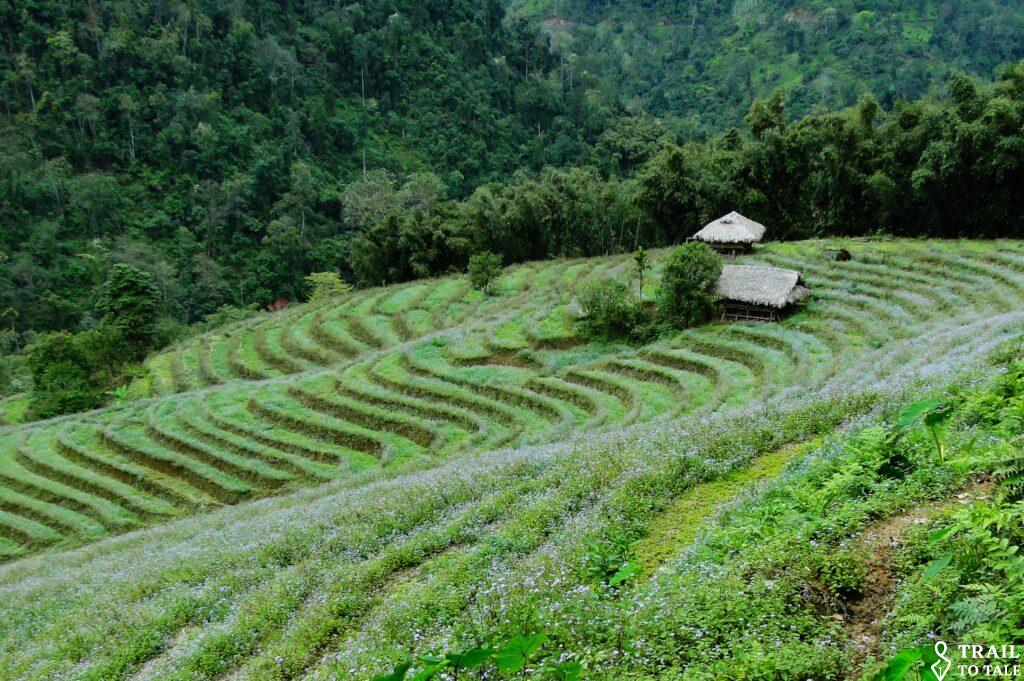
Close to the houses, vegetables are grown, while some of the dense jungle next to the villages was often cleared and skillfully constructed rice terraces covered the slopes.
Besides cultivation of crops (even opium poppies) and breeding of livestock, braiding baskets and weaving is a widespread skill. Each tribe seemed to have their own different colors and patterns.
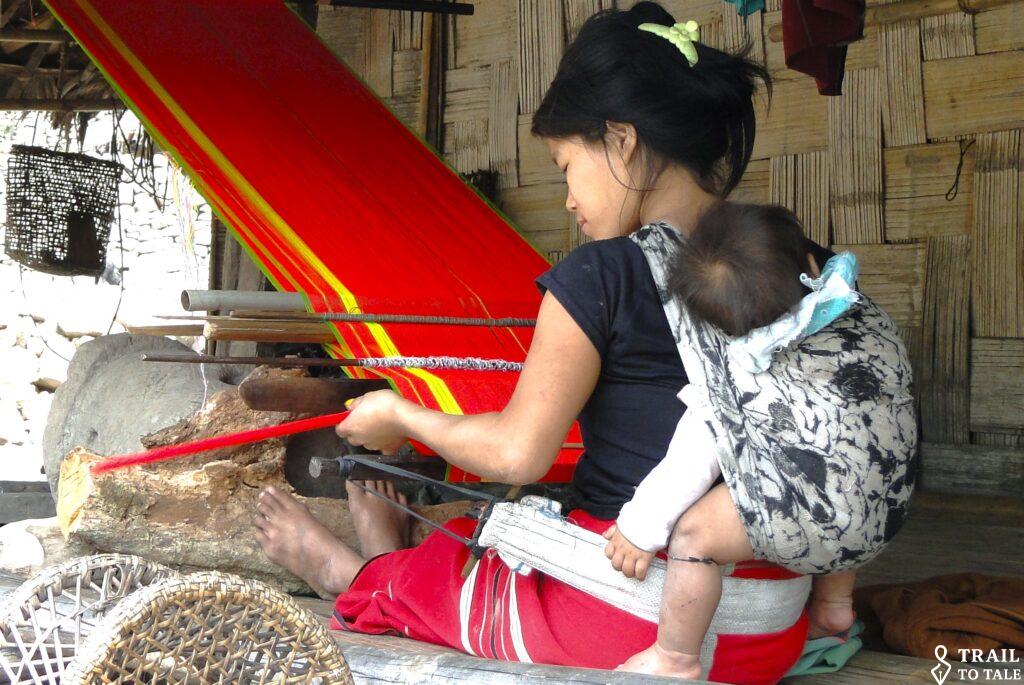
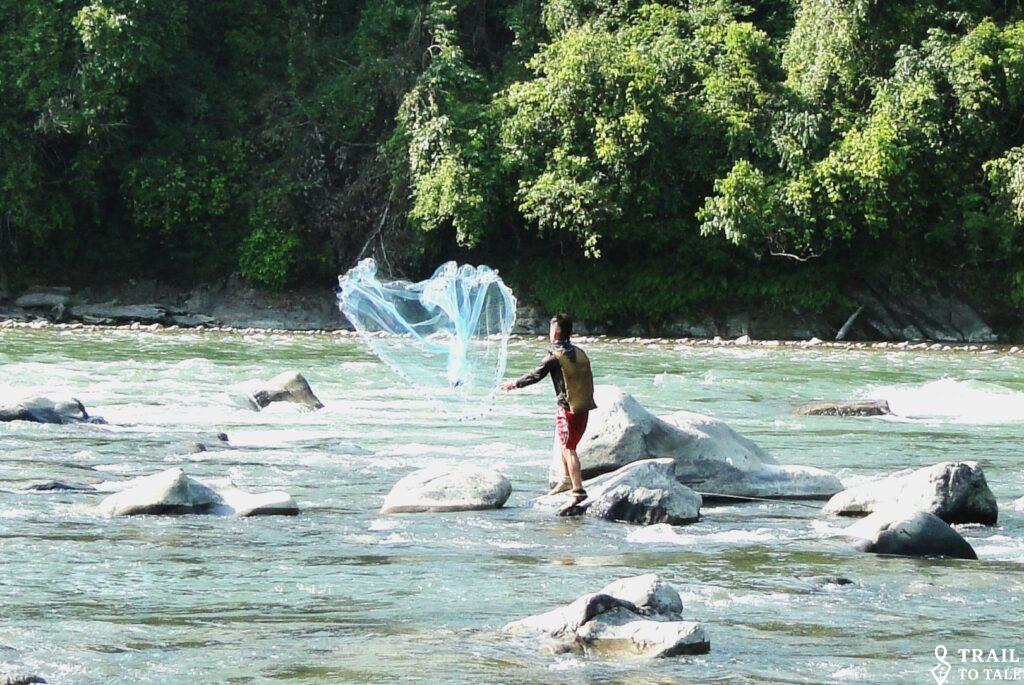
Spending the nights in homestays allowed a very close encounter with the locals and the chance to be part of their day-to-day life. While rice and vegetables were the main food sources, on some occasions chicken, pork, or river fish was served. Tea is the widespread drink.
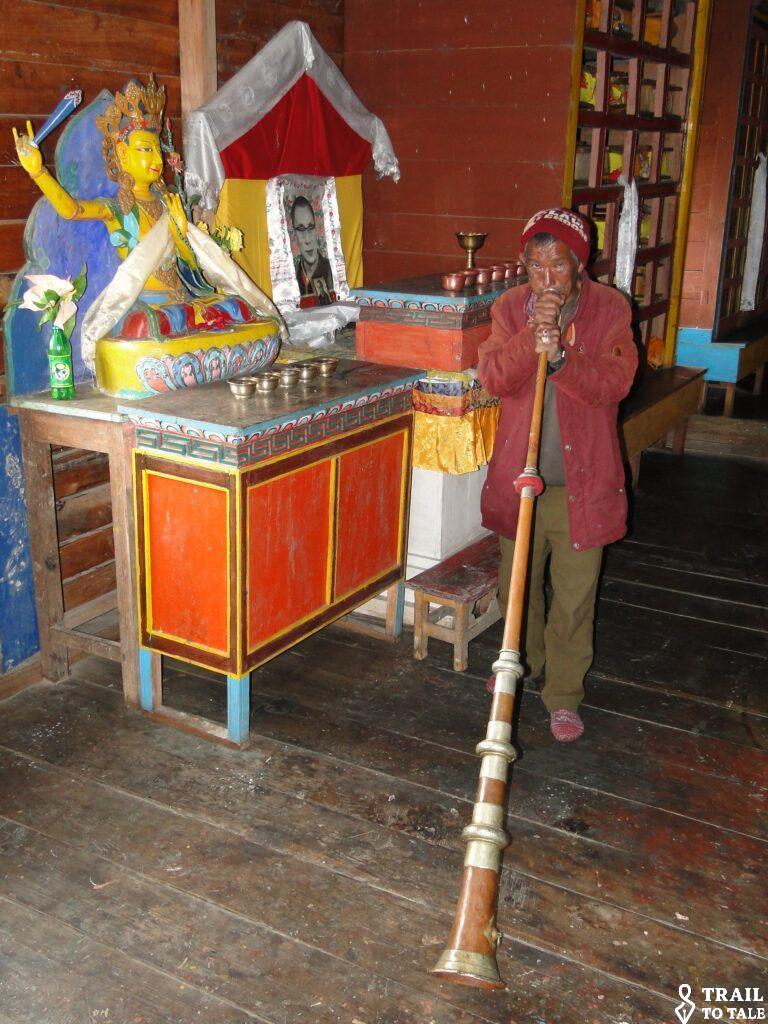
At the far end of the Mechukha Valley (30km south from the Indian-Tibetan border) the sounds of Buddhist horns from inside a wooden house belonging to a family from the Memba tribe caught the attention. The family head, with distinct Tibetan features immediately invited us in to have butter tea and witness a ceremony lead by Buddhist monks.
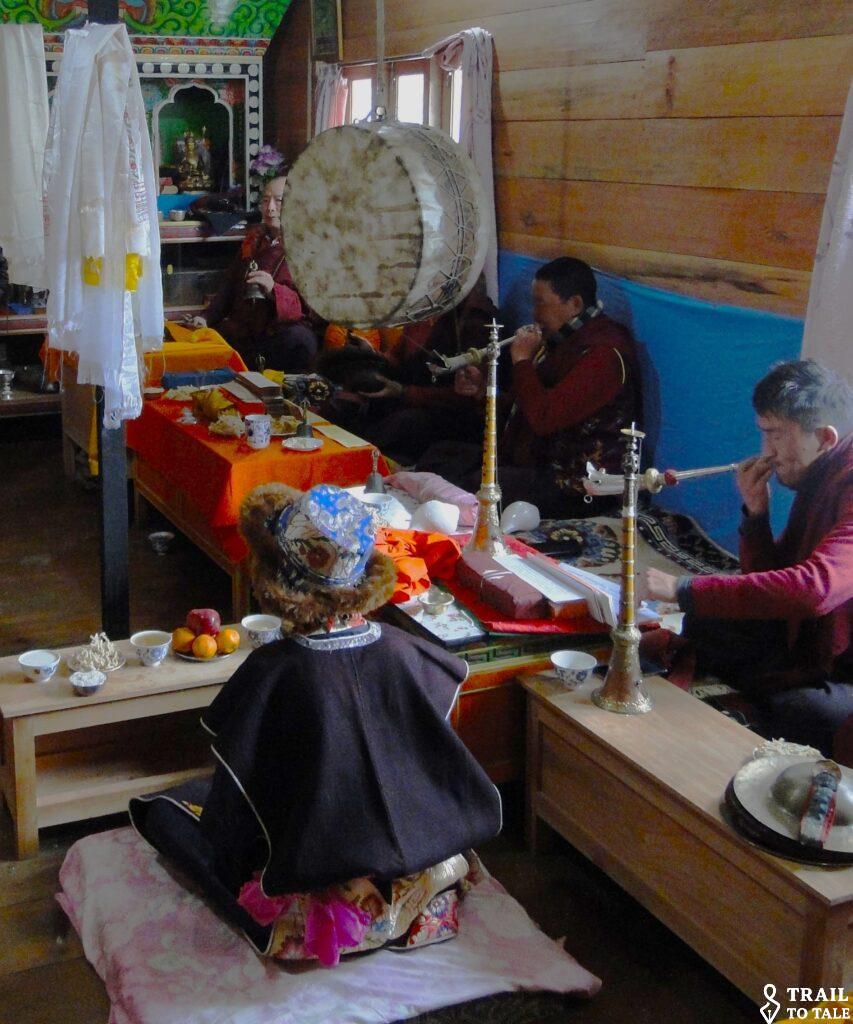
Long, monotonous Buddhist prayers, interrupted by horn sounds and drum beats, accompanied local hunters equipped with bows and arrows and large knives who chanted at the bad spirits occupying the body of a young, beautifully-dressed girl from the Memba Tribe.
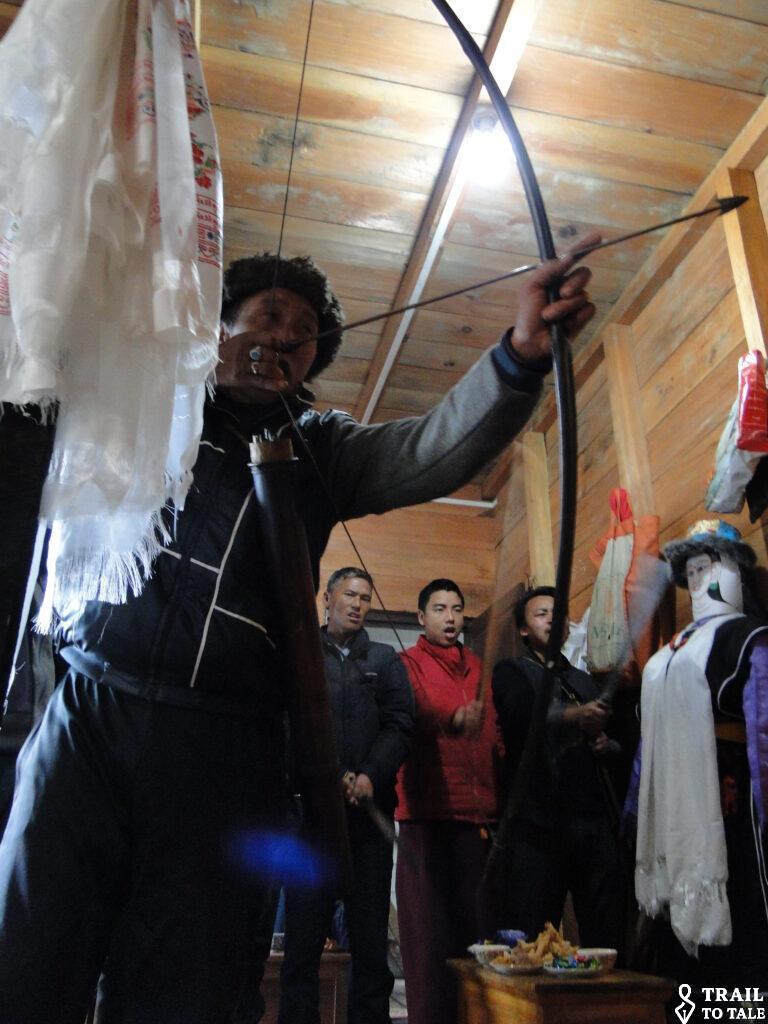
A life-sized doll meant to absorb these bad spirits was later dumped into a nearby river. This 17-year-old girl said later that she had been suffering from severe stomach pains for over two years. After several failed attempts to get help from conventional doctors, this spiritual way was seen as the last hope for a cure.
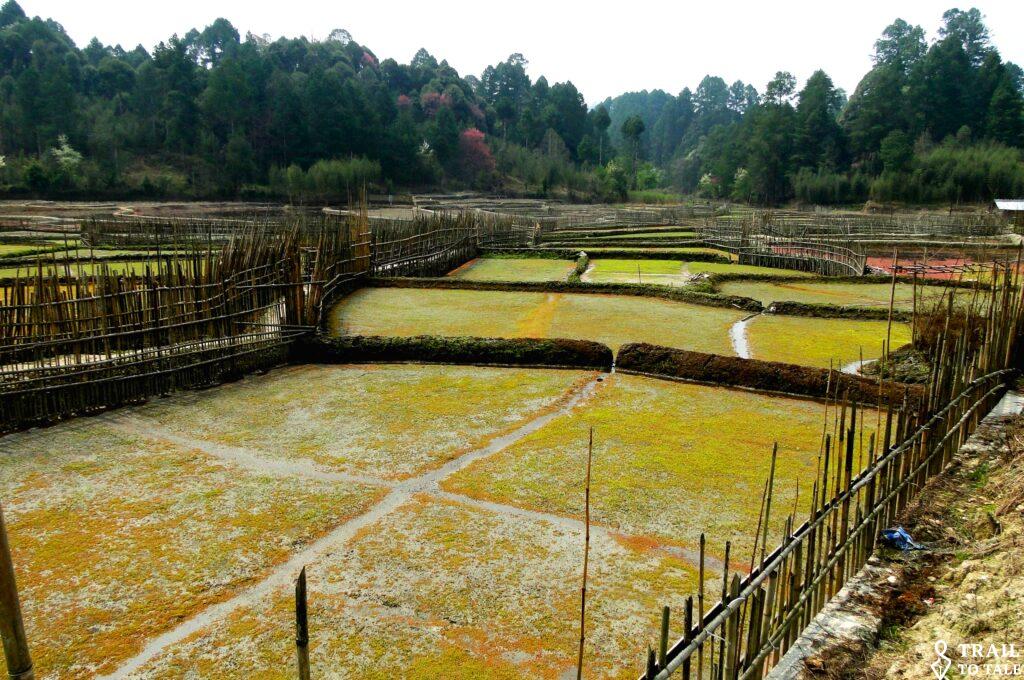
Festivals form an essential aspect of the socio-cultural life of these tribal people. The annual Myoko Festival of the Apatani Tribe in the pine-clad hills of the Ziro Valley provides a rare insight into their rituals. Starting before dawn, a shaman priest blesses animals, such as pigs and chickens, are to be sacrificed.
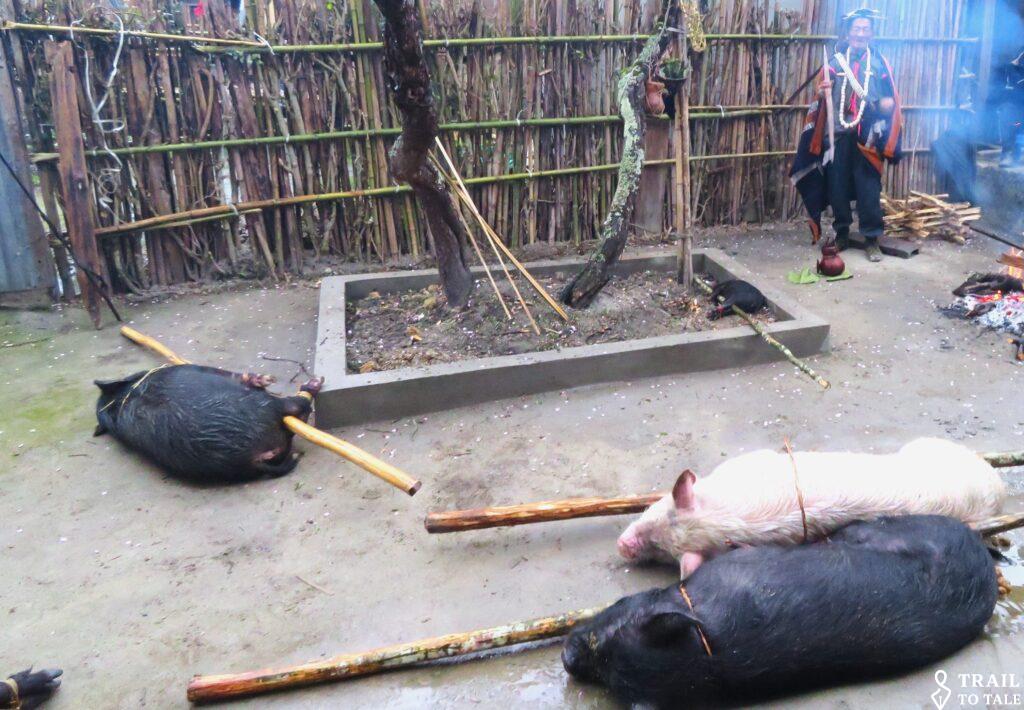
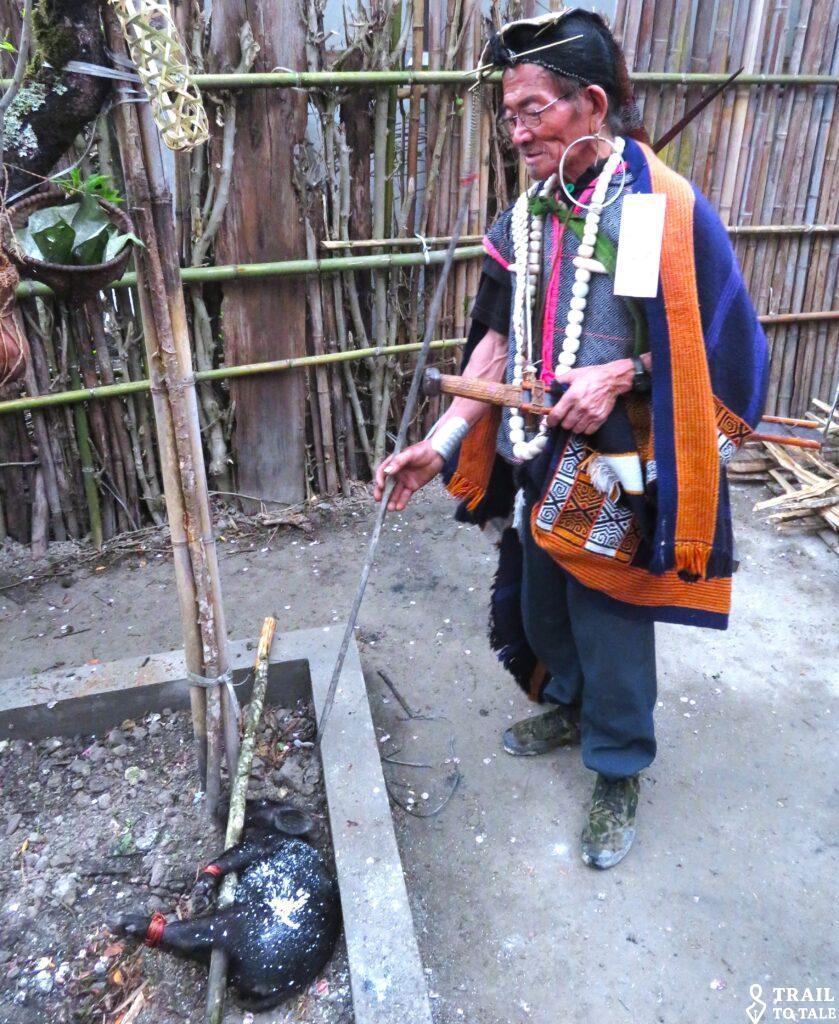
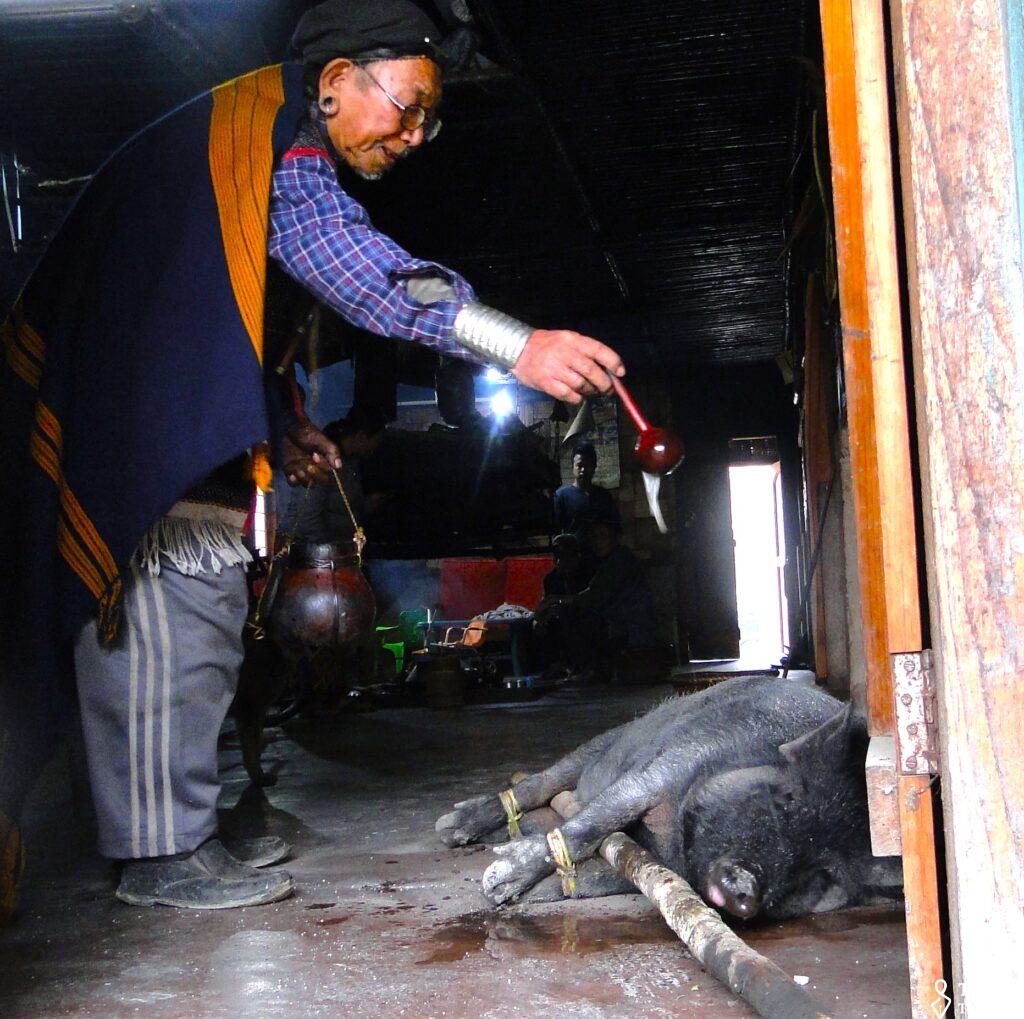
This procedure is not for the faint-hearted as it involves the slitting open of the chest and the ripping out the heart which, still beating, is then granted to and consumed by a special and highly-respected family member.
Warning: the VDO contains disturbing images
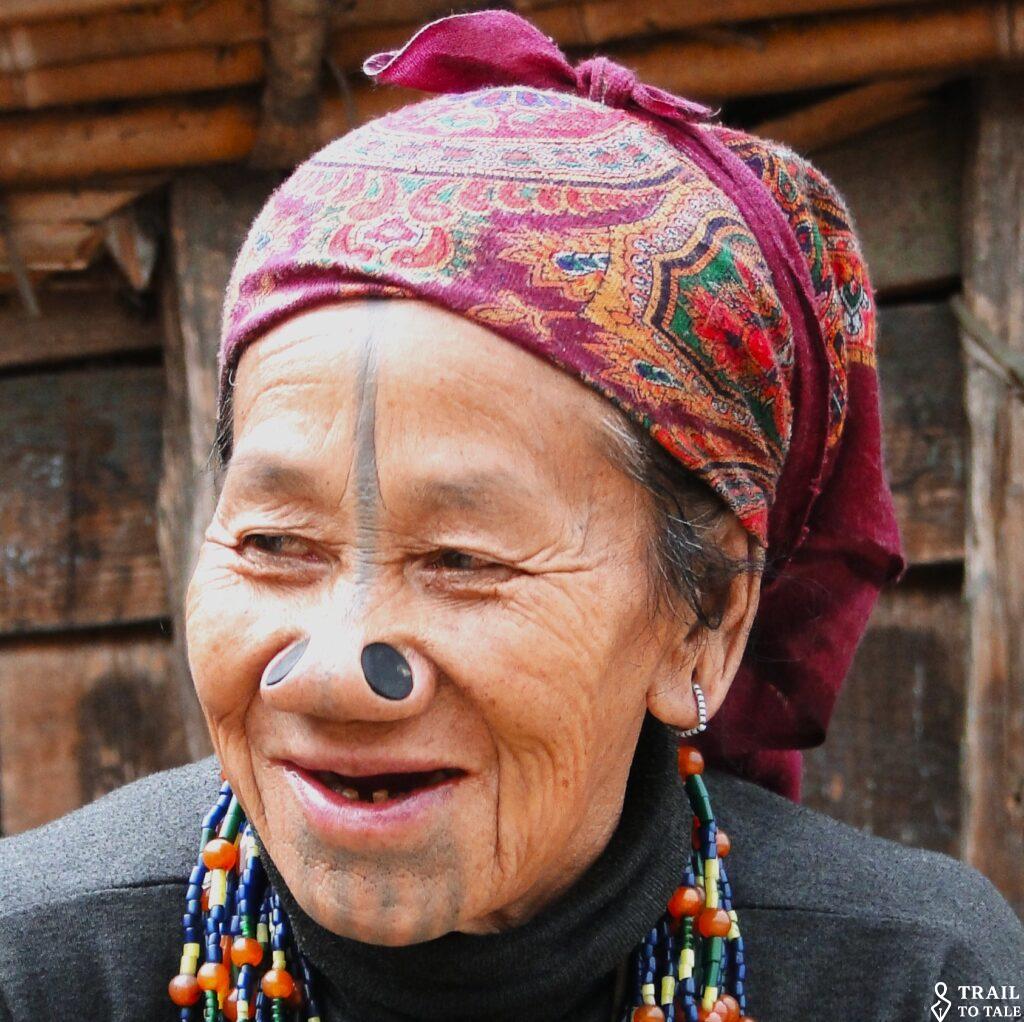
Known for their beauty, Apatani women were, in the past, often abducted by neighbouring tribes. To discourage this, their noses were turned into hippopotamus–snouts by means of large resin disks being thrust into the pierced nostrils, while facial tattoos were forced upon them to blemish their beauty – a tradition which only ended in 1969.

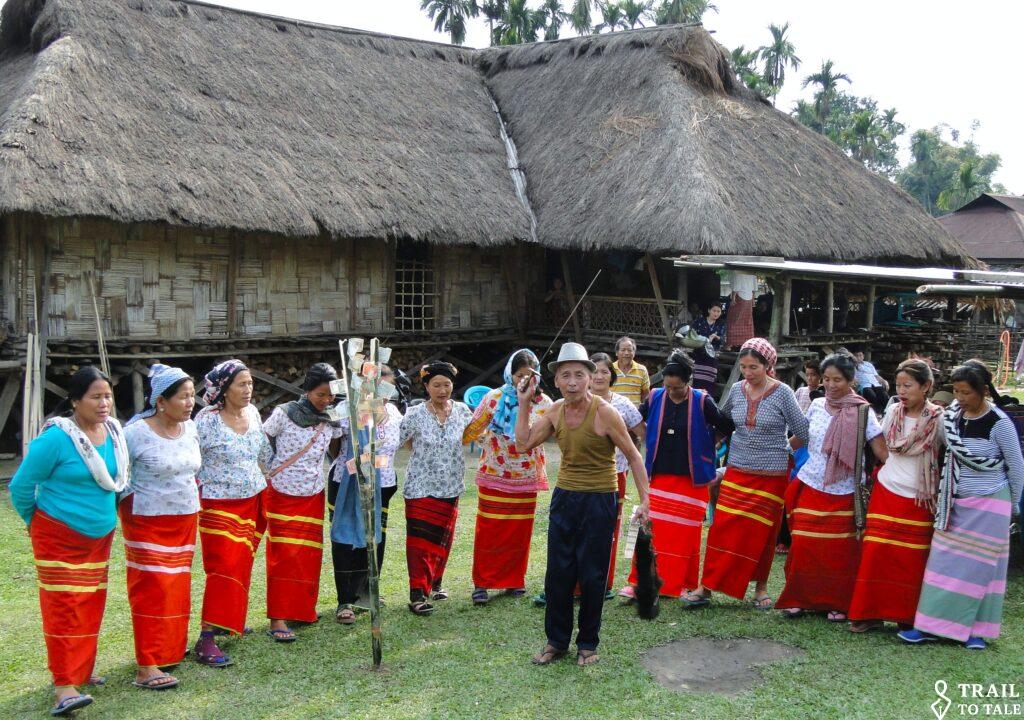
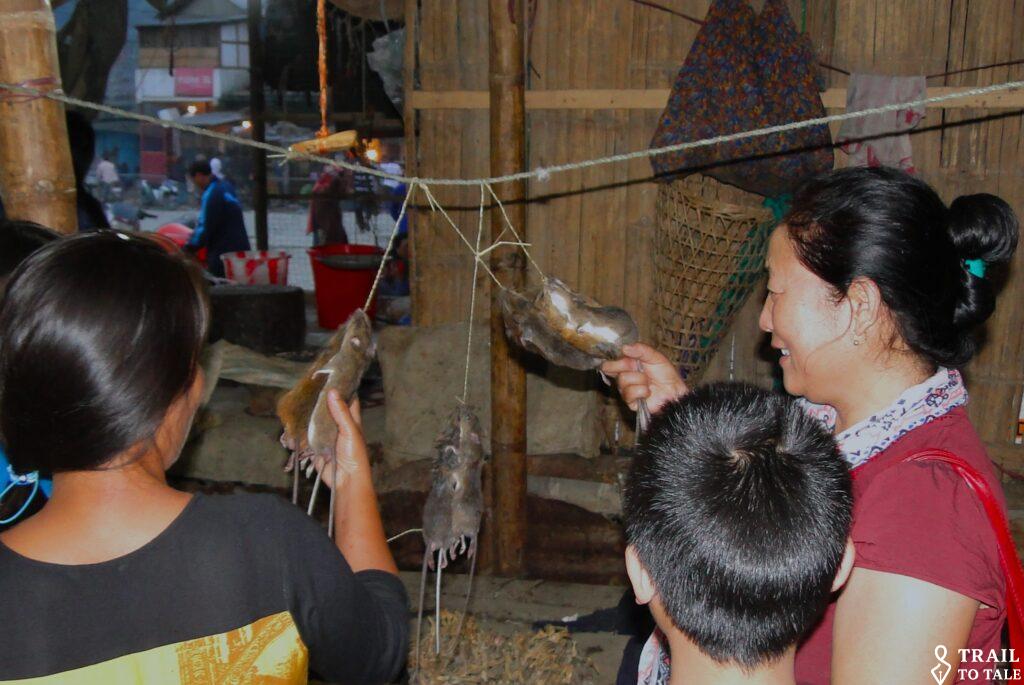
Dance forms a vital element in the lives of the tribal people. During a stroll through an Adi Padam tribal village in one of the lower valleys, a large group of people was seen gathering in front of a house. Advancing closer, and once the barking dogs had been calmed down, we were invited to join their annual family reunion, witness their traditional dances, and have a meal. After lunch (men first, followed by women), served on banana leaves and consisting of rice, vegetables, potato, cooked chicken, and roasted field rats, we were indulged with rice beer.
Modernity is approaching fast in Arunachal Pradesh. Traditional lifestyles and values based on living in harmony with nature are still extant there though and there is level of happiness clearly visible to the visitor. Life there provides a stark contrast to life governed by tight schedules in the hectic and polluted concrete jungle of Bangkok and leads the thoughtful visitor to ponder the really important things in life.

Leave a reply
You must be logged in to post a comment.