


A further highlight in this remote part of the world was a three-night stay with the family of a ‘Berkutchi’ (Kazakh for eagle hunter) Amid the harsh splendor of Mongolia’s arid plains; nomadic eagle hunters still follow a traditional way of life that has defied history, geography, and political change. This traditional of hunting with eagles goes back thousands of years in central Asia. It was a privilege to witness how these people, dressed in their traditional outfits, train their eagles for hunting wildlife and how proud and excited they feel for their Golden Eagle’s training. The Golden Eagle is a magnificent bird – a regal and powerful ruler of the skies.
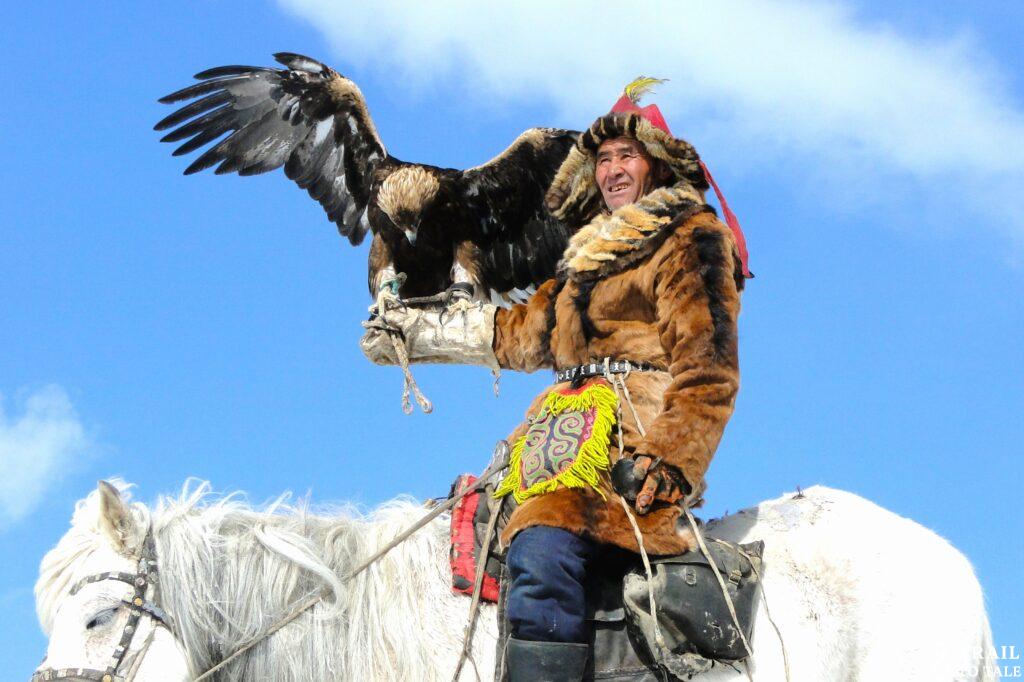
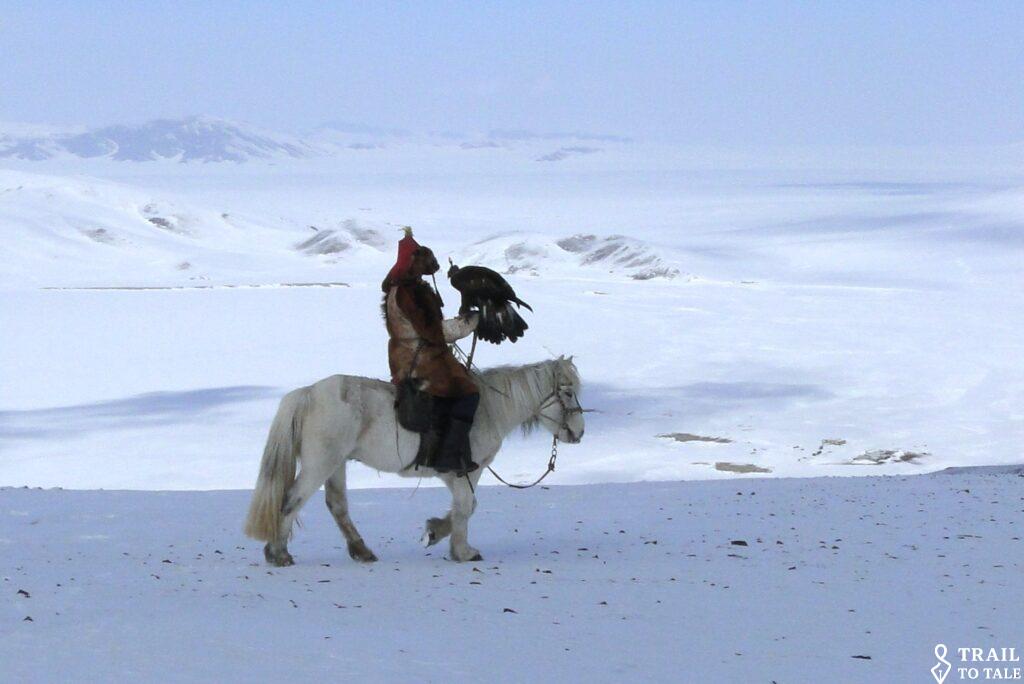
Through deep snow on horseback, I follow the hunter up the nearby 300m high mountain range. After an hour, we reach the top and enjoy this vast view over the neighboring valley and mountains. It is cold but dry and sunny.
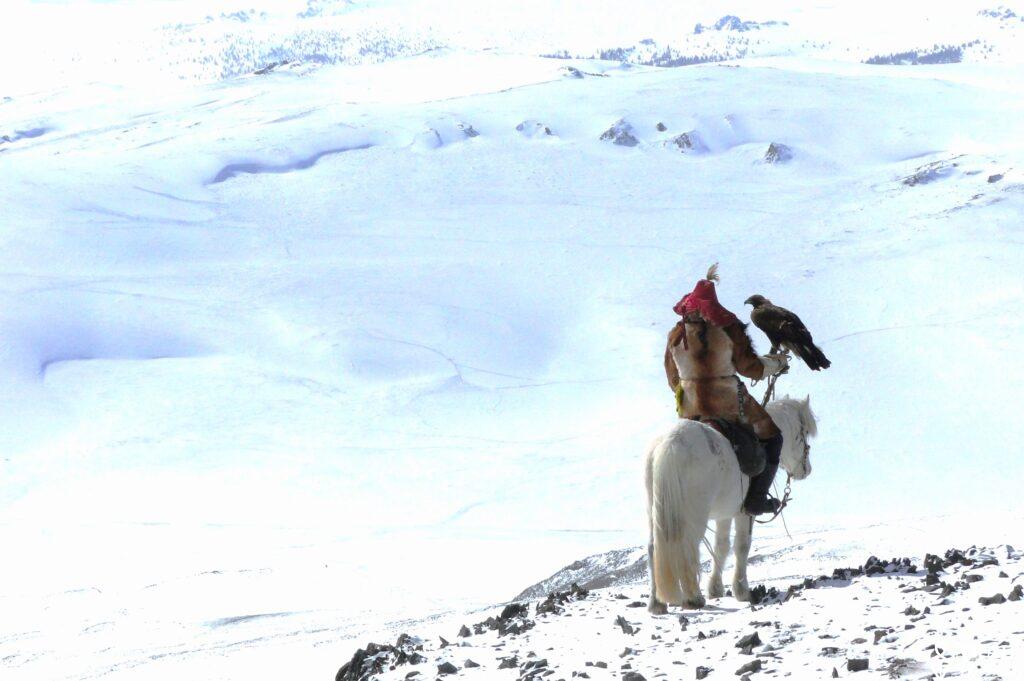
With a 360-degree view, the eagle sits on the hunter’s leather glove which rests on a special timber stand on the saddle. While the eagle’s big eyes monitor the open landscape a gentle movement of the hunter’s lower arm is the sign for the ruler of the sky to take off, quickly gaining height with a few strokes of her vast wings.
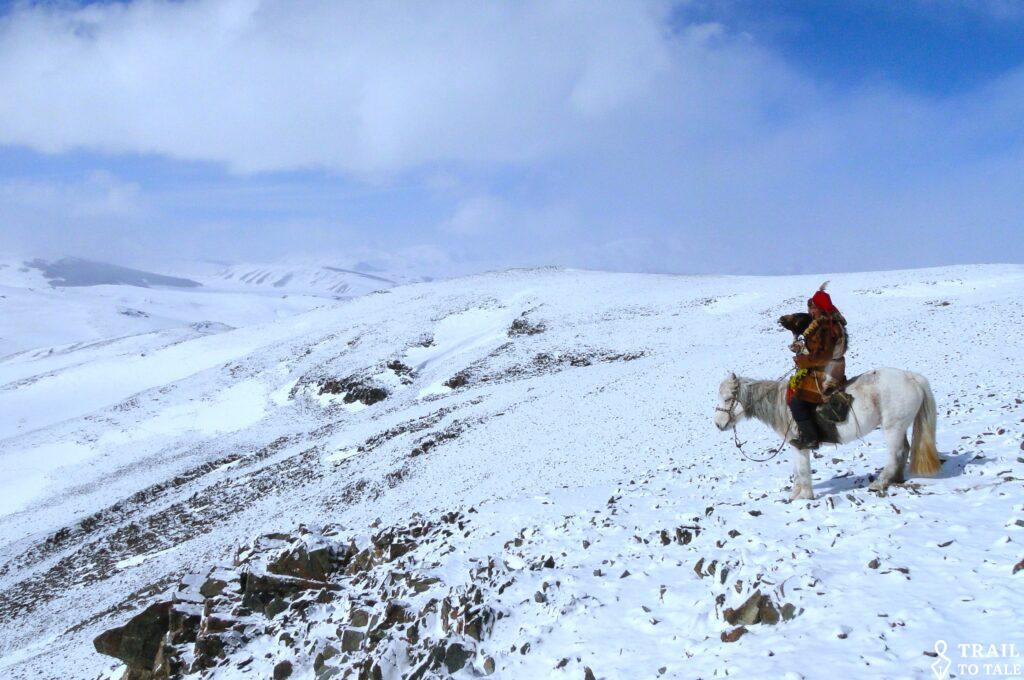
With the vision that is seven times more powerful than the human eye’s, the eagle quickly detects the prey and flies into the valley ready to make the catch.
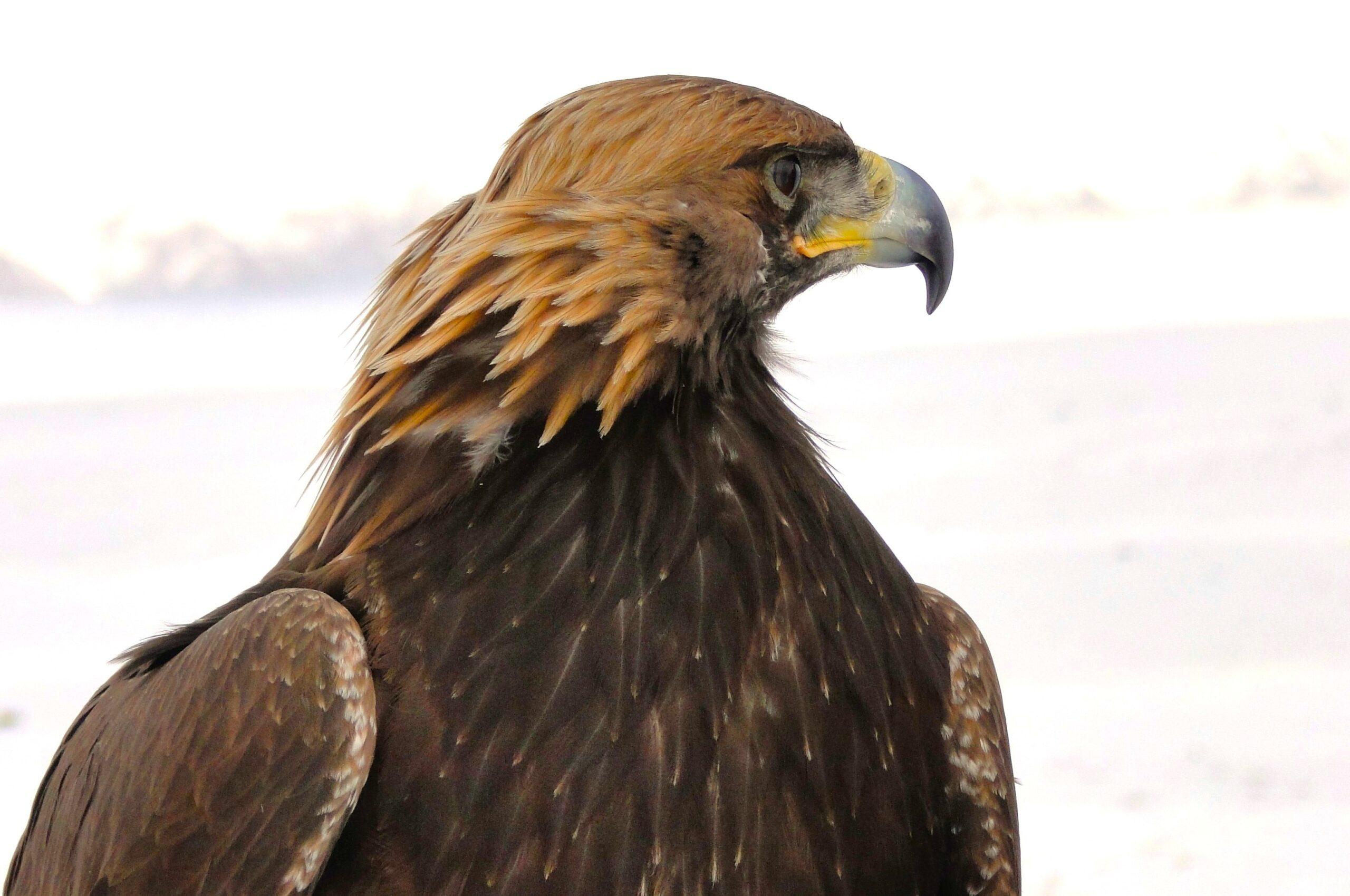
Screaming in like a racing yacht with a fierce wind behind it, slicking diagonally across the sky, then with a sudden, stunning turn of speed just a metre above the ground, she has the scruff of the fox’s fur in the talons, its feet leave the ground then crash back on it as all 7g of the eagle’s weight descends like doom upon its neck. Within minutes the fox is just another trophy. A juicy piece of raw meat rewards the successful hunt.
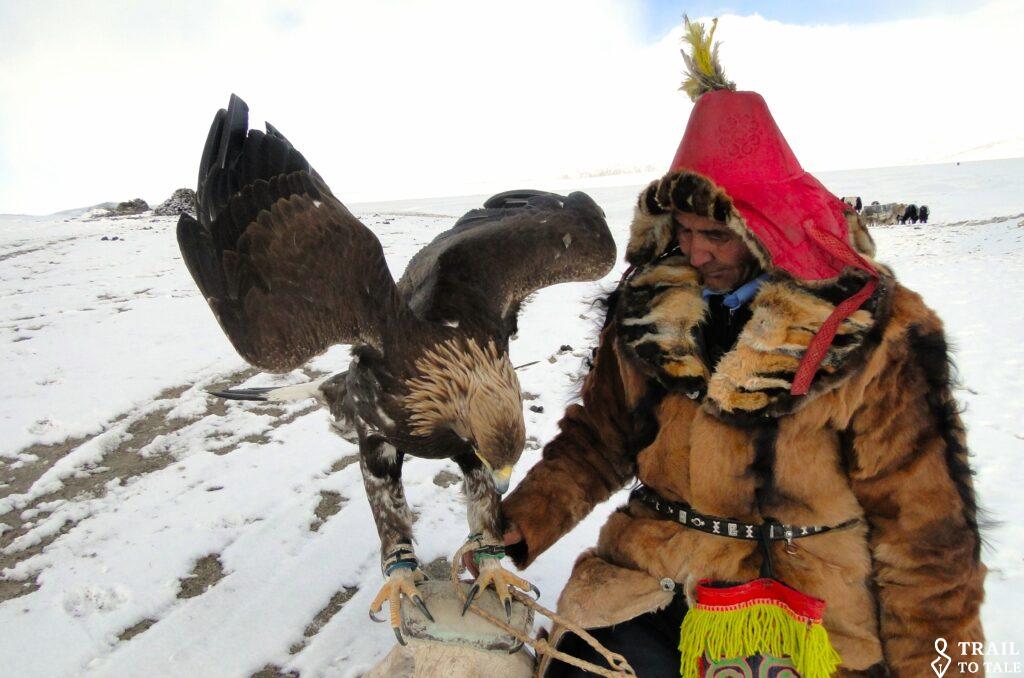
Hunters catch young birds, preferring the bigger, stronger females. The trained eagle then lives with the family and hunts with them for eight to nine years, after which it’s released back into the wild for the rest of its life (Golden Eagles live to around 25 years). It is hoped that once released, a trained eagle will go on to bred the next generation of eagle hunters.
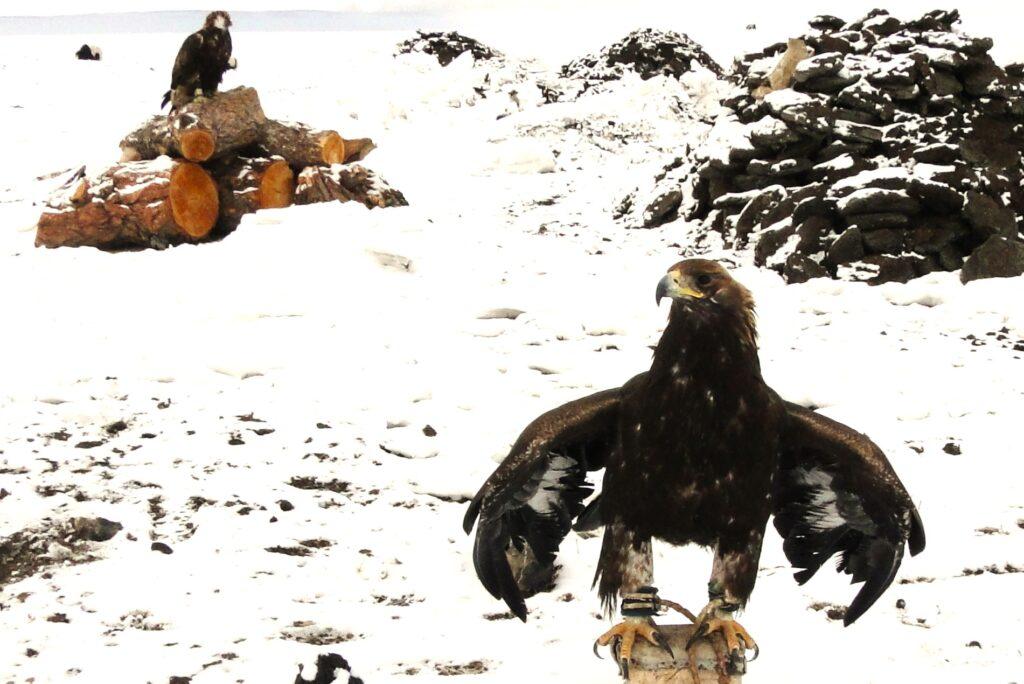
The Golden Eagle Festival is held every October in Bayan-Ölgii Province, deep in Mongolia’s wild west. It’s a living celebration of a tradition that still survives in the snow-covered ridges and wide-open steppe—Kazakh eagle hunting.
Organized by the Mongolian Eagle Hunters’ Association, the festival brings together eagle hunters who have trained their birds since they were chicks. The competitions are straightforward: best eagle in hunting, best response to the handler’s call, and best traditional dress. The stakes aren’t high in a material sense, but the pride on display is unmistakable. It’s not about showing off—it’s about showing up, bird on arm, eyes scanning the horizon.
Late March, in the town of Ölgii, a smaller but no less spirited version was experienced during the Nauritz Festival—a local spring celebration where eagle hunters ride in from their winter camps to mark the new year. Their eagles, balanced calmly on thick leather gloves, are just as much part of the ceremony as the singing, the fermented mare’s milk, and the occasional fistfight between rival herdsmen.
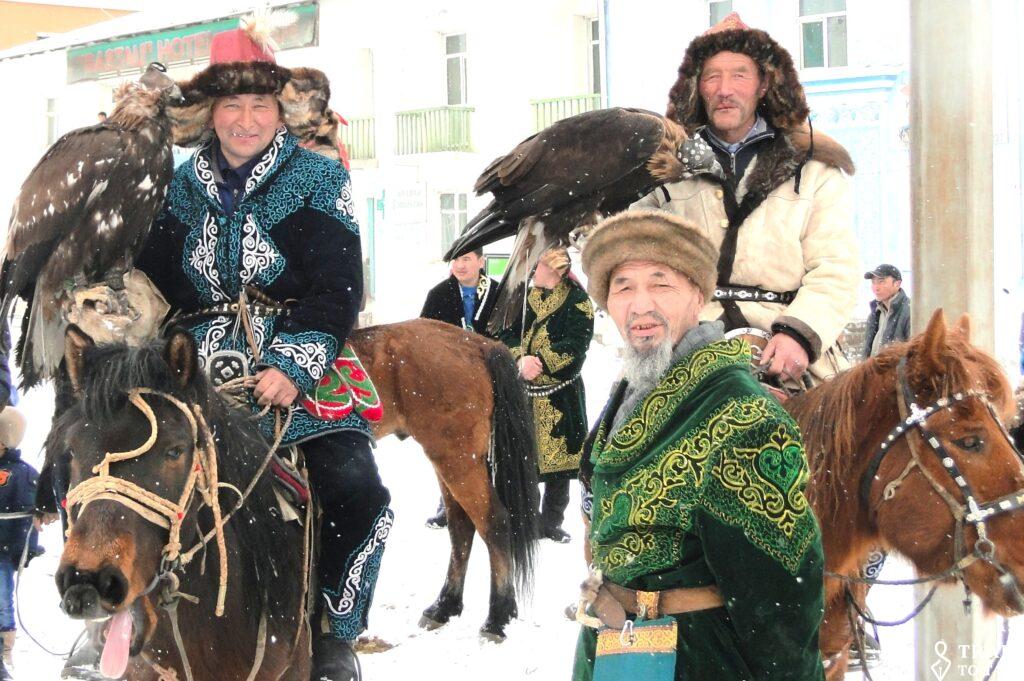
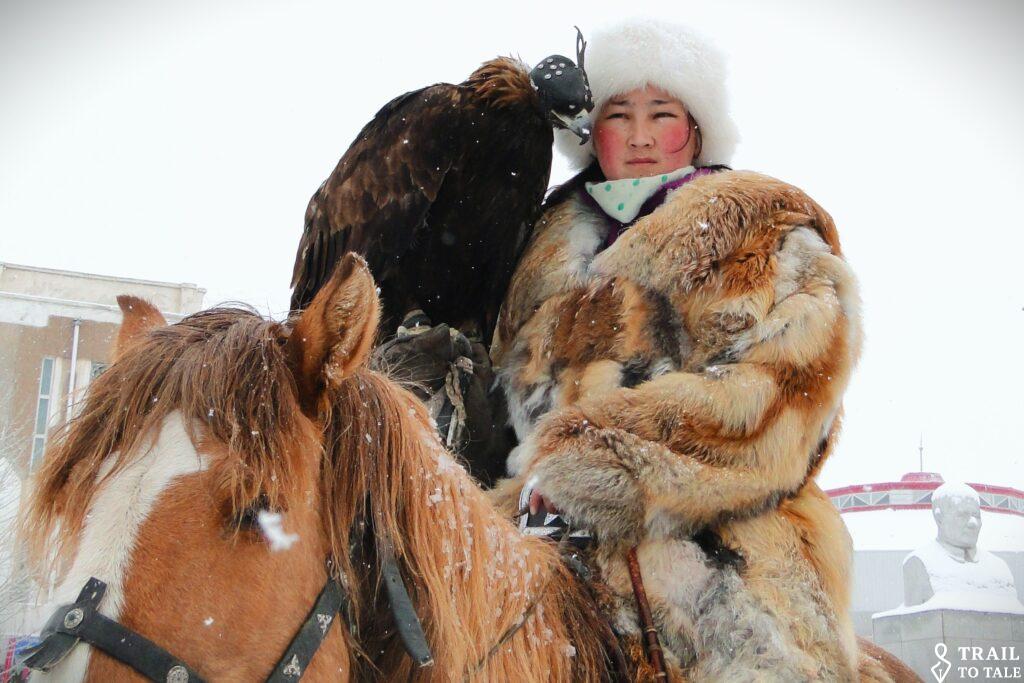
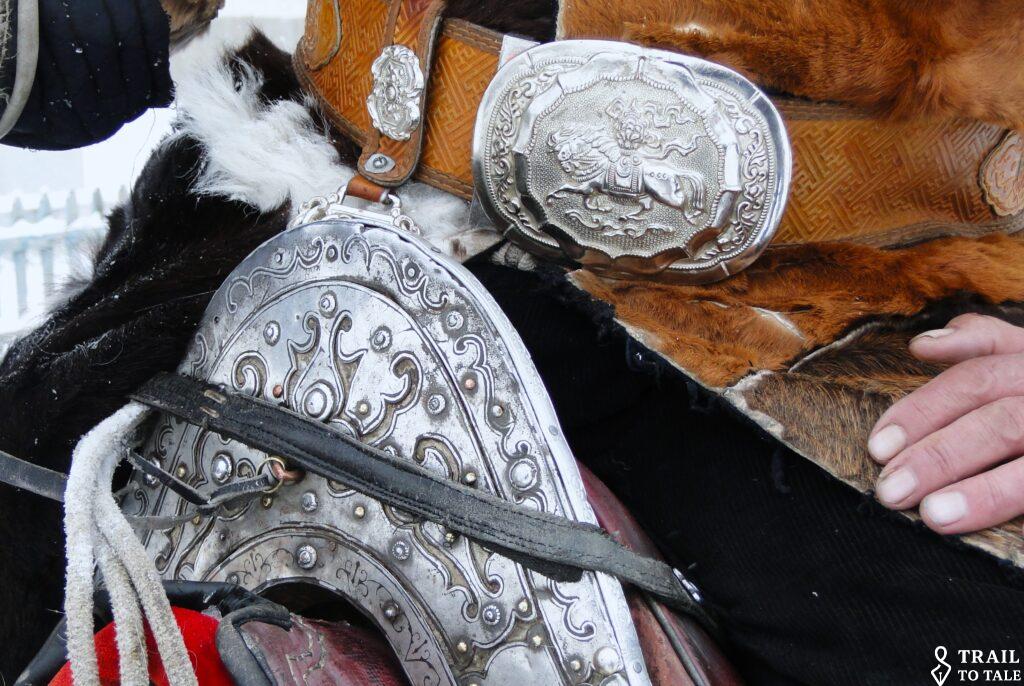
Out here, horsemanship isn’t a hobby—it’s a birthright. Most Kazakh children learn to ride before they learn to read. By the time they’re six, they’re already galloping without saddles guiding horses with their knees.
While eagle hunting may be the cultural symbol most people associate with Kazakhs, the real action is in the “three manly sports” of Mongolia: wrestling, archery, and horse racing. All three are regular fixtures at local festivals and family gatherings.
Another impressive feat is wrestling (or ‘tug of war’) on horseback. Two riders face off, grappling while riding at a canter or even gallop, trying to unseat each other with pure upper-body strength—all while controlling their horses with their legs alone.
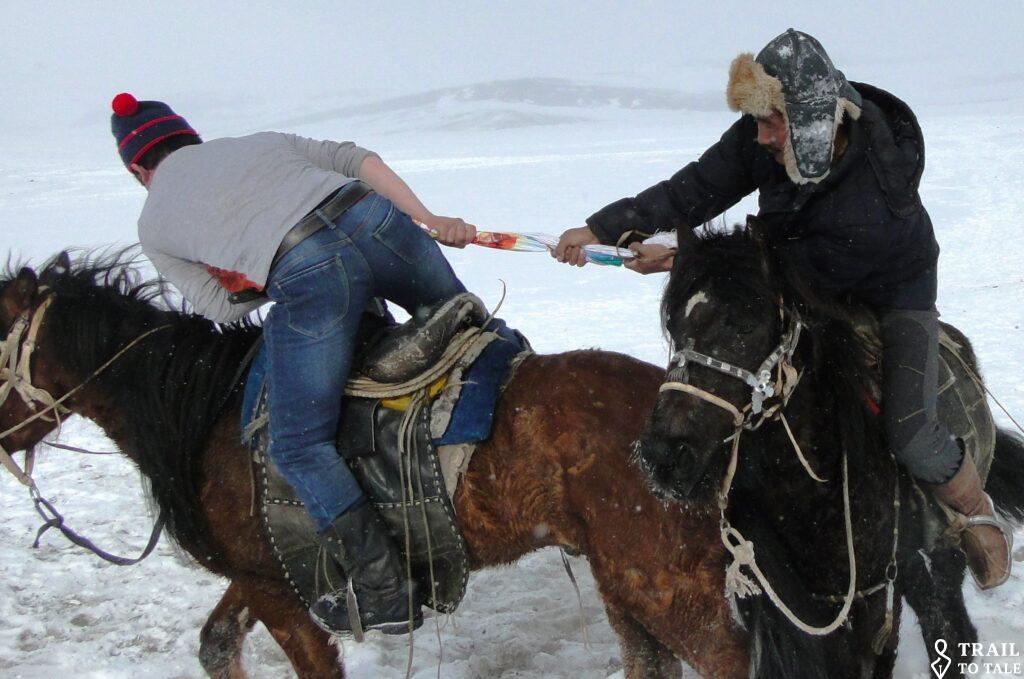
Even in less formal games, Kazakh riders demonstrate astonishing control: bending down from a fast-moving horse to scoop a scarf off the ground. They’re everyday proofs of a relationship between rider and horse that outsiders can admire, but never fully imitate.
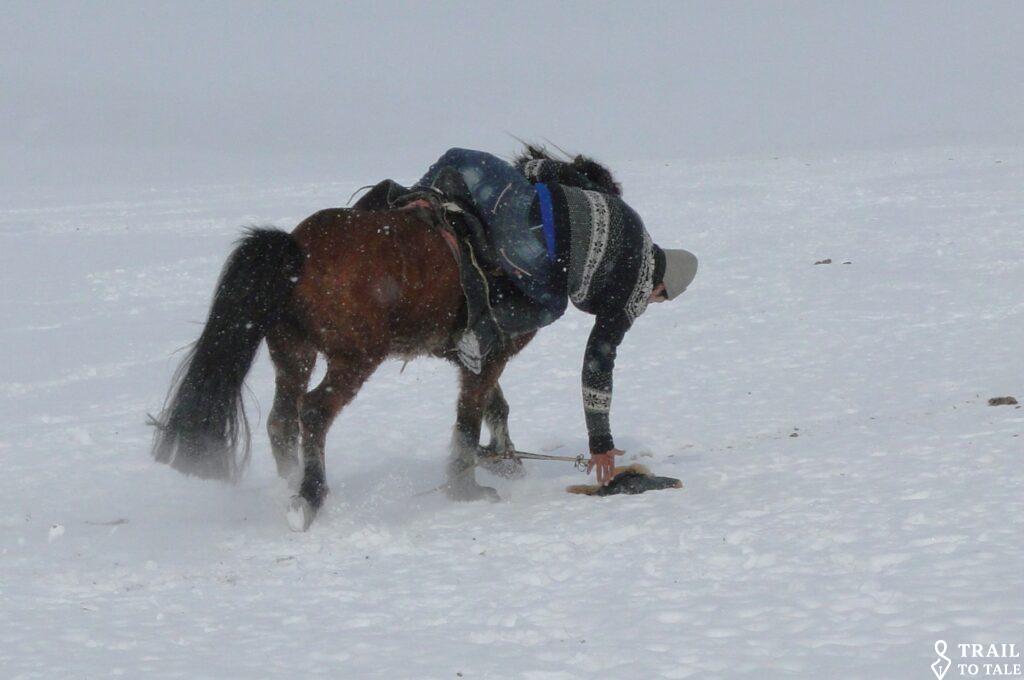
And then there is buzkashi—a raw, chaotic contest where riders gallop at full speed, each trying to drag a headless goatskin away from the others while staying mounted. There are no detailed rules—just one goal: don’t fall, don’t let go, and don’t be gentle. Helmets are optional, bruises are not. It’s chaotic. It’s beautiful. And it tells you everything you need to know about life out here.
Leave a reply
You must be logged in to post a comment.