


The Kyrgyz are of Mongolian, Turkish, and mixed Asian origin. Descendants of tribes that originated in Siberia and migrated to what is now Kyrgyzstan between the 10th and 15th centuries, they stayed close to their nomadic roots. Kazakhs and Kyrgyz are close relatives.
During the 1920s, Kyrgyzstan saw considerable cultural, educational, and social change. In 1926, it became the Kyrgyz Autonomous Soviet Socialist Republic and 10 years later the Kyrgyz Soviet Socialist Republic (SSR) was established as a full Union Republic of the USSR.
At the end of the twentieth Century, the USSR faced a comprehensive system crisis. The policy of ‘perestroika’ and ‘democratization of the society’ led to the collapse of the USSR. On December 15, 1990, the Supreme Soviet of the Kyrgyz SSR adopted the ‘Declaration on the State Sovereignty of the Kyrgyz Republic’.
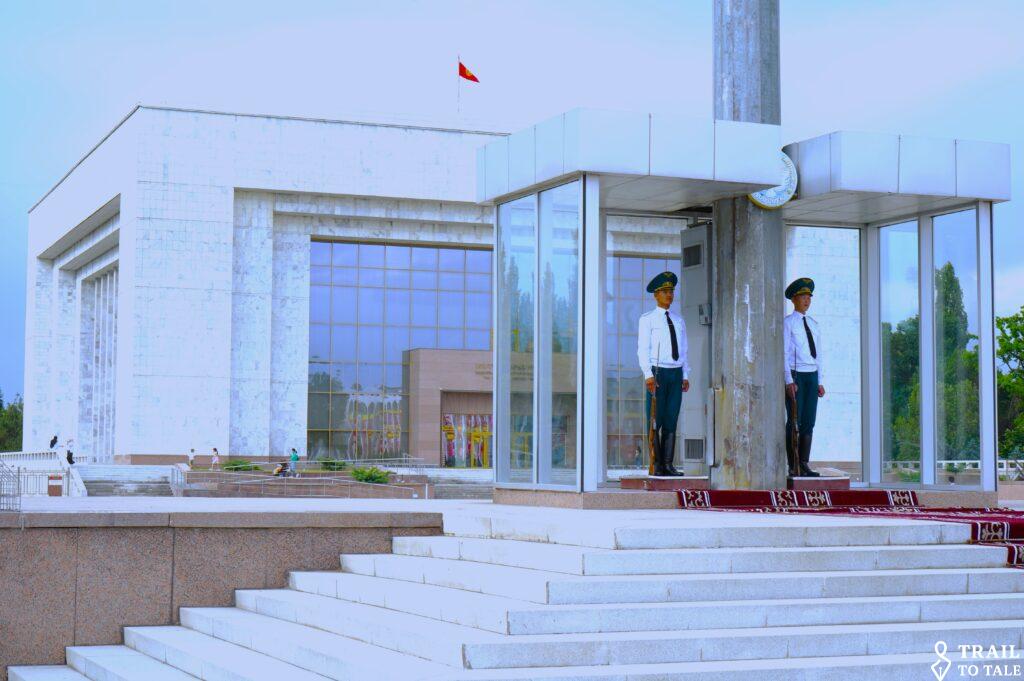
On August 31, 1991, at a meeting of the Supreme Soviet of the Kyrgyz SSR, the ‘Declaration of the State Independence of the Kyrgyz Republic’, was solemnly proclaimed, thanks to which a new historic page in the independent development of the free Kyrgyz state was turned. The new constitution was adopted May 5, 1993 according to which the country was renamed Kyrgyz Republic.
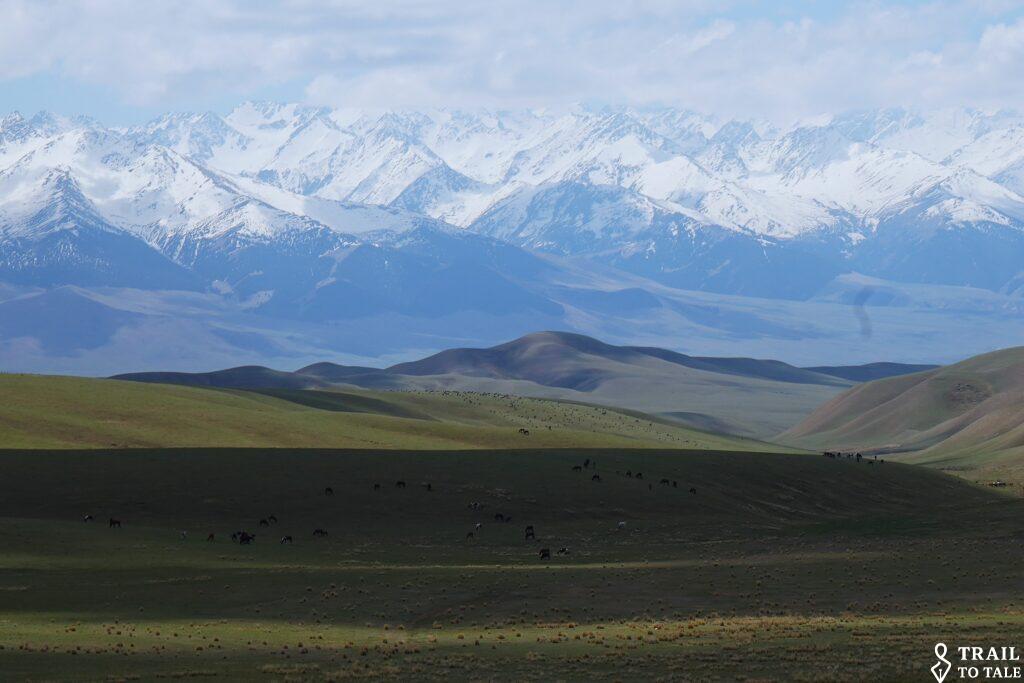
Kyrgyzstan is a landlocked, lower-middle-income country in Central Asia, seemingly often overshadowed by its big neighbor Kazakhstan which is located on vast resources of fossil fuels. However, during the three intensive visits the author made over nine months, the natural beauty, like the majestic mountain ranges with snowcapped peaks (the highest being ‘Jengish Chokusu’ at 7439m; based on its high ranking of challenges, ’Lenin Peak’, the No. 2 at 7134m, does attract skilled mountaineers from all around the world) and the many scenic lakes left an unforgettable impression.
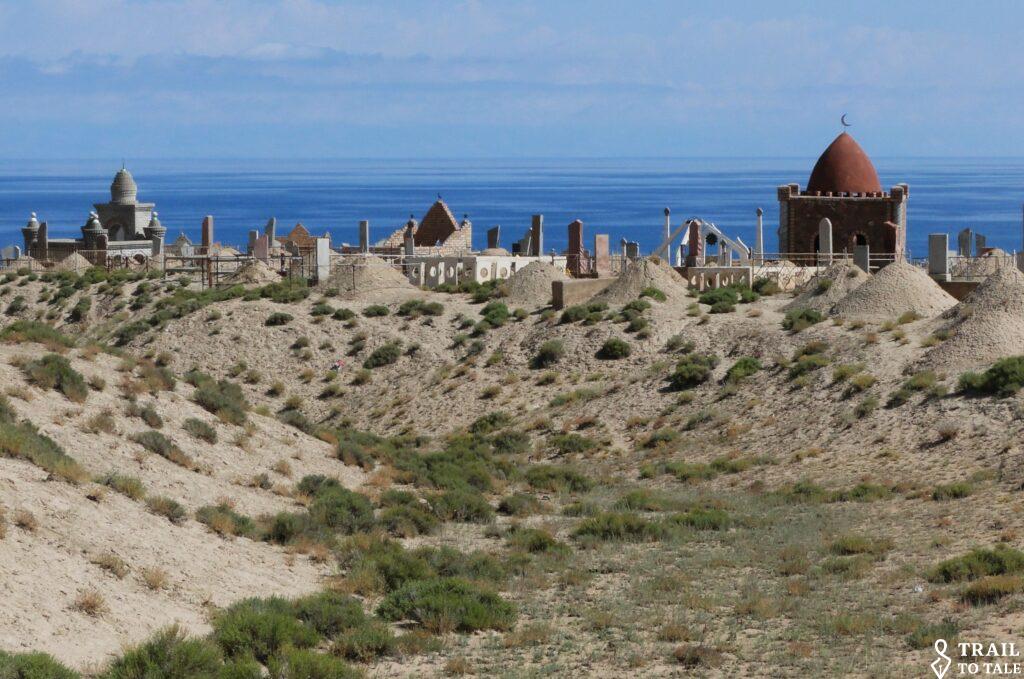
In the northeast of the country, at an elevation of 1600m, Issyk-Kul, with a length of 187km and a width of 60km is the world’s 10th largest lake, the seventh deepest and the second largest mountain lake in the world (after Titicaca). Formerly, Issyk-Kul represented, a halt for travellers moving towards the West on the Silk Road.
On the lake’s south side, the red sandstone formations of the Jeti-Oguz Canyon (‘Seven Bulls Rocks’) stand in contrast to the beautiful background of towering white summits. This is even more evident in the picturesque surroundings of the nearby Chon-Kemin valley which, based on its Alpine similarity, is called the ‘Switzerland of Asia’. The lush natural area is brimming with diverse flora and fauna. The conifer forests are home to many varieties of herbs, berries, and mushrooms.
Outside the capital Bishkek, on the wide neighboring plains and in the villages like those in the Kongur Olung Valley, life is focused on agriculture.
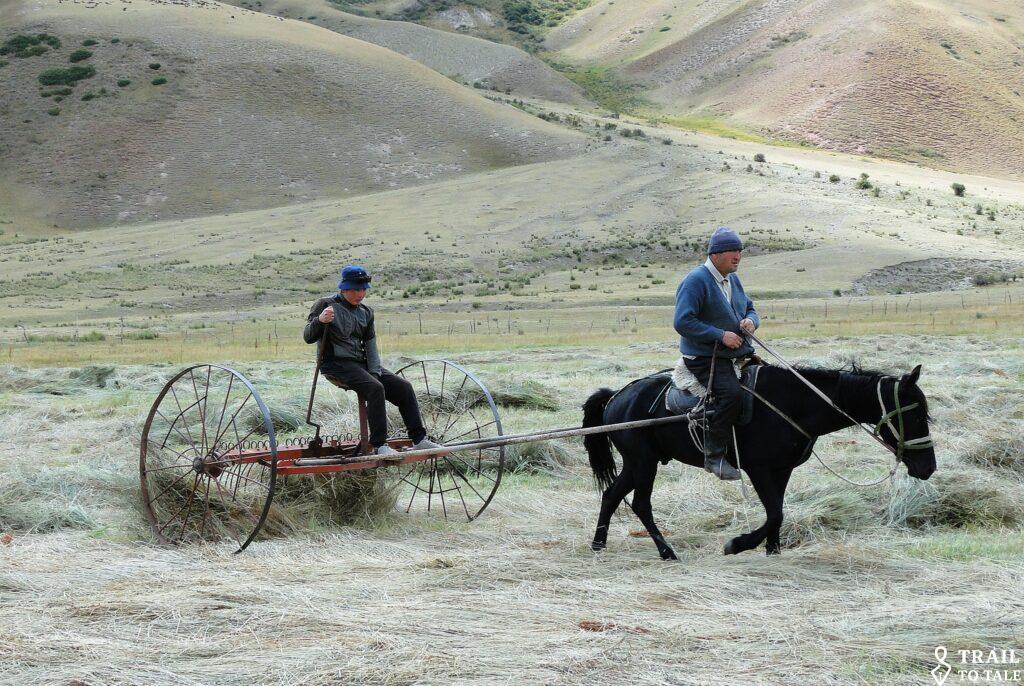
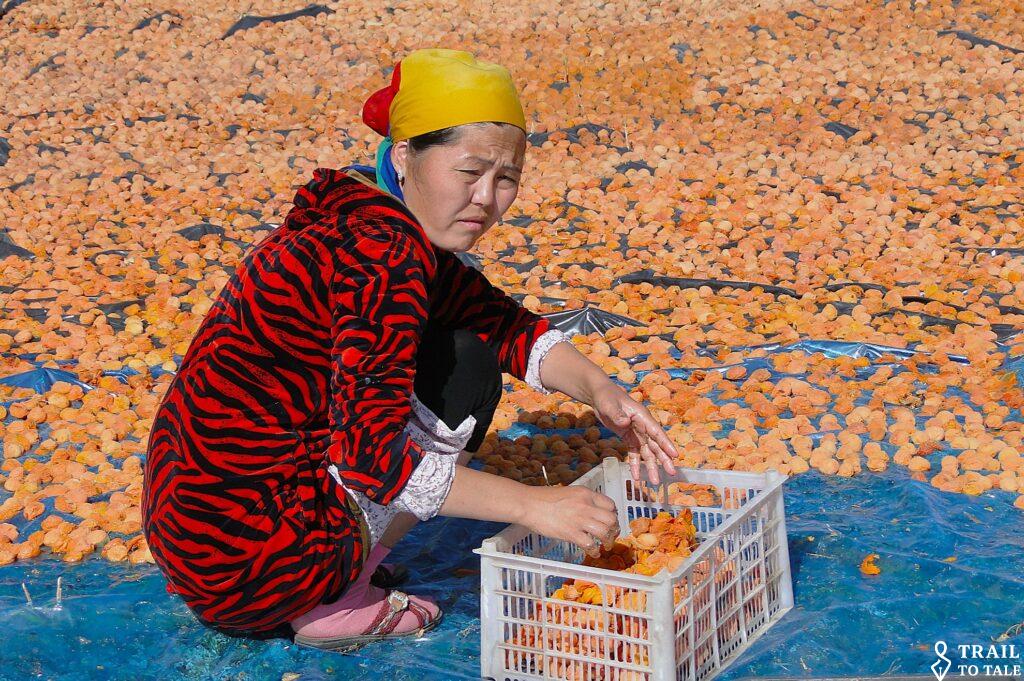
Livestock raising, the cultivation of fruit, vegetables, cereal grains and wool production are the leading activities. While aged tractors plough the fields, potatoes and the fruits are harvested manually and peaches are dried in the sun before they are sold at the bazaars.
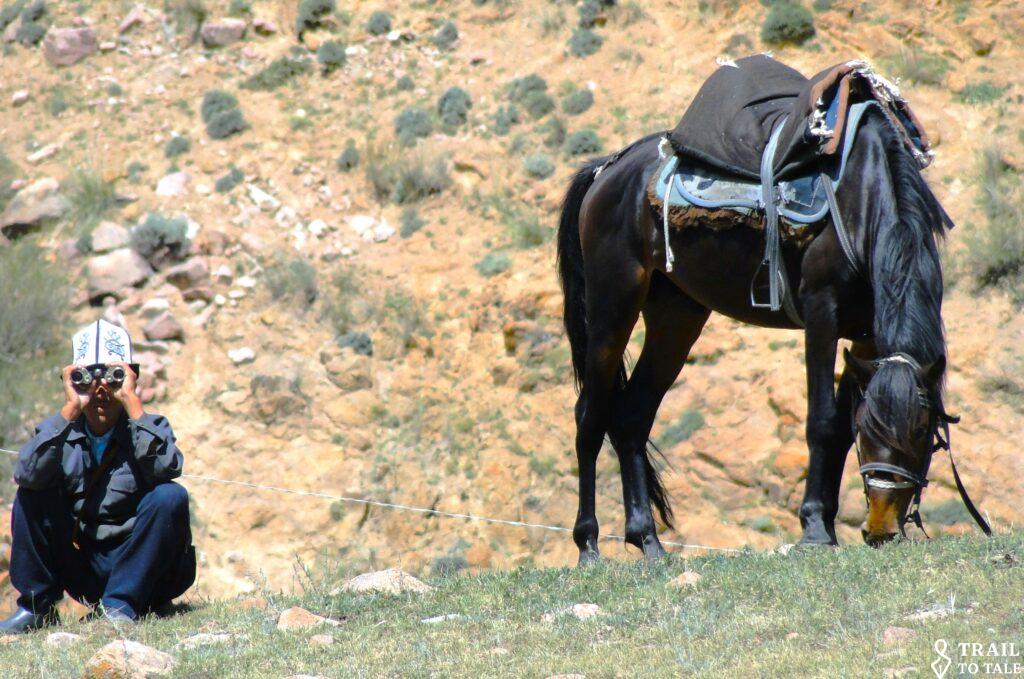
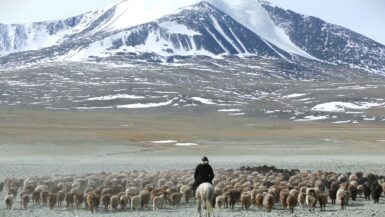
During the rather short summer months (the high plateau around lake Son-Kol at 3000m elevation was still not accessible last early May) sheep, goats, cattle and horses, directed by skillful horsemen, migrate to the more fertile grasslands in the mountains.
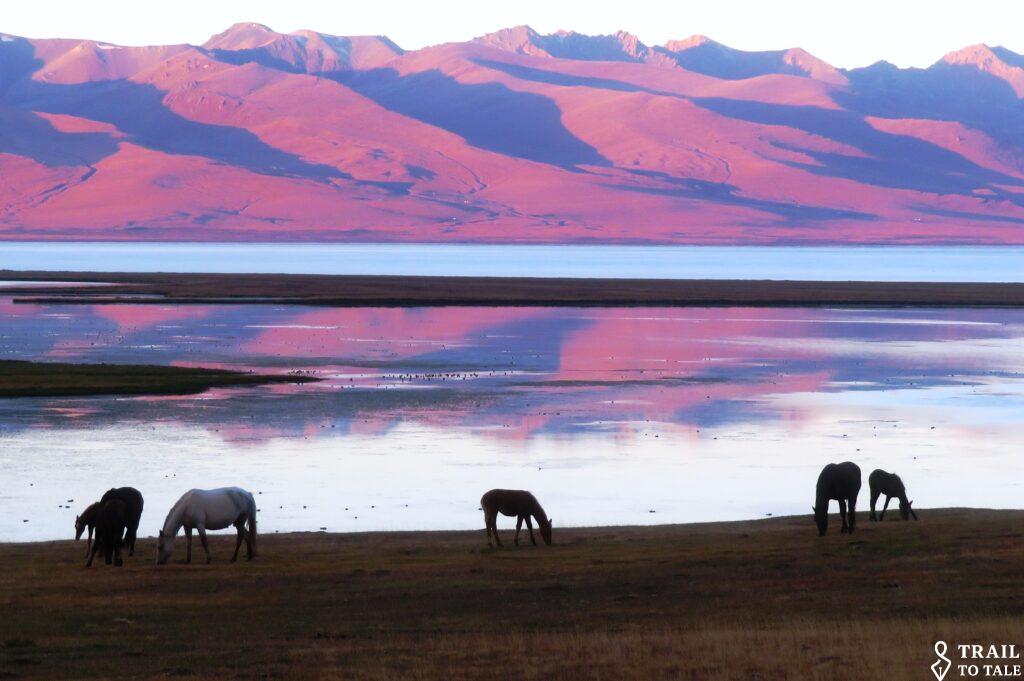
By the end of September, most herders start demolishing their mobile yurts again and return with their animals to the lower valleys where shelter against the snow and the cold winter storms can be found. Dry dung, is for most, the only source for heating and cooking.
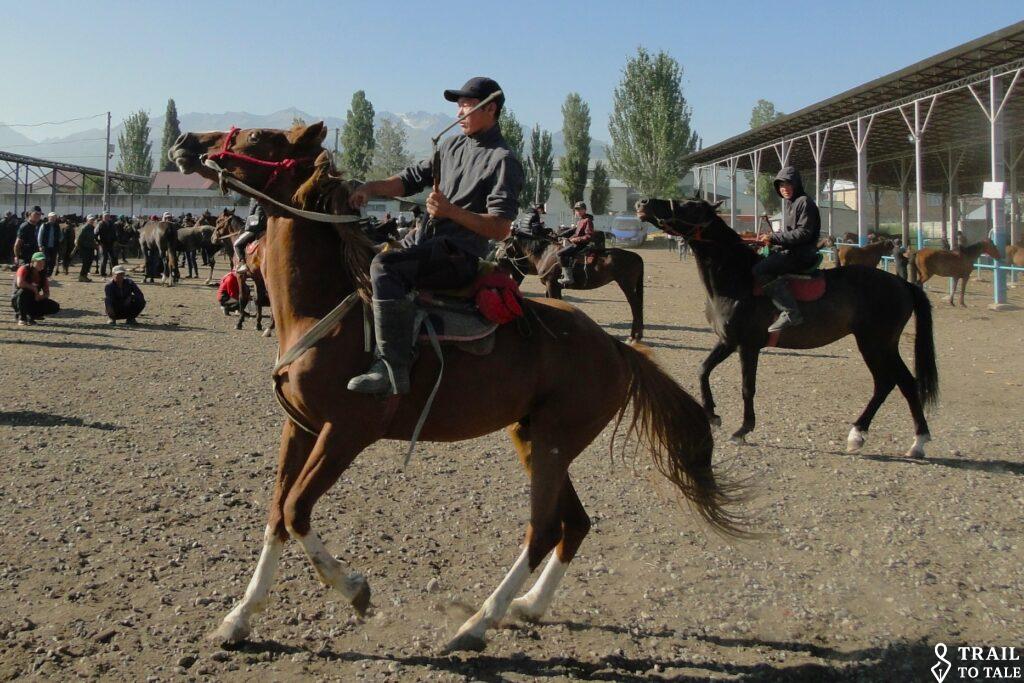
The importance of horses in the Kyrgyz people’s lives is even more evident in the rural parts of the Republic. Horses are bred for meat and for export to neighboring countries. At the weekly animal markets like the one on Sundays at Karasol, hundreds of people together with thousands of cattle, sheep, and goats are presented. The livestock is carefully evaluated, prices fixed by handshake and cash paid on the spot.


Traditional Kyrgyz food revolves around mutton, beef and horse meat, as well as various dairy products. The preparation techniques and major ingredients have been strongly influenced by the nation’s historically nomadic way of life. Thus, many cooking techniques are conducive to the long-term preservation of food. Mutton and beef are the favorite meats. Beshbarmak is the Kyrgyz national dish consists of meat boiled in its own broth for several hours and served over homemade noodles sprinkled with parsley. Beshbarmak means ‘five fingers’ in the Kyrgyz language, and is so called probably because the dish is typically eaten with the hands. While the dominant religion is Muslim alcohol is widely available in the county.
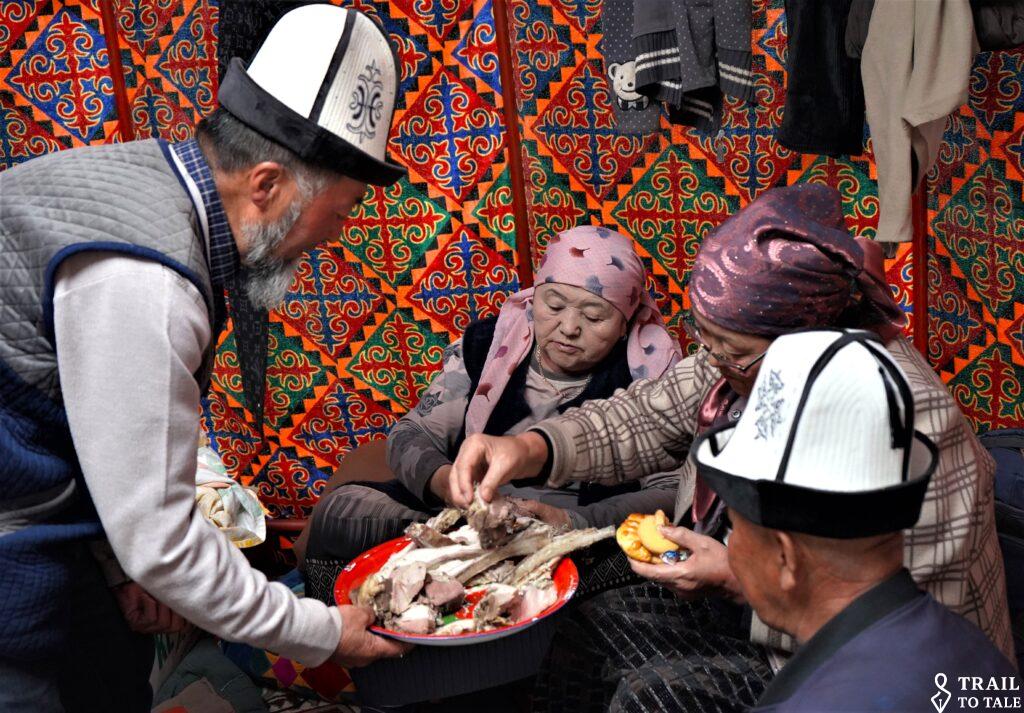
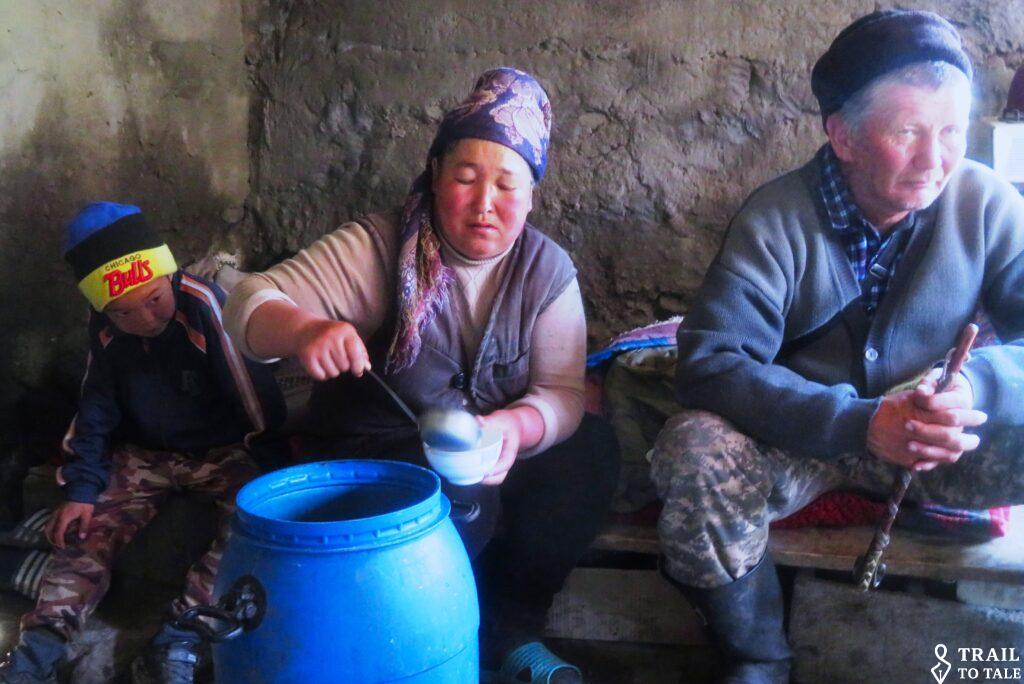
It is quite common that a horse is slaughtered at weddings and even at funerals. While tea is the daily drink, Kymyz, fermented horse milk, is widely regarded as a specialty. The milk, fresh from the mare’s udder is warm and tastes slightly sweet. However, the more refreshing fermented version, containing up to 3% alcohol once ready to be served, is advised to be consumed in small quantities by those not familiar with it.
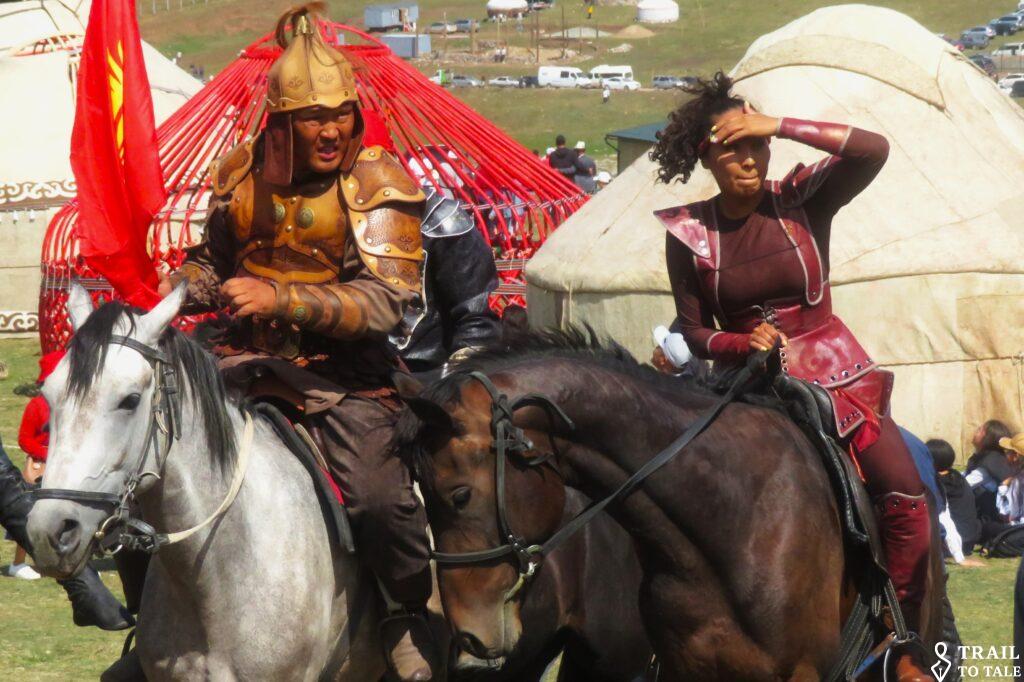
One of the most popular and well-known national horse game is Kok-Boru (’Goat Grabbing’, also referred to as ‘Kyrgyz Basketball’), a traditional game that has been played by the locals for centuries and is considered an important part of their cultural heritage. It requires great riding skills. It is played by two teams on horseback and players try to pick up (usually at full gallop) a goat carcass from the ground, race and maneuver it across the field and toss it into the center of the kazan, a ring of tires functioning as a goal. Each team has their own kazan, one at either end of the 400m-long field.
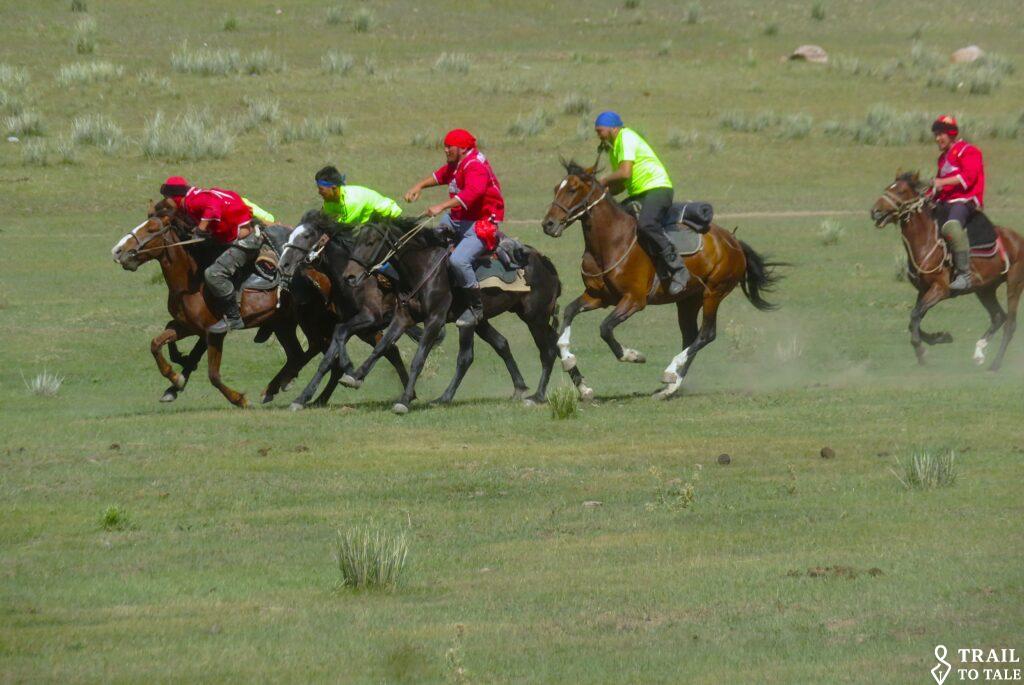
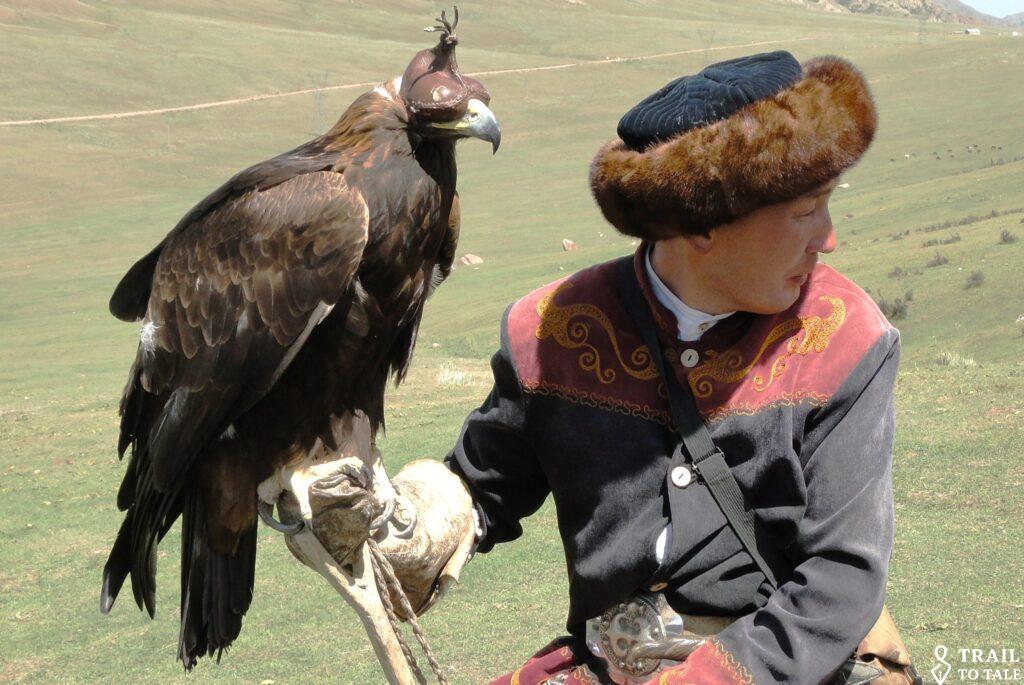
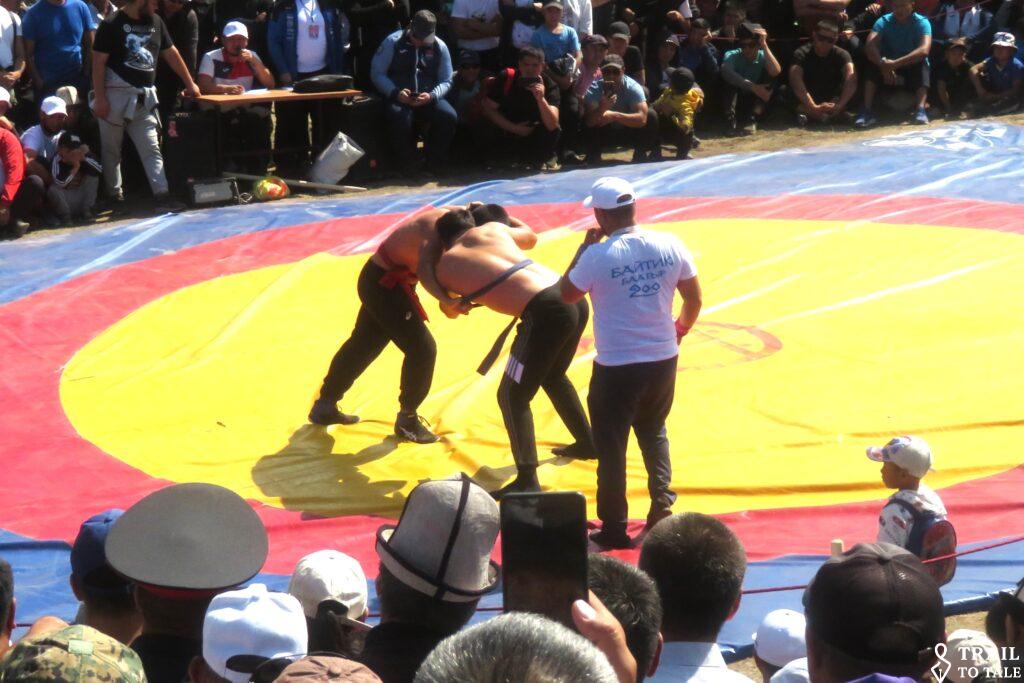
The World Nomad Games are an international sporting competition dedicated to ethnic sports practiced in Central Asia. The first three World Nomad Games were held in Cholpon-Ata, Kyrgyzstan, where more than 3000 athletes from 102 countries participated in the events. Kyrgyzstan had been on the top of the medal tables in 2014-2018. In addition to all sorts of competition related to horse riding (including a marathon), wrestling, archery and eagle hunting are typical disciplines. Some of these very skillful athletes on horseback receive contracts to perform stunts in the movie industry or at an international circus.
Hospitality is high on the Kyrgyz agenda. You are always welcomed by a joyful smile when approaching a local home. To be invited for a piece of bread and a warm cup of tea is a typical welcome gesture. Homemade jams made from the likes of cherries, raspberry, strawberries, peaches as well as organic honey gathered from the colorful flowers and fruit trees are a common sight in a normal household.
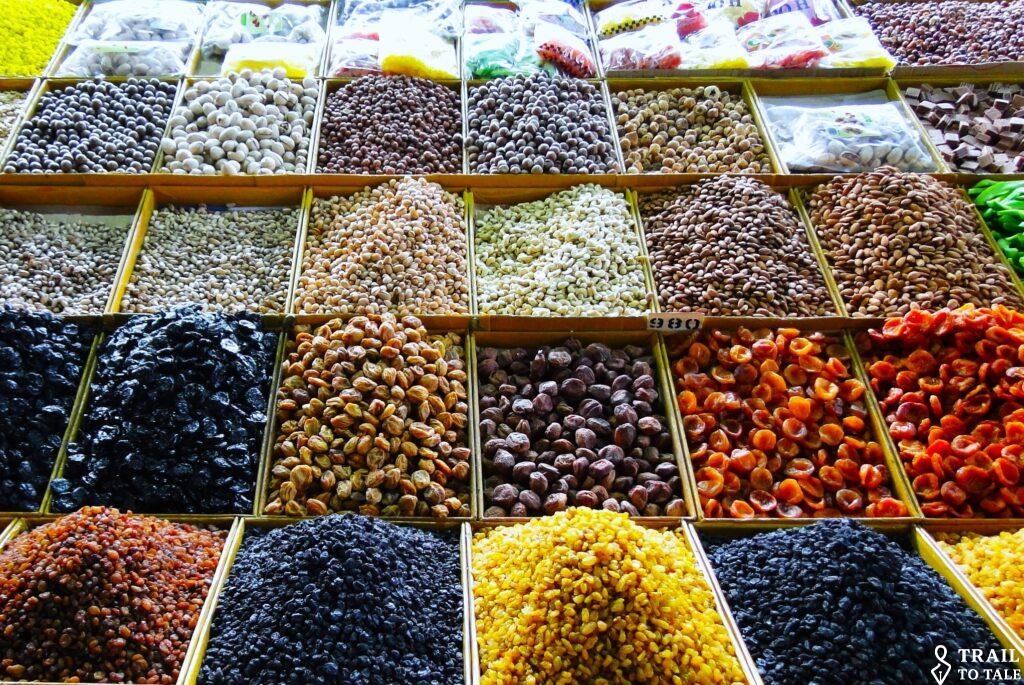
Kyrgyz culture features influence from Russia, Persia, and Turkey yet remains something unique. Natural influences are prominent, from the designs to the music, and many traditions reflect the fact that nomads lived closely with nature. At the numerous festivals, the different communities wear their traditional dress.
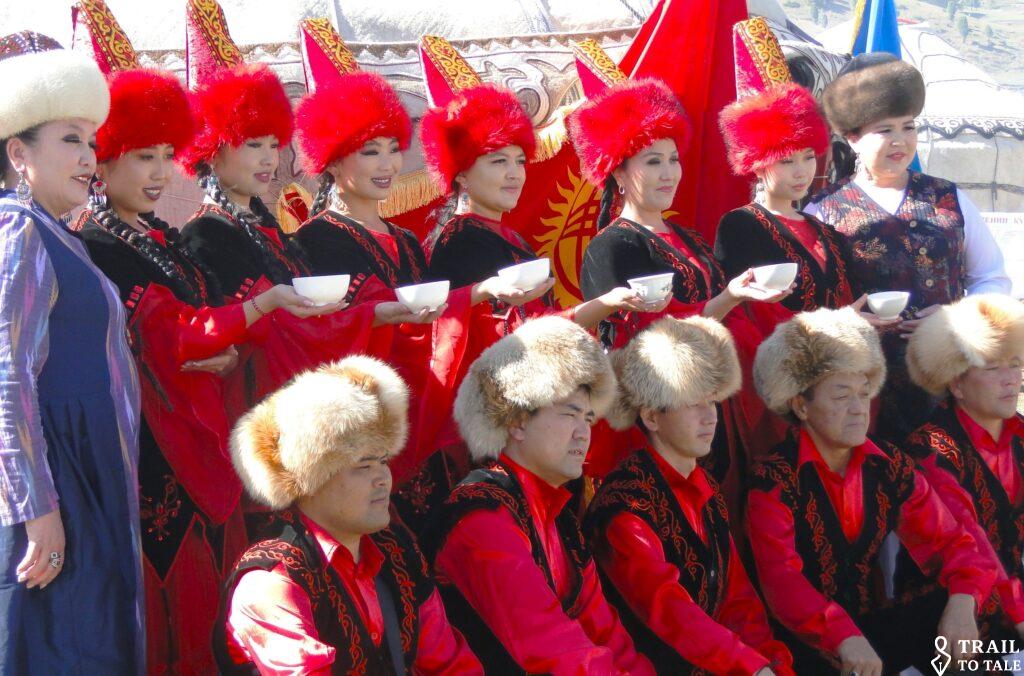
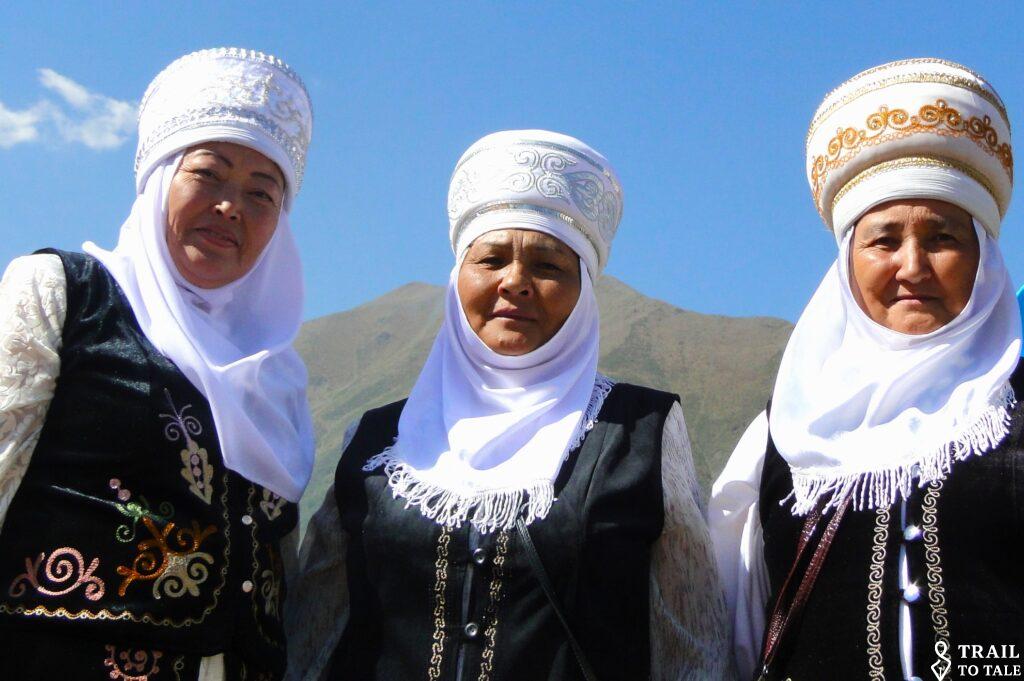
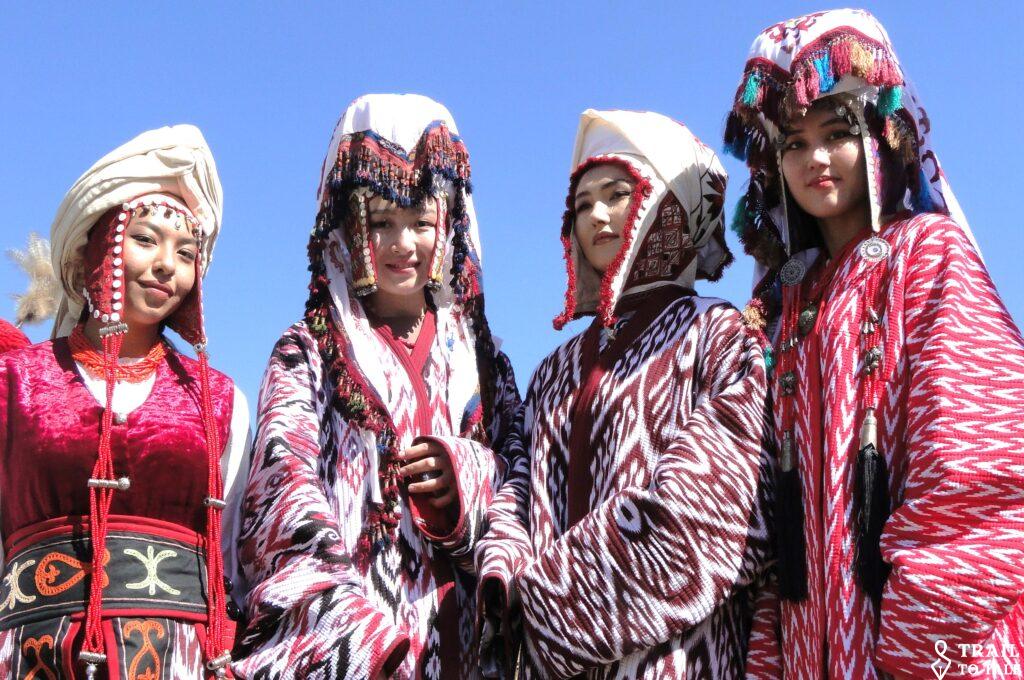
The author only hopes that the growing tourism does not impact the beauty and traditional values of the Kyrgyz people.
‘The Big Chilli‘ Magazine, Edition November 2023 – now enhanced with some additional Photos.
Leave a reply
You must be logged in to post a comment.