


Bangkok-based Christian Schulz unveils the myriad attractions of his childhood home
Locked between the ocean and the world’s oldest desert, and buffeted by ever-moving sand dunes, Swakopmund is Namibia’s premier holiday resort, a place rich in reminders of its past and ample reasons to warrant a visit today.
To get to Swakopmund as an overseas visitor, you first have to fly into the country’s capital Windhoek, located at an elevation of 1800m on the southwest corner of the African continent in one of the most isolated and little-known parts of the world, and then travel by road some 380km, including a 150km desert crossing.
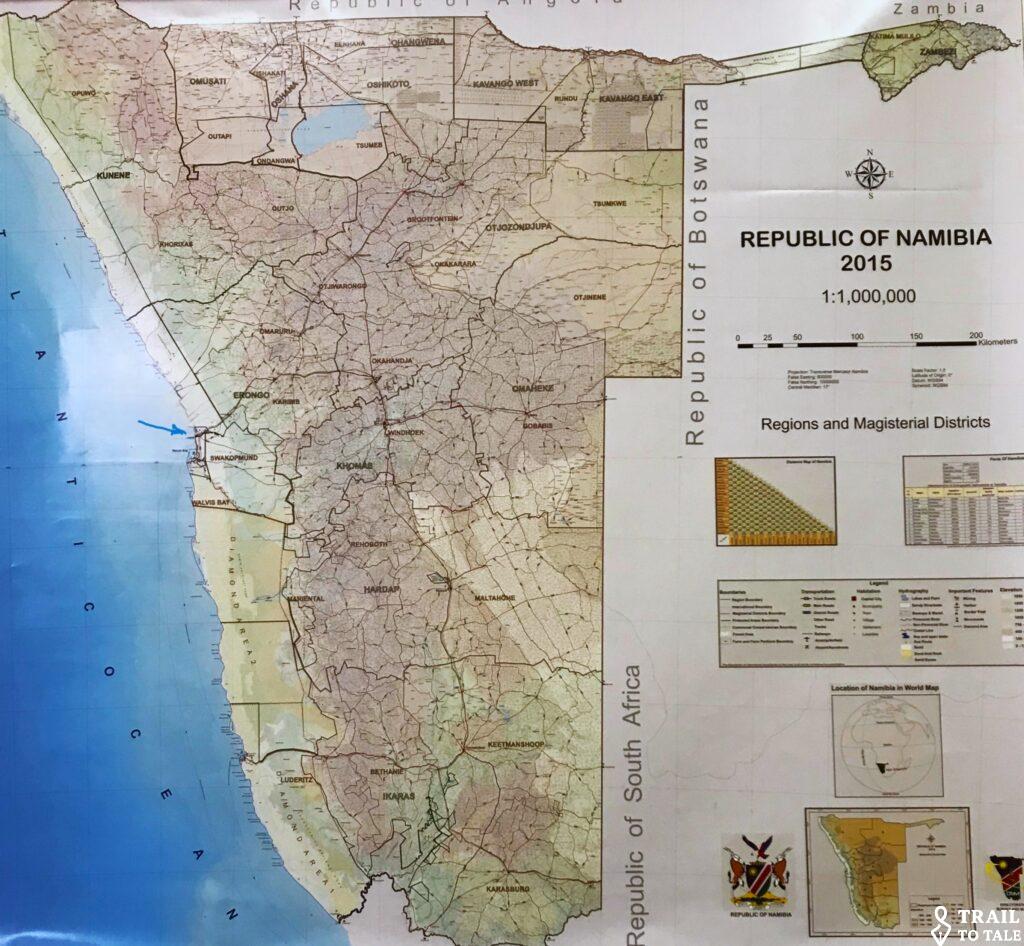
This beautiful seaside town was founded in August 1892, two years later than Windhoek, by Captain Curt von Francois, as the main harbour of German South West Africa, a former colony ruled by Germany. (This ended during the First World War with a 1915 defeat by South African forces. In 1920, after the end of the war, the League of Nations mandated administration of the colony to South Africa. Namibia gained independence from South Africa on 21 March 1990).
Increased traffic between Germany and its colonial outpost necessitated establishing a port since Walvis Bay, located 33km south, was a British possession. The choice fell on Swakopmund, where water could be found and because other sites checked were unsuitable. Records show that in 1894 there were only 19 inhabitants.
The name in essence means “the mouth of the Swakop River” and is believed to originate from the Nama word ‘Tsoakhaub,’ which can be translated as ”excrement opening” an accurate description of the waters of the Swakop River in times of flood when it carries tonnes of clay and sand, along with piles of vegetation and the odd animal corpse. Fortunately, this happens less frequently nowadays as dams upstream store water to supply the capital and other towns.
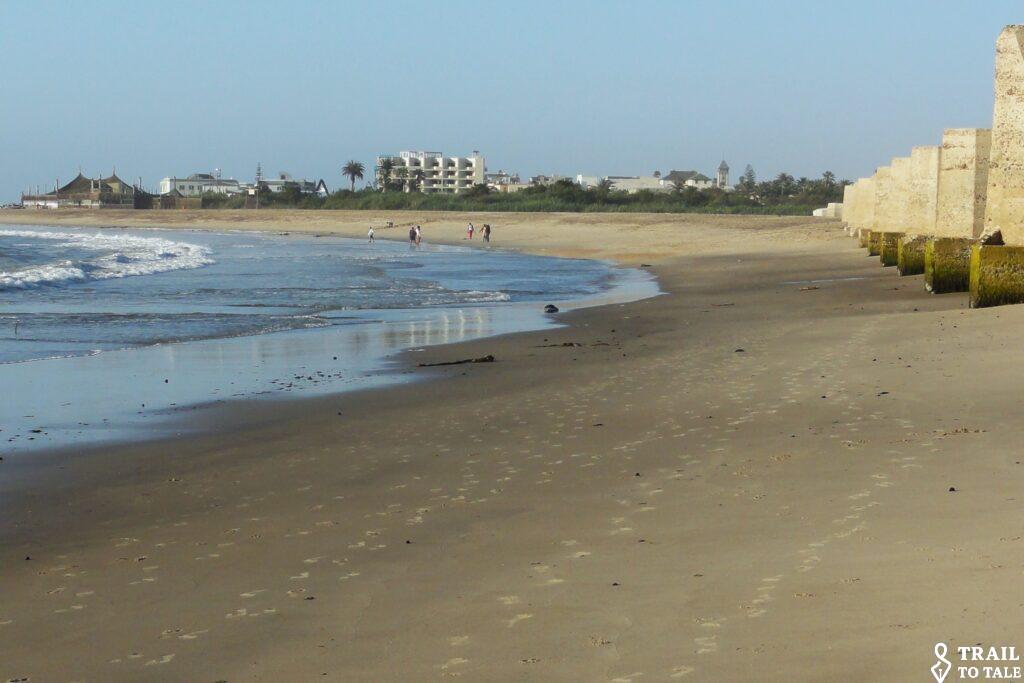
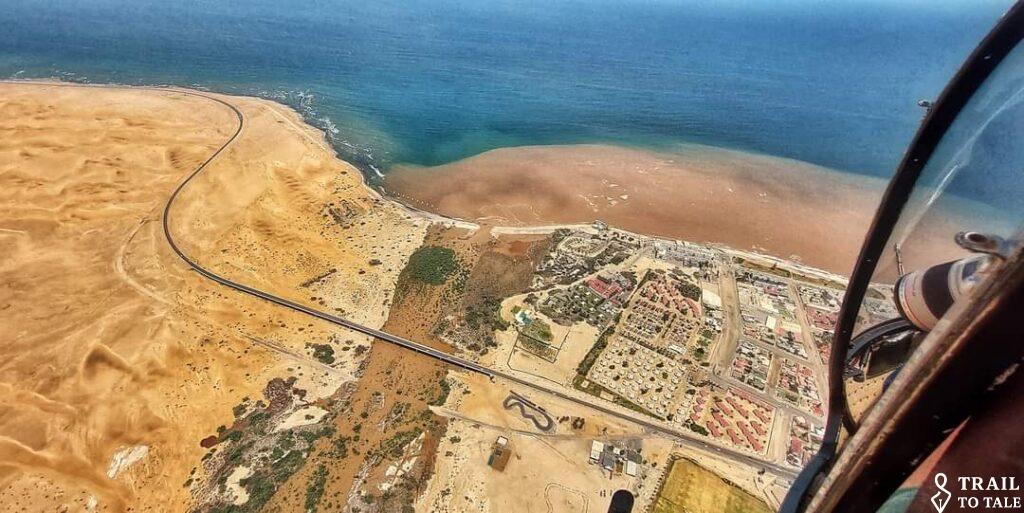
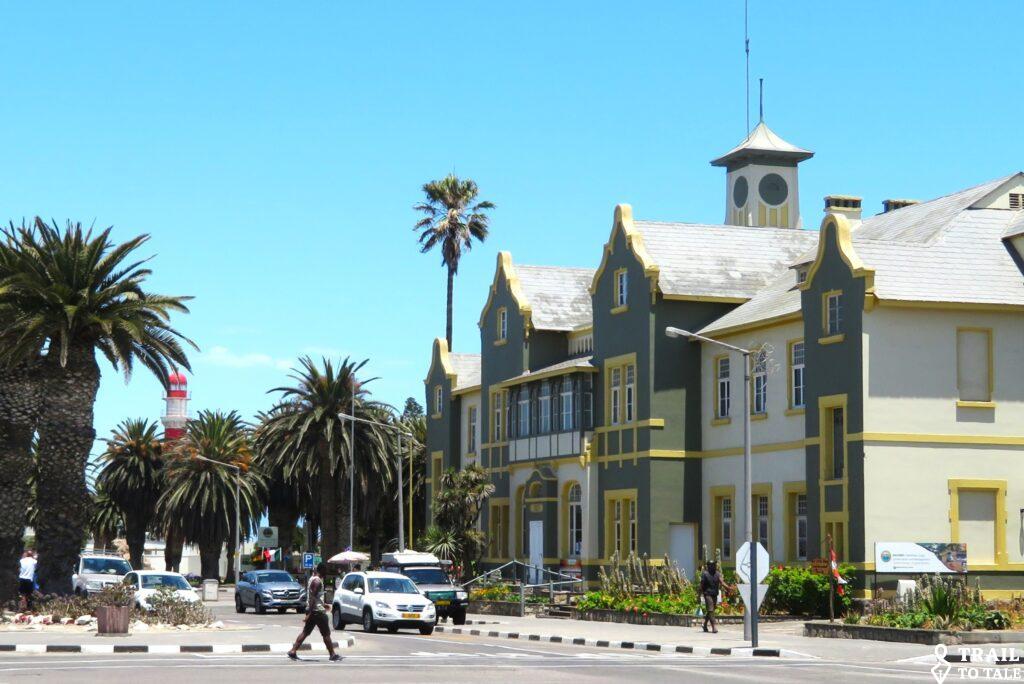
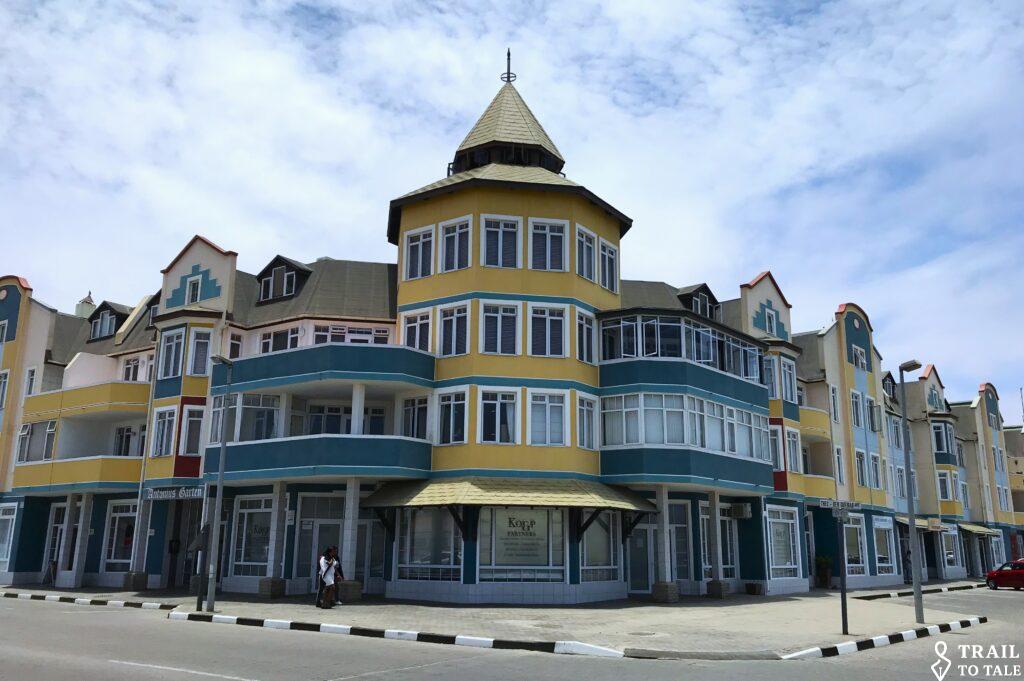
Despite its name, this beautiful little town on the west coast of Namibia has a rich past, reflected in the many old but well-preserved colonial buildings. The facades, arches, towers, and ornamentation reflect architectural themes which dominated Europe at that time.
Swakopmund retains something of 19th century Germany with traditions like the Küsten-Karneval, Oktoberfest and the Christmas Market still celebrated. Many of the restaurants offer typical German dishes. For example, the Black Forest cake and the daily fresh baked Apfelstrudel served at Café Anton are famous beyond the borders of the country. In addition, the 24-hour German Language Radio station and the daily ‘Allgemeine Zeitung’ report on important and not-so-important issues. On Mondays, it publishes the results of the Bundesliga, Germany’s top soccer league. A sizeable part of Swakopmund’s population is still today German-speaking.
The city’s colonial landmarks include:
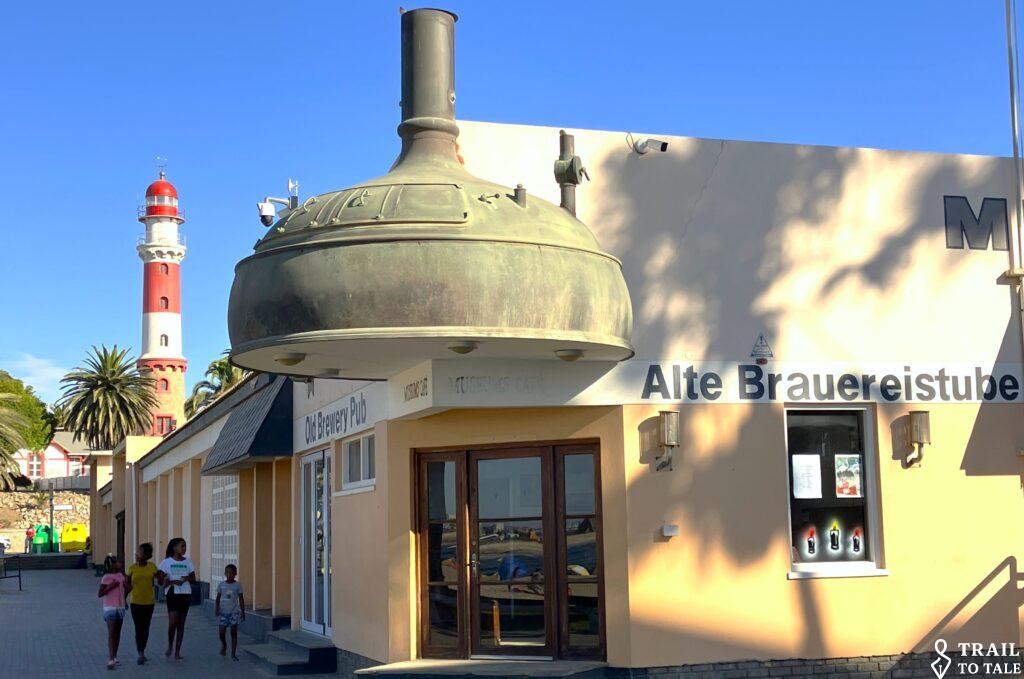
– The Swakopmund Lighthouse, the first 11m were erected in 1902 and a further 10m added in 1910. Just adjacent the former Imperial Court house (Kaiserliche Bezirksgericht) turned State House was built in 1906.
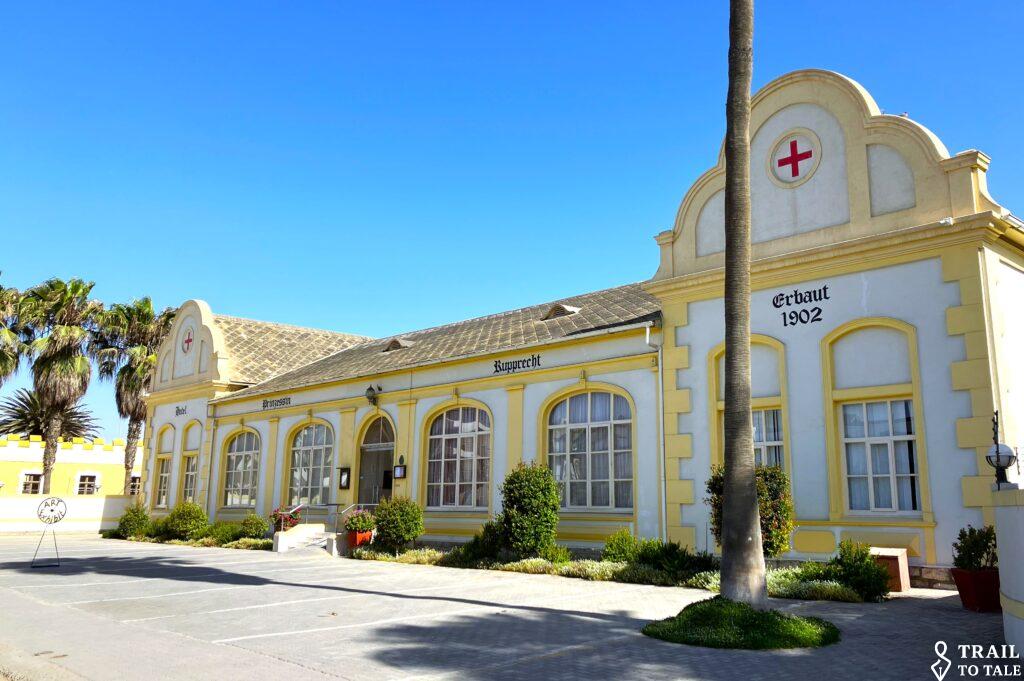
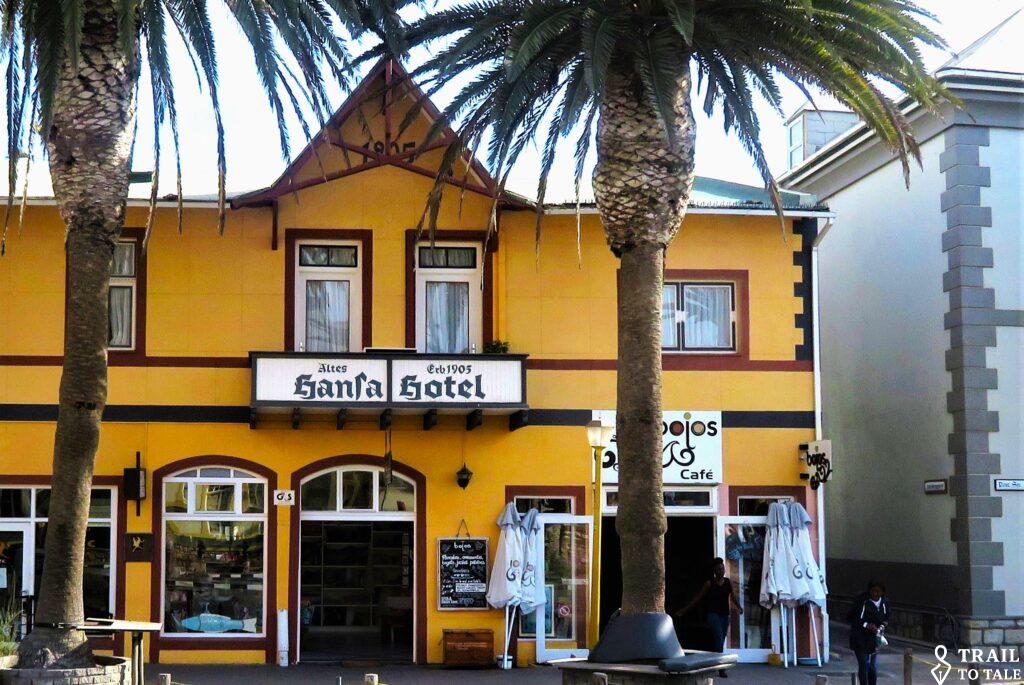
– The Hansa Hotel, built in 1905, is still operating till today and, after extending and a major facelift, is arguably the No. 1 hotel in Town.
– The ‘Kaserne’, completed in 1906 served as the military barrack and later as the Primary School.

– The Woermann Haus, built in 1906 with a prominent tower now hosts the public library.

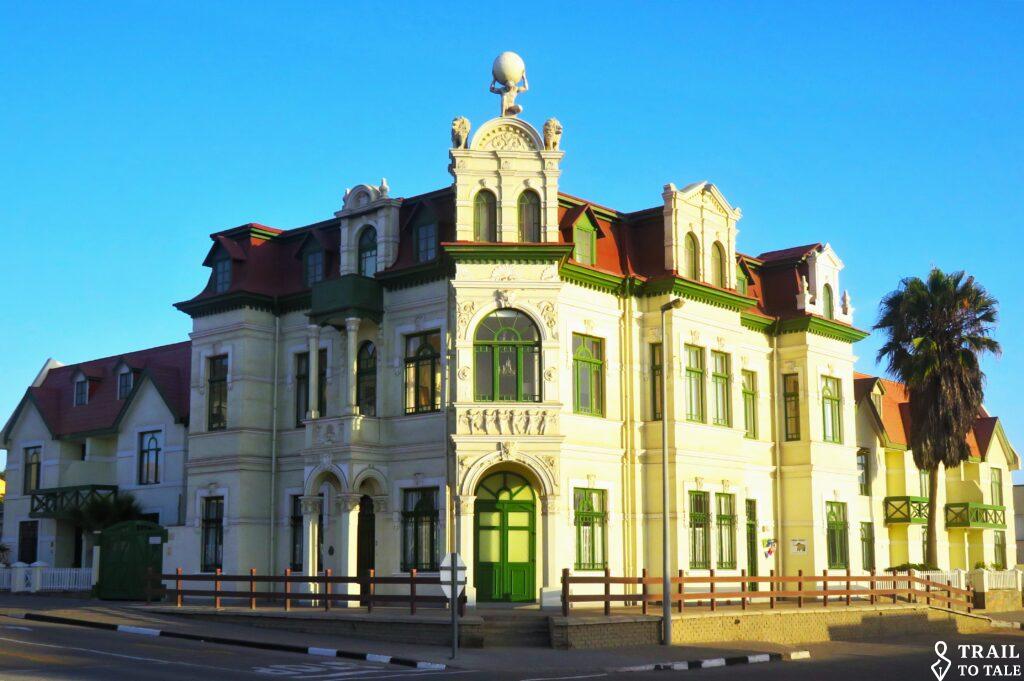
– The Hohenzollern Haus, built in 1906 as a hotel nowadays hosts apartments.
– The Antonius Hospital opened in March 1908 and only recently was converted into the ‘Antonius Residence’ for the Seniors.
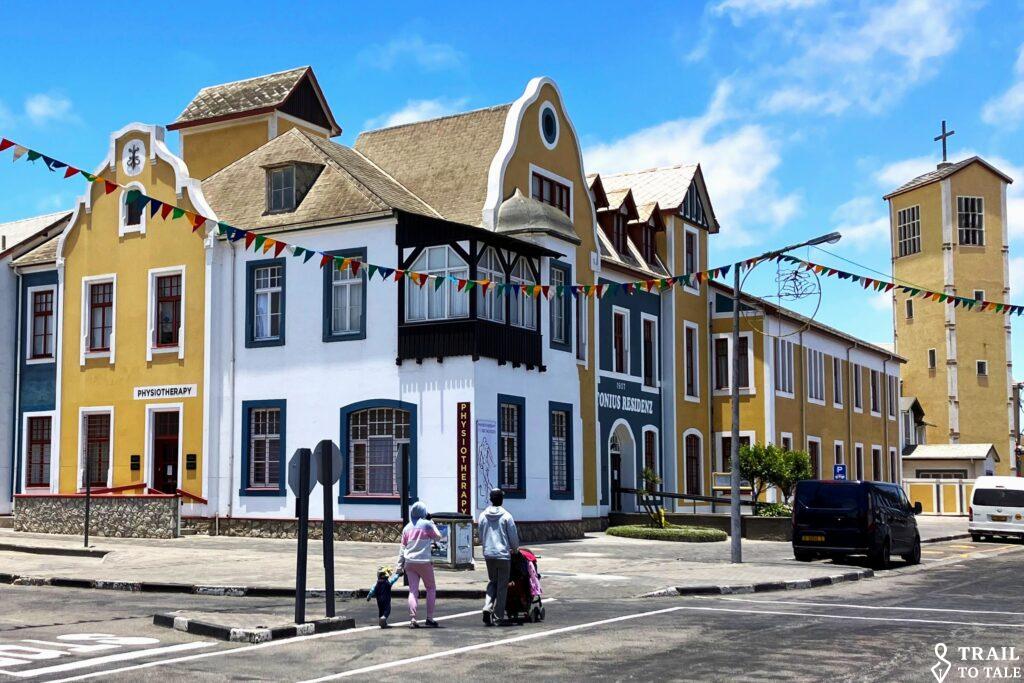
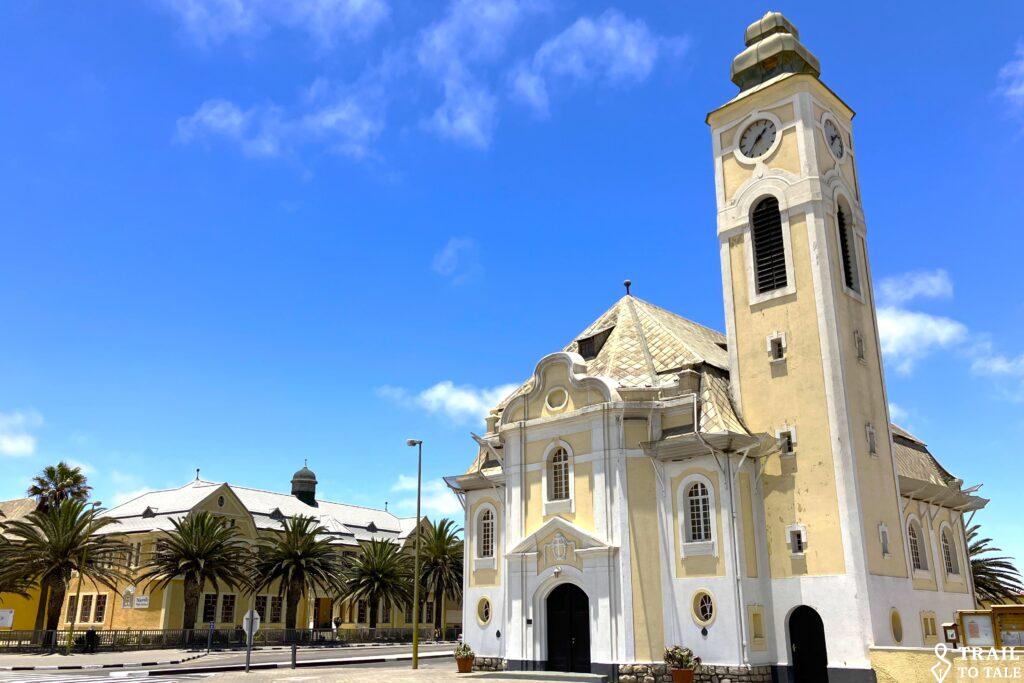
– The Lutheran Church, with bells imported from Germany, which was constructed in January 1912.
– The historic Swakopmund Railway Station, turned Hotel and Casino.
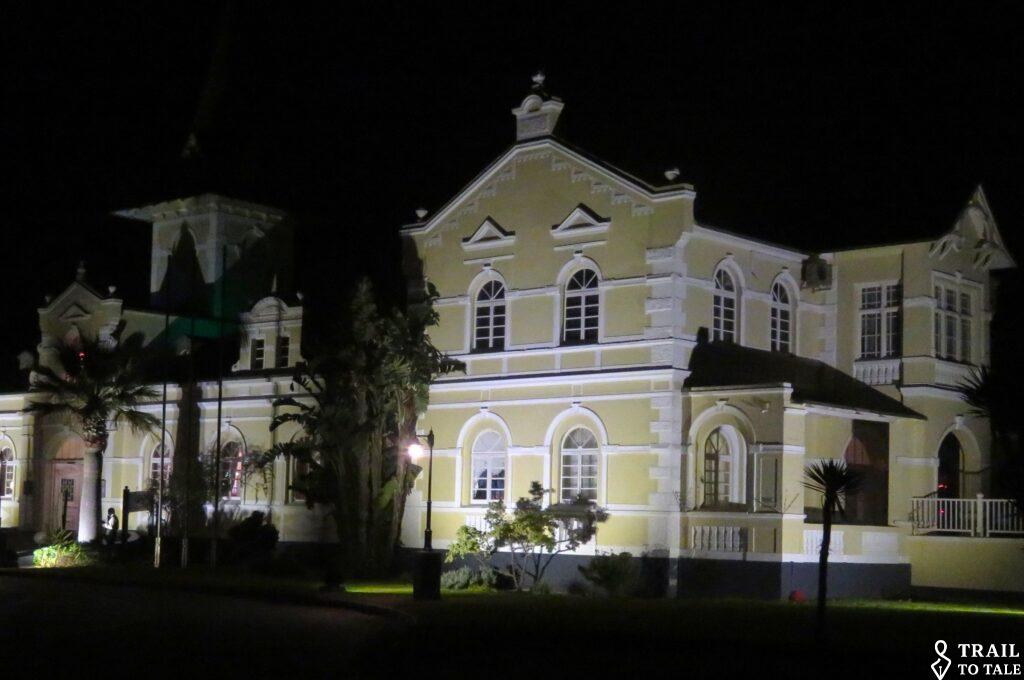
Other historic structures are the ‘Gefängnis’, the prison, built in 1909 is still today providing shelter to those convicted; the German School, completed October 1913, which hosted both the government and municipal secondary schools; the prominent former Post Office how hosts a restaurant.
One of Swakopmund’s lesser-known historical facts is that the conditions were actually unfavourable to build a harbour as the coastal waters were far too shallow. In addition, there was no sheltered lagoon, and the surf was much too strong. As the disembarkation of settlers and troops on surf boats was a life-threatening undertaking, an artificial harbour was built at very high cost. Unfortunately, the ‘Mole’ sea-wall was a brave but ultimately unsuccessful attempt.

Although some 375 meters of pier was completed in 1900, by winter 1906 it had silted up and a sandbank blocked it completely, leading to the construction of a 325m long wooden jetty in 1902, which was replaced by an iron one in 1912. The remains of this jetty still serve as a popular pedestrian walkway and, since 2010, host an oyster bar at the far end.
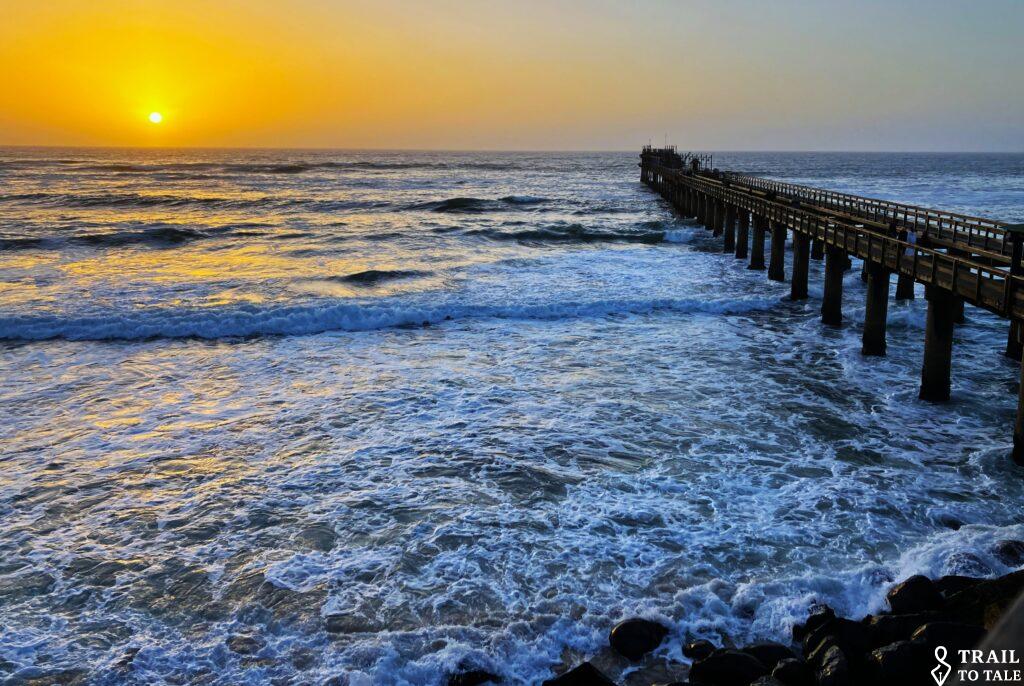
Today the ‘Mole’ serves as the main beach and attracts locals and tourists alike. Swimmers can have close encounters with dolphins who visit regularly and a small colony of seals that enjoy drying their fur on the nearby rocks.
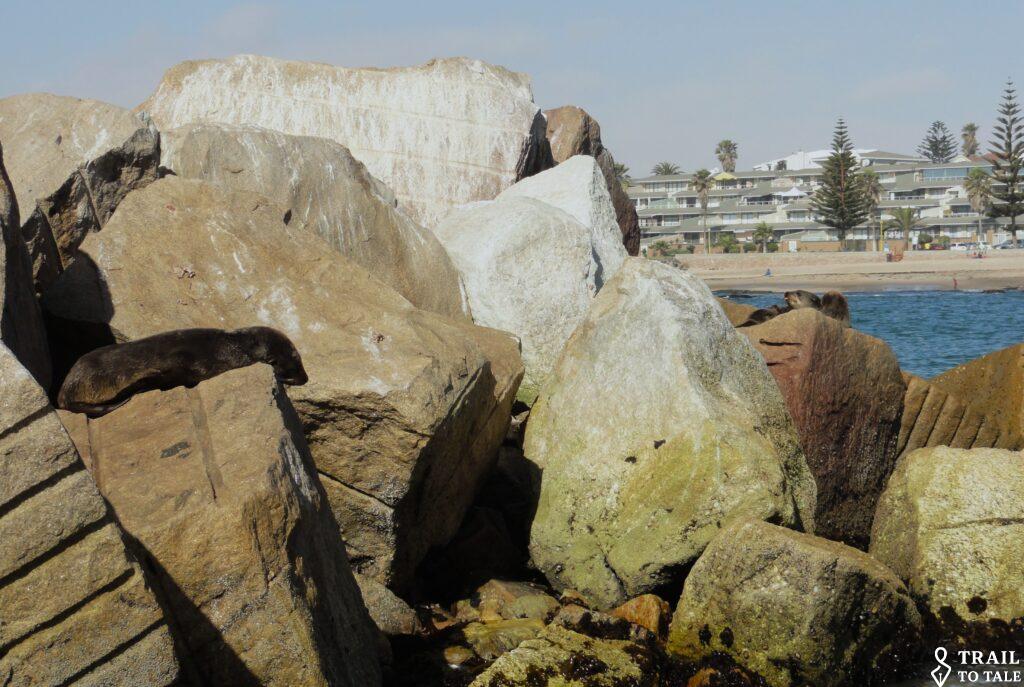
In 1894, regular freight traffic began, led by the Woermann-Linie, a shipping company based in Hamburg, Germany. Thus Swakopmund quickly became the main port for imports and exports for the whole territory, and was one of six towns which received municipal status in 1909. Many government offices for German South-West Africa had offices in Swakopmund. When the jetty opened, the newspaper ‘Deutsche Südwestafrikanische Zeitung’ stated that there were 1,433 inhabitants of the town.
After German South-West Africa was taken over by the Union of South Africa in 1915, all harbour activities were transferred from Swakopmund to Walvis Bay. Many of the Central Government services ceased. Businesses closed down, the number of inhabitants diminished, and the town became less prosperous.
During the author’s school days in the 60s, the town boasted some 5,000 inhabitants yet people only knew about such urban niceties like traffic lights from movies shown in the cinema on Wednesday and Saturday. The main local industry were the salt pans, 7km north of the town, where today seawater is still pumped into huge ponds to allow harvesting of the ‘white gold.’
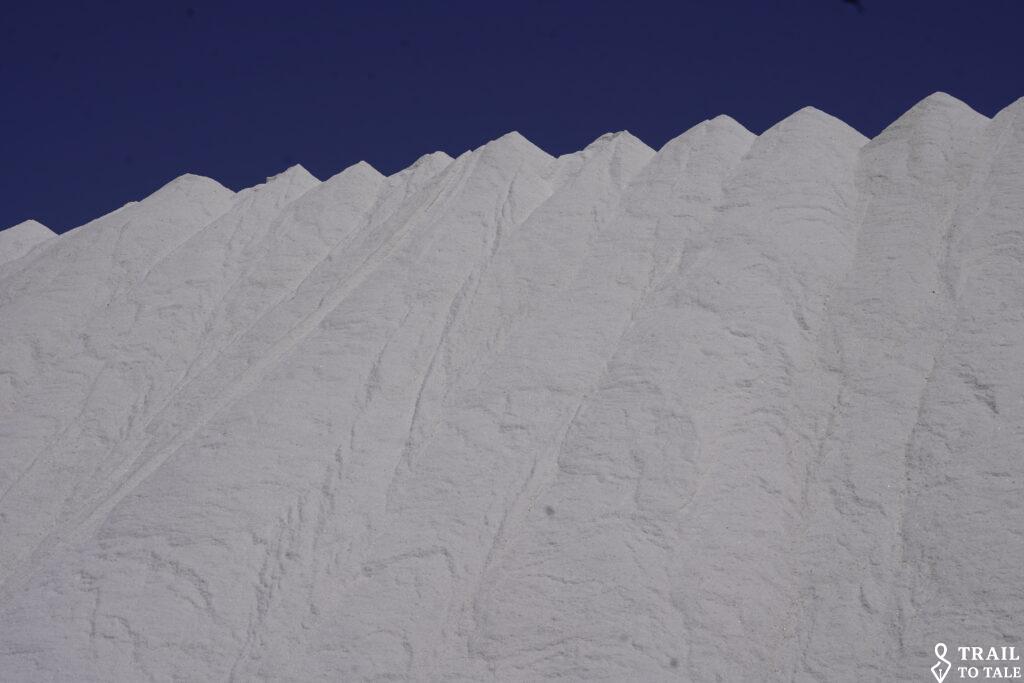
Others were the tannery and the Hansa Brewery (opened 1929) where the brew master (the author’s father) took great pride in strictly following the over 400-year-old German Purity Law (only four ingredients: water, malt, hops, yeast). Although the discovery of uranium at Rössing, 70 km outside the town dates back to 1928, exploration and extraction only started in 1976. This led to the development of the world’s largest open cast uranium mine. In 2005, it produced 3,711 tons of uranium oxide, becoming the fifth-largest uranium mine, with eight per cent of global output. This had an enormous impact on all facets of life in Swakopmund and necessitated expansion of the infrastructure of the town, making it into one of the most modern in Namibia.
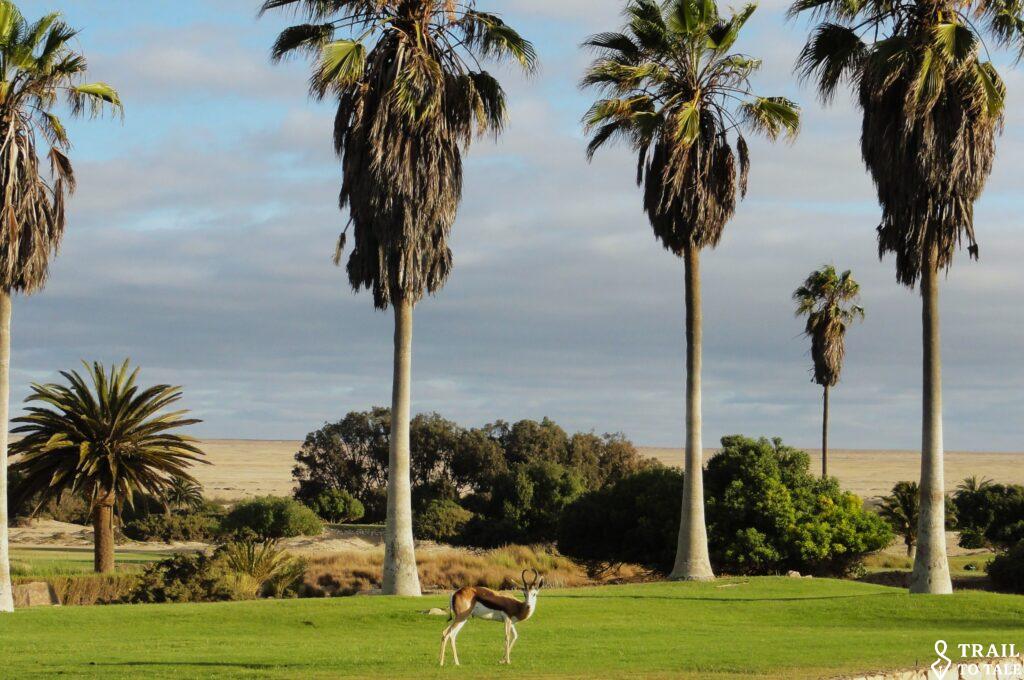
Outside of the city, the Rossmund Desert Golf Course is one of only five all-grass desert golf courses in the world. The well maintained fairways not only attract golf enthusiasts but also animals like springboks and ostriches from the adjacent Namib Desert plains. Over the last 50 years, the potential of Swakopmund as a holiday resort has been recognized and developed. Today, tourism-related services form an important part of the town’s economy.
The number of hotels and restaurants has increased as more and more international tourists visit Swakopmund while touring the huge country with the second lowest population density in the world, after Mongolia.
Surrounded by the Namib Desert on three sides and the cold Atlantic waters to the west, Swakopmund enjoys a mild desert climate. The atmospheric conditions caused by dense banks of coastal fog that hang over the ocean on many mornings dissipate as the sun rises high in the sky. With only around 20mm falling per year, rain is a rather rare event.
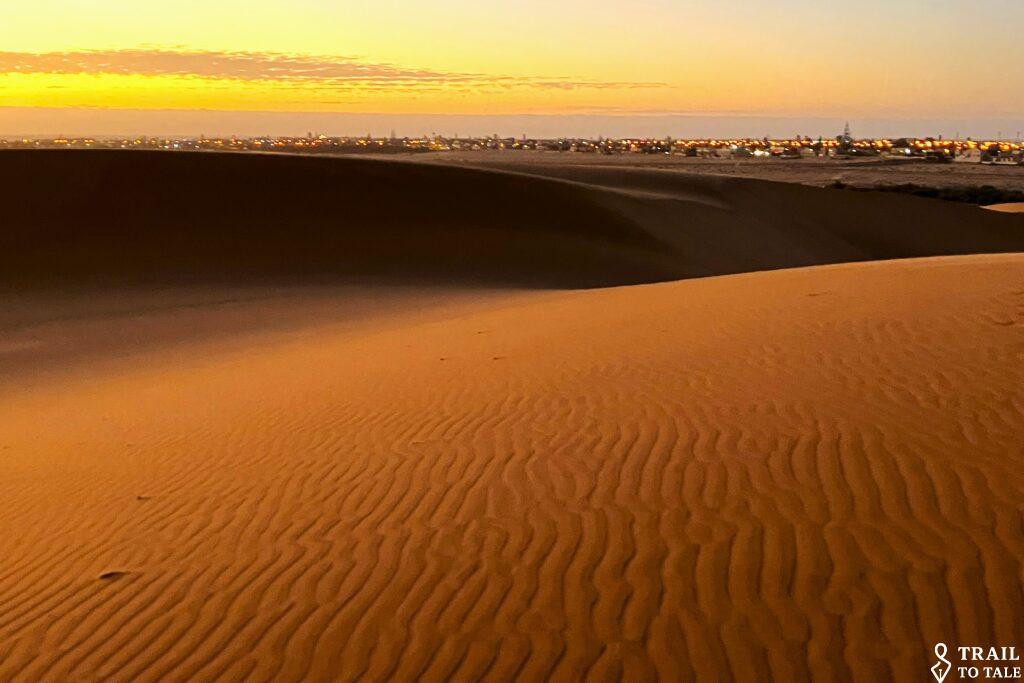
While the African sun is very intense, a fresh breeze from the southwest coming up later in the afternoon does have a cooling effect. Due to the cold and marine-life-rich Benguela current, seawater temperatures rarely reach over 20 °C.
Many South African and Namibian pensioners take up residence in Swakopmund and the German language can be heard everywhere. Although many of prominent streets were renamed after independence, some still bear names from the colonial days. Today, Swakopmund is the capital of the Erongo Region and has about 34,000 inhabitants.


Leave a reply
You must be logged in to post a comment.