


Kandahar is one of the oldest continuously inhabited and most historically significant cities in the region. Located in southern Afghanistan, it has long served as a strategic hub for trade, culture, and political power. Deeply connected to both early Afghan history and modern political developments,
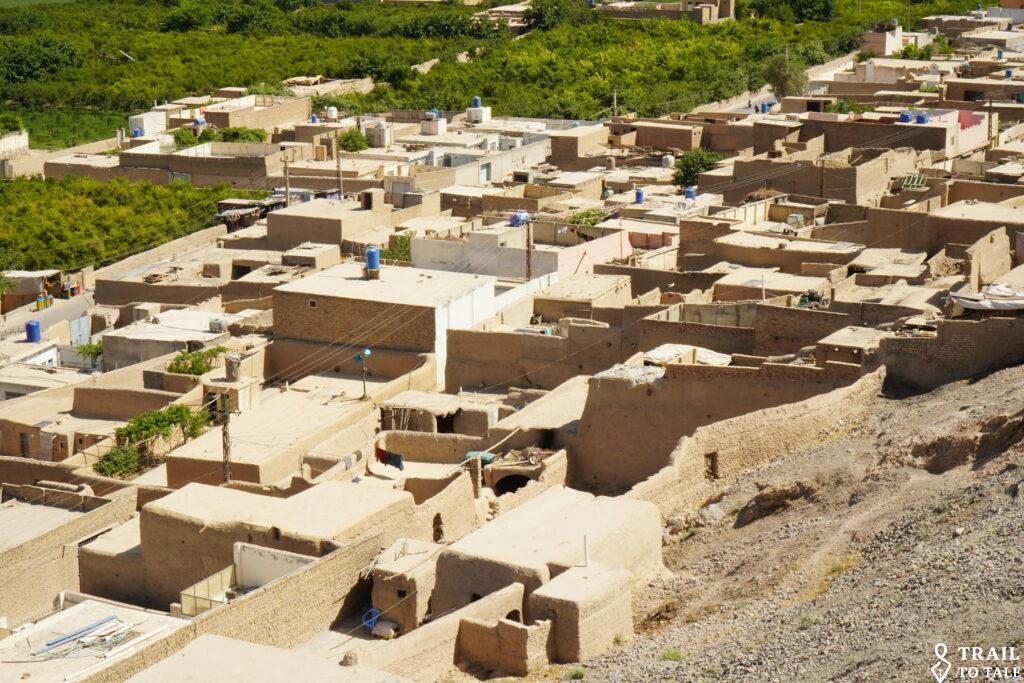
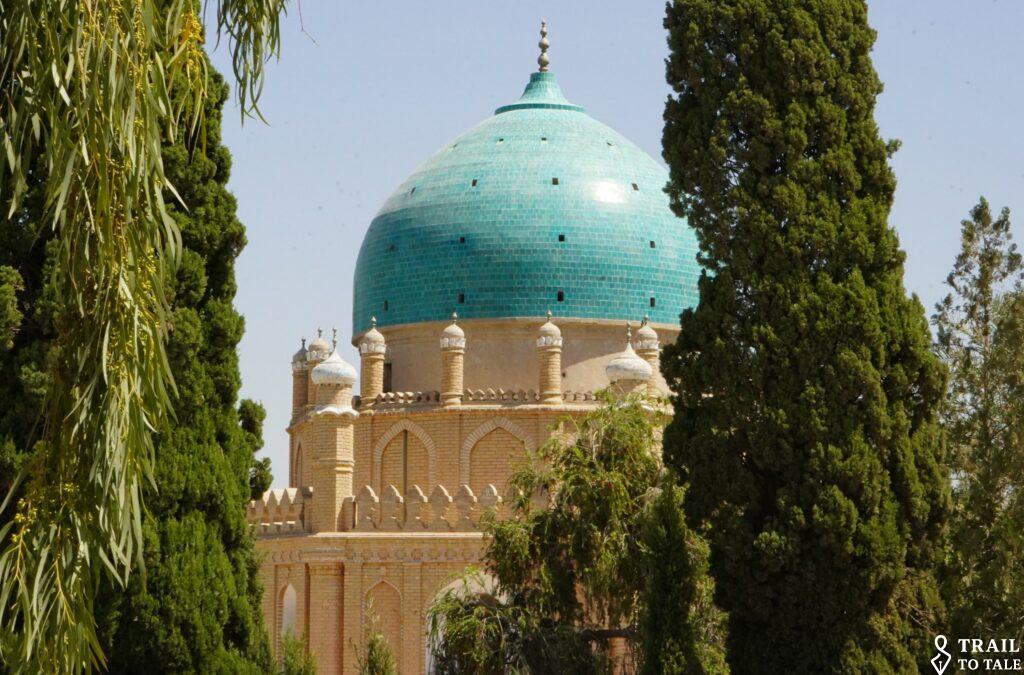
Founded in antiquity and linked to Alexander the Great, Kandahar later became a key city of the Durrani Empire under Ahmad Shah Durrani (founder of modern Afghanistan) whose mausoleum still stands in the city. This royal burial chamber built in 18th century is one of the most important historical landmarks.

Turquoise/green-tiled dome, tomb, octagonal shape, historic brick base.

The underside of the arched portal decorated with painted muqarnas-patterns.

Small corner turrets with decorative arches surrounded by trees in a garden setting.
Inside the simple raised sarcophagus, Ahmed Shah Durrani’s grave, rich Persian style wall decoration, red, gold, geometric panels.

Chandeliers and calligraphy bands.

The Mihrab with dense floral and geometric painting, black band with Arabic calligraphy. Simple prayer setup carpets.

The Shrine of the Cloak (Khirqa Sharif) in Kandahar is one of Afghanistan’s holiest Islamic sites and is closely linked to the rise of the Taliban. It is believed to house a cloak attributed to the Prophet Muhammad, brought there in 1768 by Ahmad Shah Durrani.
The shrine features ornate Islamic design, including marble, gilded arches, and tiled façades, though access to the relic is highly restricted.
A key historical moment occurred on April 4, 1996, when Mullah Mohammed Omar displayed the cloak before his followers. This symbolic act helped legitimize his leadership, strengthened his claim to the title Amir al-Mu’minin (“Commander of the Faithful”), and marked a turning point in the rise of the Taliban.

The Eidgah Mosque, includes a large open courtyard, used for Eid prayers and a long arcade of arches along the side.

The area under the pink/reddish central dome is used for mayor gatherings.

Religious scholars enjoying a tasty snack.

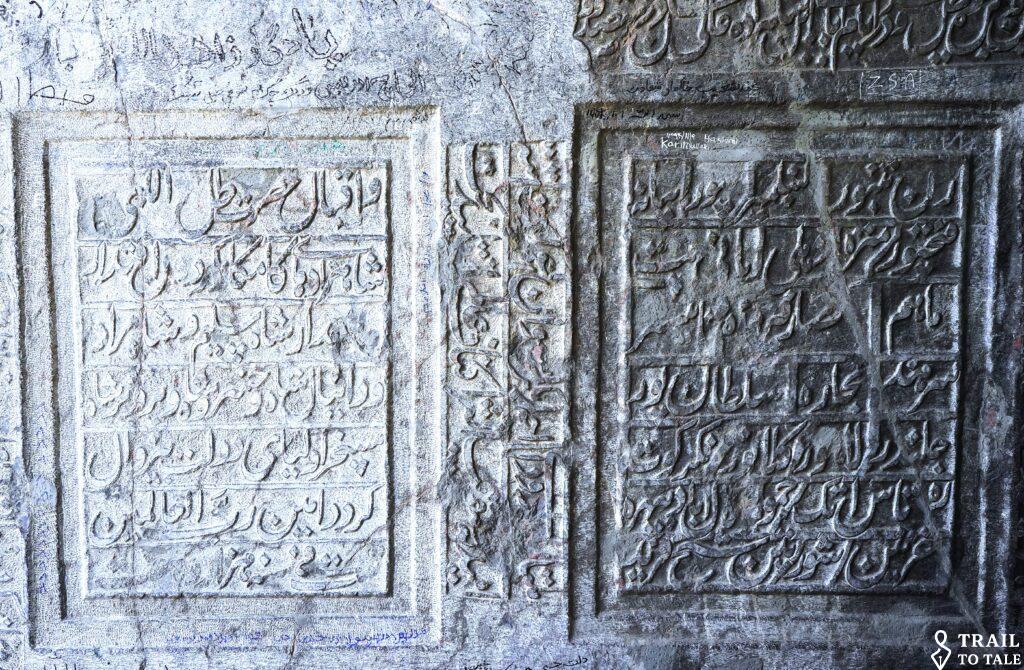
‘Chil Zena’, Persian for “Forty Steps”, is a 16th-century rock-cut chamber reached by a steep staircase carved into the mountainside. From the top, it offers panoramic views over the plains and the ancient city of Old Kandahar.

An inscription carved into the rock commemorates the territorial victories of Babur, founder of the Mughal Empire. It stands as a lasting monument to power and conquest.
The Kandahar central square pavilion is a civil monument functioning as a symbolic landmark and a gathering point.
Approached by a foreigner the gathered local men reply with curious and sceptic looks.

The Bazaar does include the popular bird market:
The Churkar Partridge is commonly kept in cages used for calling competition.

Passionate pet traders present the rabbit ‘out of the box’.

Canaries and different pigeon species.

Reminders of the western Easter celebration: Colored chickens.

A proud merchant presenting his Indian Ringneck Parakeet.

Juvenile White-Eared Bulbul handfed.

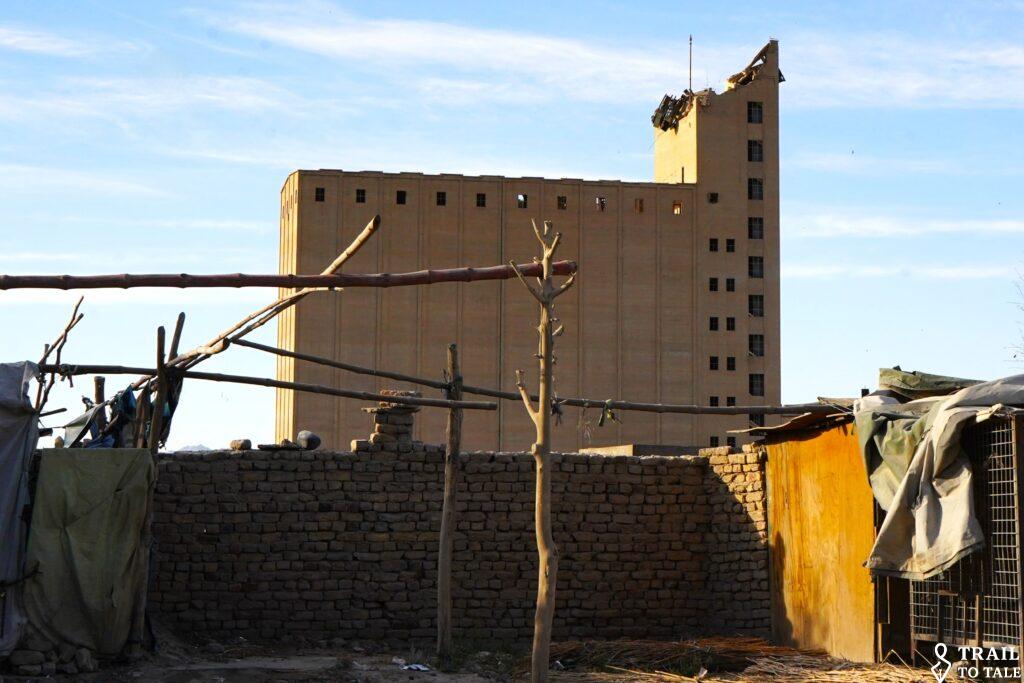
Result of a US bomb dropped on a grain silo (built by the government with the support of the Soviet Union in the 1980) during an invasion in late 2001.
Today life in the city tries to go on as normal. Food stalls.

Kids selling eggs.

Clay pottery for sale.

Boys cycling in a muddy canal.

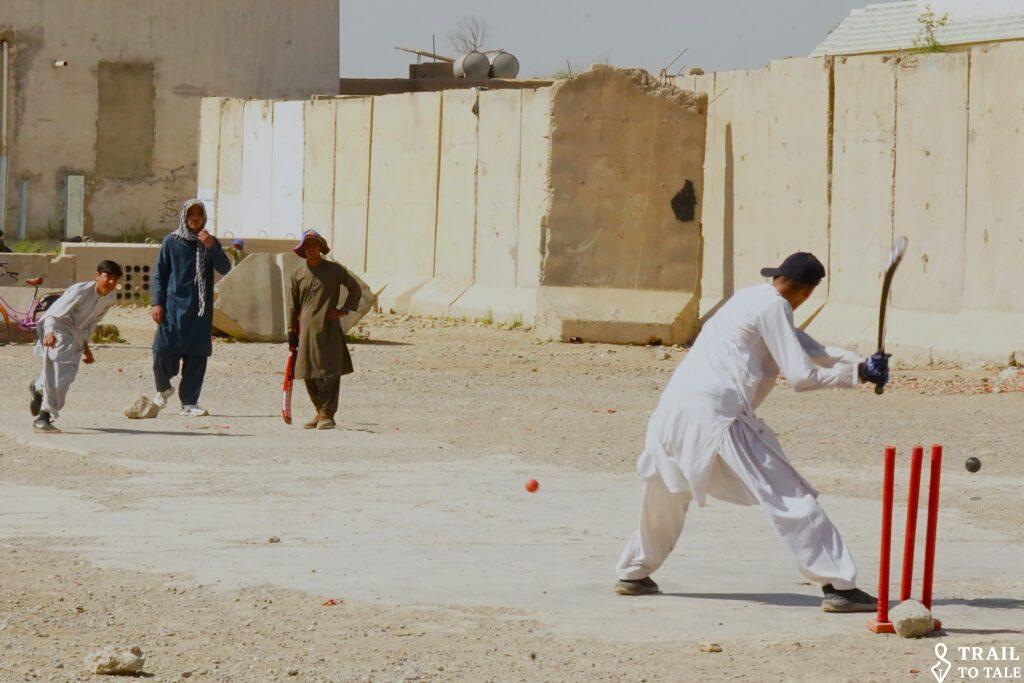
Cricket, the national sport.
Pedestrian

Colorfully dressed girls

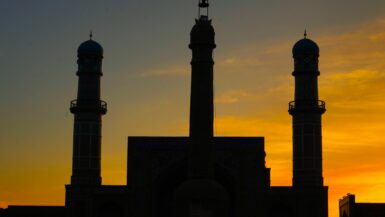
The largest mosque in Kandahar, the Omar Al-Farooq Mosques (4 modern style tall minarets, central dome, and smaller side domes) in the new satellite township of Aino Meena, established under the previous government.

In modern times, Kandahar, has held strategic importance, it remains a vital economic hub in southern Afghanistan, known for its agriculture, especially pomegranates, and its role as a crossroads between Central and South Asia.
Leave a reply
You must be logged in to post a comment.