


1) The Bamyan Buddhas were two monumental statues carved into the cliffs in the peaceful Hazarajat region of central Afghanistan in the 6th century, standing about 55 m and 38 m high. They were among the largest standing Buddha figures in the world and symbolized the region’s importance as a Buddhist center among the most remarkable cultural treasures of Central Asia, both for their scale and their symbolic meaning.
For nearly 1,500 years, they represented a unique fusion of art, religion, and cultural exchange. In March 2001, however, the Taliban deliberately (during a 2-month long demolition period) destroyed the statues using explosives, considering them un-Islamic idols, despite global appeals to preserve them.

Their destruction is widely regarded as one of the greatest cultural tragedies of modern times: an irreversible loss of world heritage that erased a tangible link to Afghanistan’s diverse past.

The locals address the bigger niche (55m) as the ‘father’. During the time the US were present an initiative started reconstruction as the scaffolding is still in place.

The early attempt to reconstruct the footing was abundant after the Taliban came to power again.

The 40m high niche

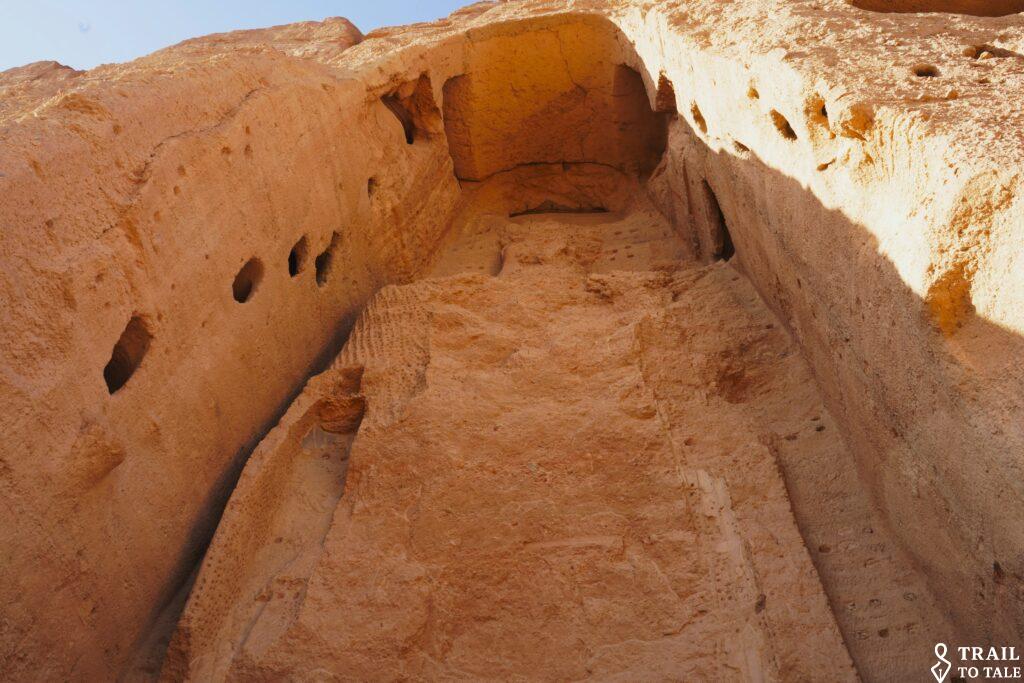
The locals address as the ‘mother’.

A narrow, vertical staircase carved into the neighboring sandstone allows visitors to climb up and take in the sweeping view toward the snow-capped peaks of the Hindukush, a panorama once shared by the Buddha statue itself.


While the entire mountain face shows numerous additional niches in different sizes which allowed space for smaller Buddha statues. The locals informed that the 2 larger excavations hosted the ‘son’ and the ‘daughter’.
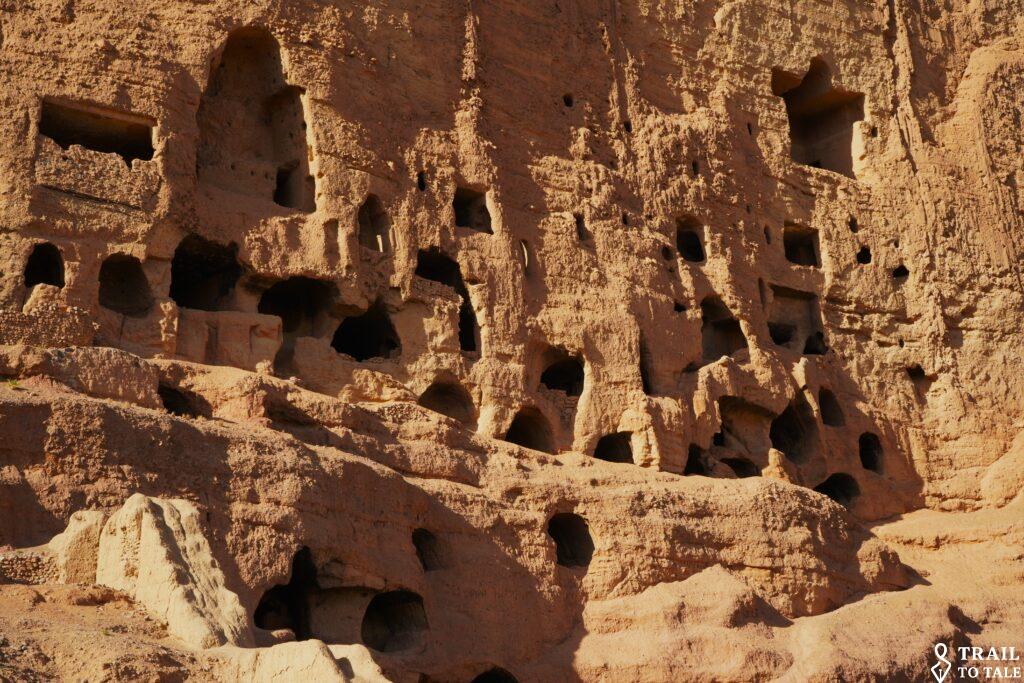

Inside some accessible niches, despite their severe deterioration, the paintings on the wall and carvings still offer a glimpse of their original splendor.


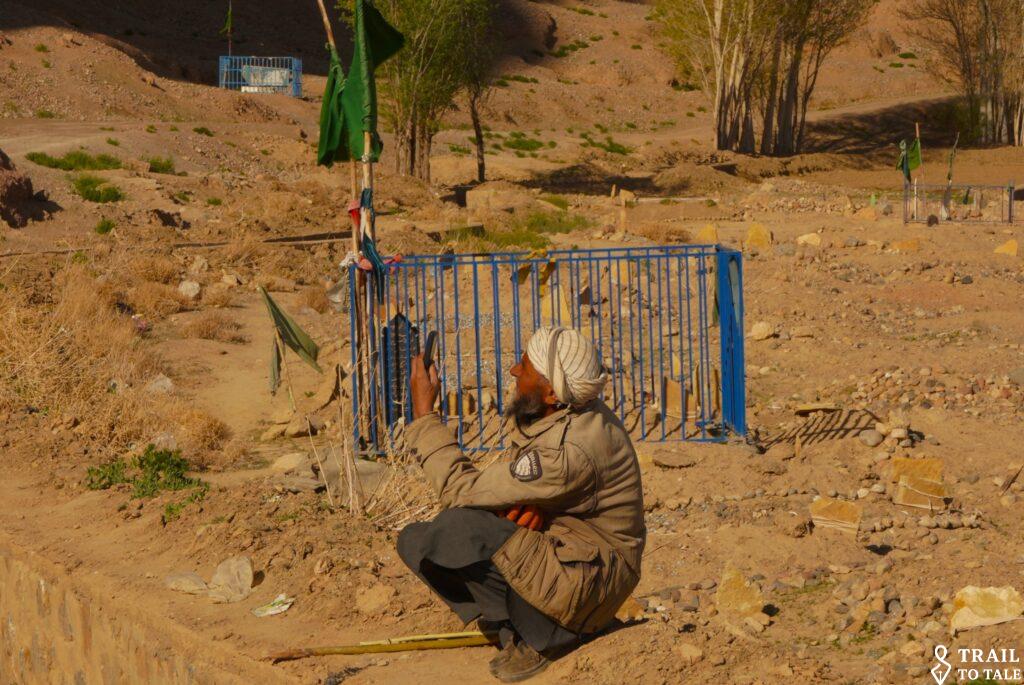
An elder next to a fenced grave
Behind cricket, soccer is the second most popular sport.

Today, the empty niches in the cliffs remain a powerful symbol of both the region’s rich history and the devastating impact of cultural intolerance.
2) The 13th century city Shahr-e Gholghola in the Bamyan Valley was a flourishing key stop on the Silk Road.

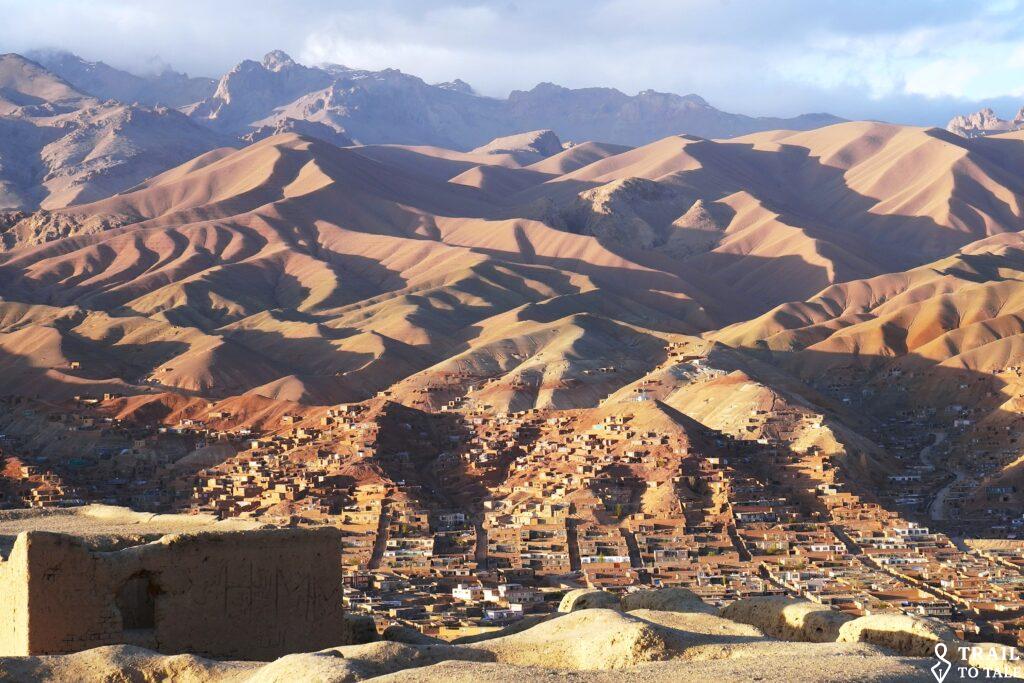
During the Mongol expansion into Central Asia, the Bamyan Valley resisted the Mongol forces, killing Cengis Khan’s grandson. This made it personal, warning others not to resist Mongol rule. In retaliation Cengis Khan ordered total destruction of the entire city and mass killings of the population. Historical accounts describe: ‘no survivors’ as the city was razed completely. The scale of the massacre and collective memory of destruction is described in the symbolic memory of the event ‘The City of Scream’.


Armed security guarding the ruins.

3) During the 10-year Soviet invasion of Afghanistan, the mountainous terrain and constant guerrilla attacks made their operations increasingly difficult. Convoys were frequently ambushed, and vehicles were destroyed or abandoned. By the time Soviet troops withdrew in 1989, many armored vehicles, especially tanks, had been left scattered across valleys like Bamyan.

Over time, these rusting machines became part of the landscape.

Some were stripped for scrap metal by locals.

Others remained as silent relics of a costly and unsuccessful occupation.
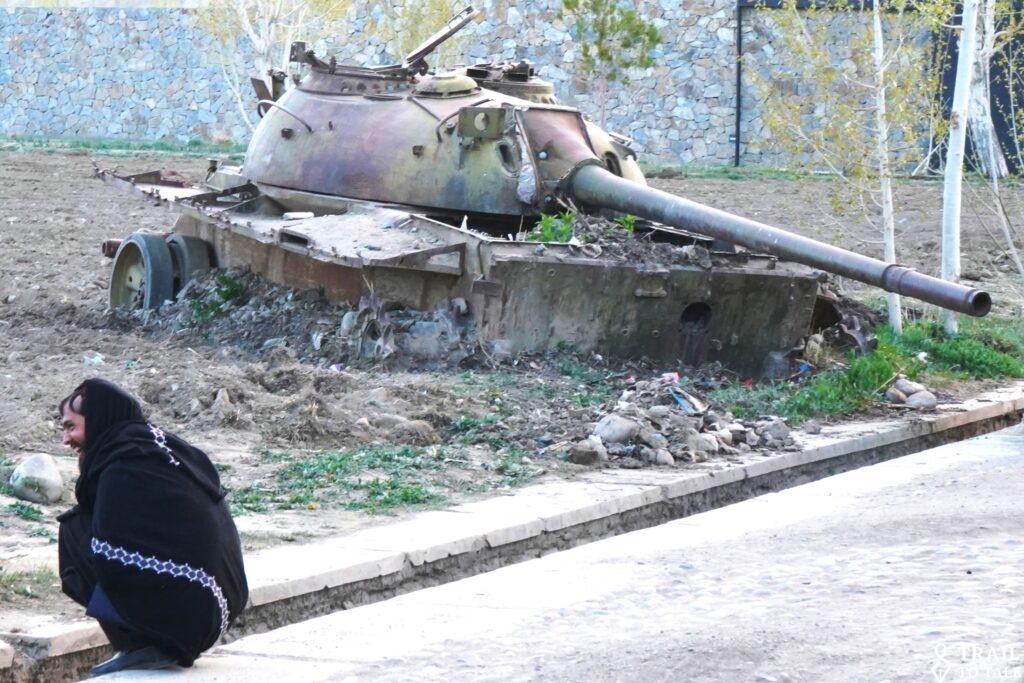
A local’s interpretation: ‘I used to conquer territories, now I decorate the landscapes’.

And after all, live does continue.
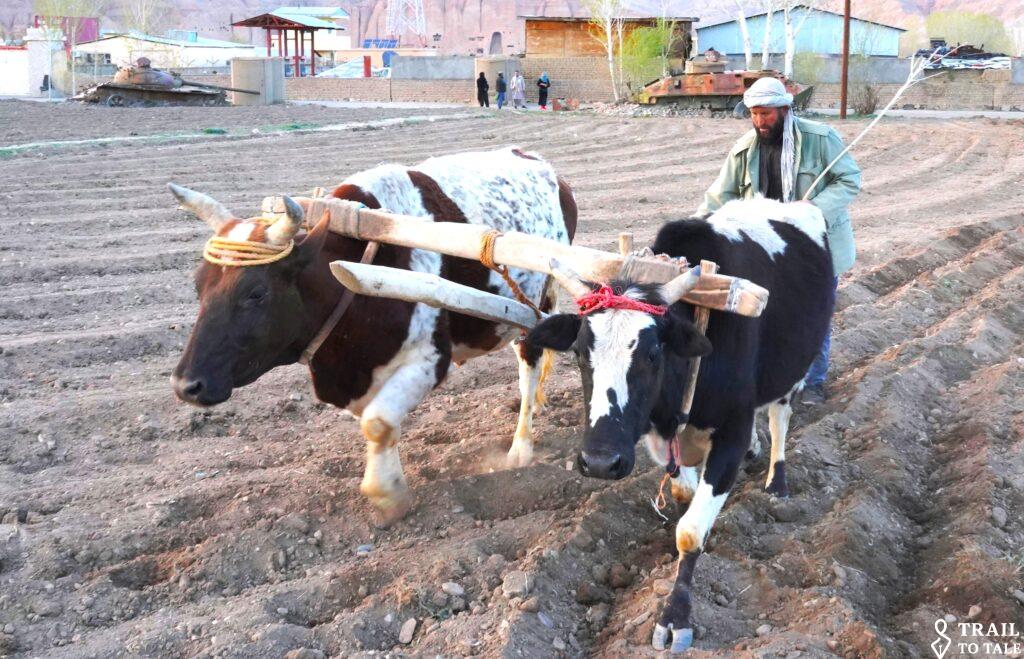

Today, these abandoned tanks stand in contrast to Bamyan’s older history, most famously the lost Bamiyan Buddhas, the obliterating of the City Shahr-e Gholghola, linking three very different eras of destruction in the same valley.
Leave a reply
You must be logged in to post a comment.