


It started in the early 90’s when a group of sporty and fun-loving expats living and working in Taipei regularly met to enjoy running with the China Hash House Harriers along the scenic mountain trails in Taiwan. The motivation: “compensate the many long office hours with healthy outdoor activity followed by camaraderie ad consuming lots of cold beer”. From that, and a common interest in mountain biking, came the idea organizing a week of off-road biking somewhere outside the island in the region. Kicking off with Sulawesi in 1993, a tradition was begun of a regular annual week of cycling in different Asia countries. This included, amongst others, a helicopter drop off in the snow in the Jomsom, Mustang area of Nepal in 1997 followed by cycling up the Kali Gandaki gorge to the Muktinath monastery and ending up along the lake in Pokara. 1998’s ride led through Thailand’s Chiang Dao National Park area. In 1999 and 2000, it involved the first-ever organized mountain bike groups cycling the Kingdom of Bhutan. 2002 saw speedy long-tail boats taking the group up the Mekong River and then following the Chinese border on Laos’s jungle trails. In 2006 the African continent was approached the first time with the team spinning the pedals in the very mountainous Kingdom of Lesotho, while in 2007 Tanzania was explored. Costa Rica, in 2013, was the only location in the Americas so far.
On the last evening of each trip, proposals for the destination in the following year are heard and voted on. Volunteers usually step forward to offer to explore the preferred location and report early in the year on the outcome. If judged “doable” the date, depending mainly on the most suitable weather conditions is finalized in March and the announcement made. Strick rules apply as to who of the 30+ names on the list (boys only, because boys behave differently when girls are around) may join as logistics generally only allow a maximum of 24 participants. Seniority (number of previous sides) as well as the earliest commitment documented with a transfer of non-refundable fees are the criteria.

After almost a quarter of a century, predominantly covering the slopes in the Himalayas and the hills in Asia, the 25th anniversary ride was meant to be special one and the first time to Europe, exploring Spain’s Basque Country of the Pyrenees under the slogan “Making Basque Great Again”. The Basque country as it stands today is known as “The Autonomous Unified Basque Country”, consisting of the North and South Provinces.
The North is controlled by the French and the South by the Spanish. Initially a little reserved towards foreigners, the locals are very proud of the identity and have their own Basque national flag. Basques have fought for their land, their culture, and their pride. Their traditions are alive ad flourishing today. The widely spoken Basque language is a language with no known linguistic relatives as it is unrelated to any of the other languages of Europe.
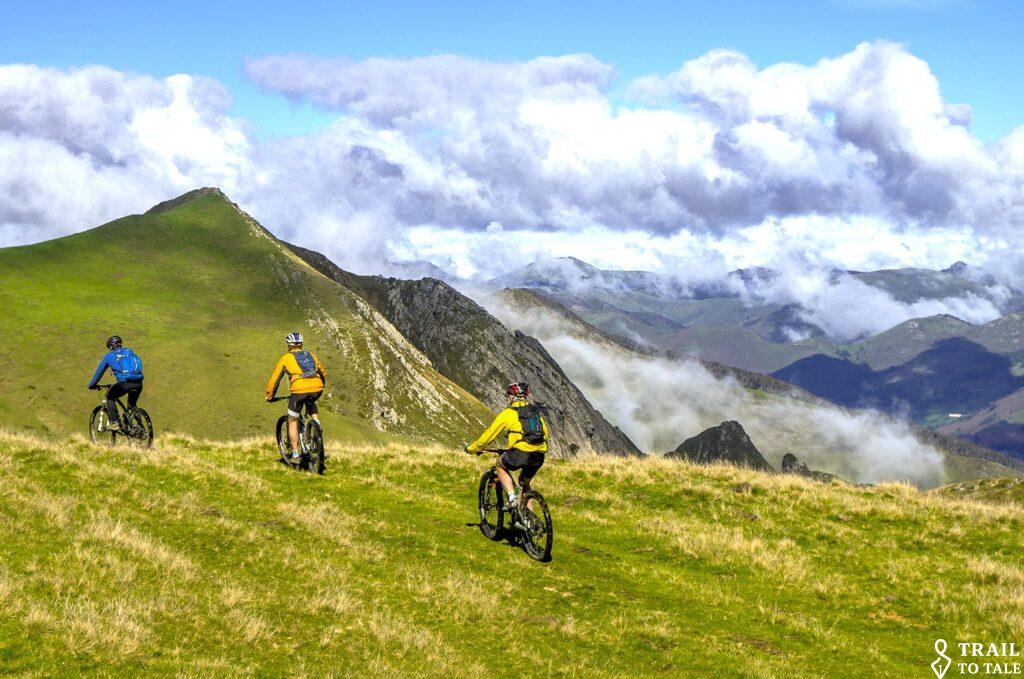
Like on all the earlier rides the basic concept was simple: a daily good workout in beautiful surroundings, preferably cycling single trails; simple accommodation and reasonable foods. However there is no compromise on the amber beverage; “enough chilled beer for everybody every evening!” Attention to detailed logistics therefore is an absolute requirement.
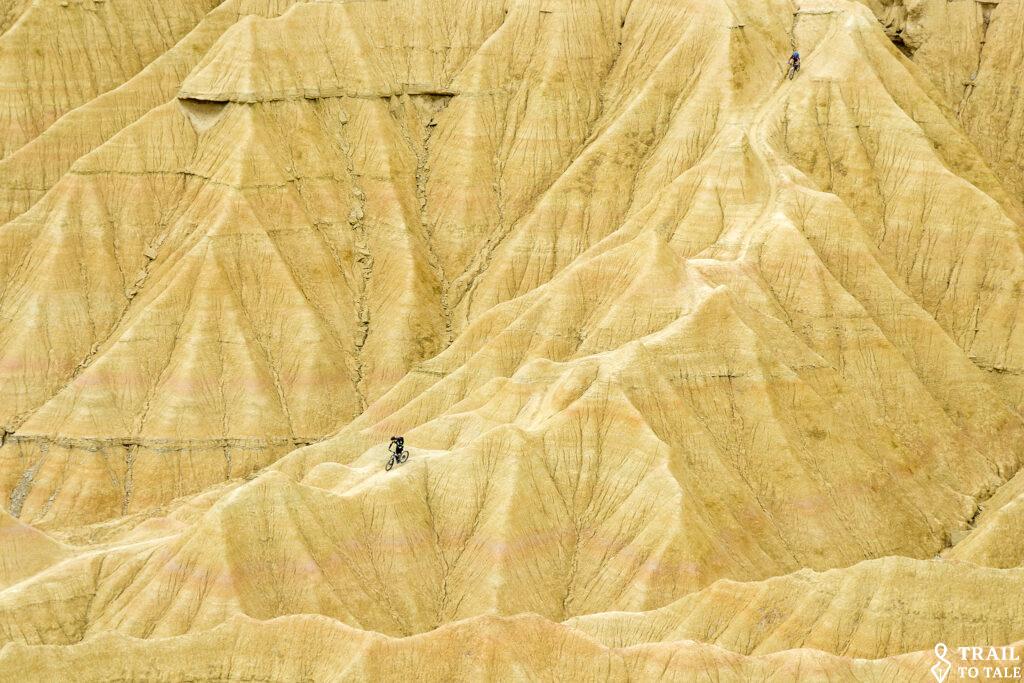
Only a few members of the original group presently still live in Taiwan since some have returned to their home countries, mainly the US, or have found new opportunities in China or the Asian region. Thus flights carrying the bikes touched down in the northern Spanish city of Bilbao from all over the world. In order to get acclimatized and check the equipment, a “warm up ride” in the little-known desert of “Bardenas Reales de Navarra” was staged before getting into the mountains and onto the Basque highlands.
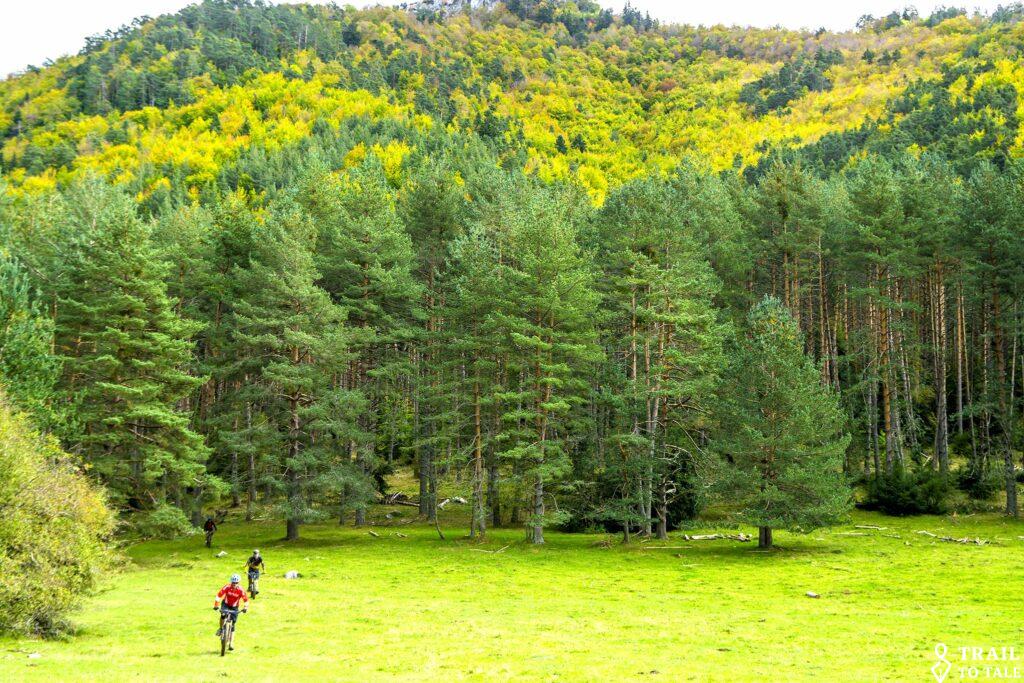
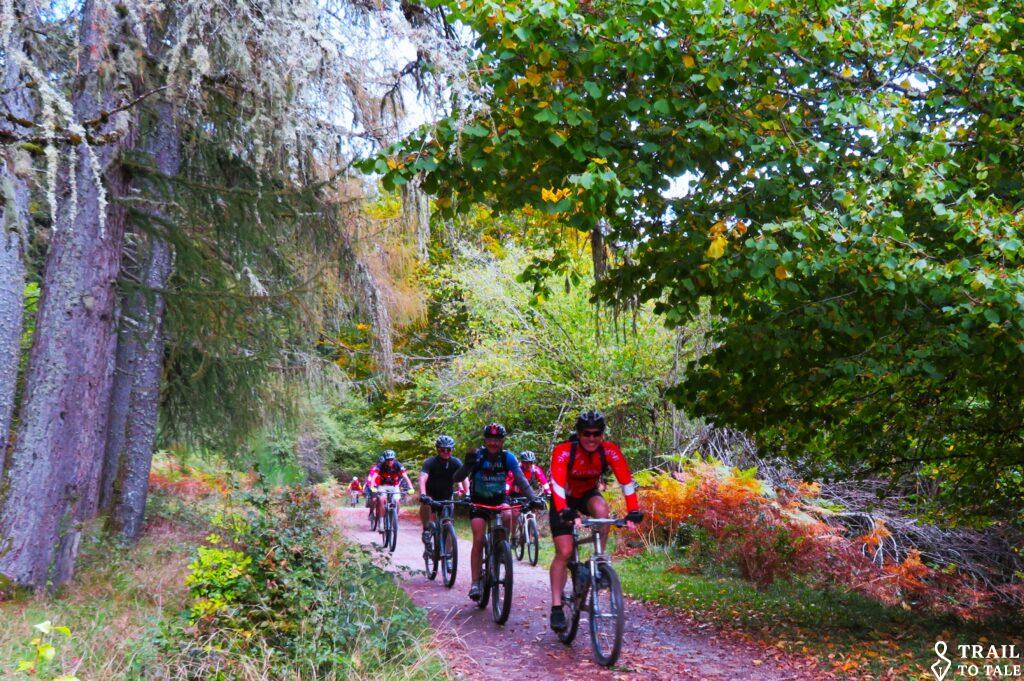
While altitude this time was no issue, the steep gradient still did require endurance (on the up) and technical skills (on the down). Usually starting in the morning on dirt roads up a valley, trail soon led into the lush woods mainly following single tracks through authumn0cloured oak tree forests. Living in the tropics for so many years and being accustomed to an almost continuous sight of “green nature” made experiencing the autumn season even more special for some. Above the tree line, open grasslands covered the slopes where healthy looking sheep, cattle, and horses were feeding on the juicy and nutritious highland grass. Alpine flowers added bright, colourful spots. Breathing the clean fresh air, no longer a given in many of Asia’s cities, felt good.
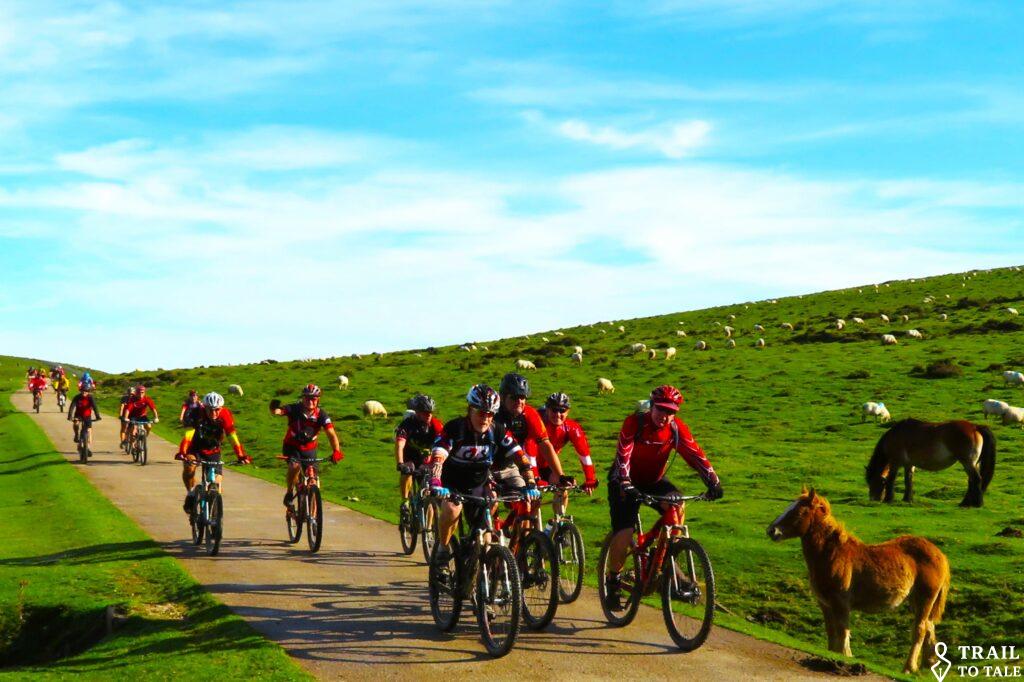
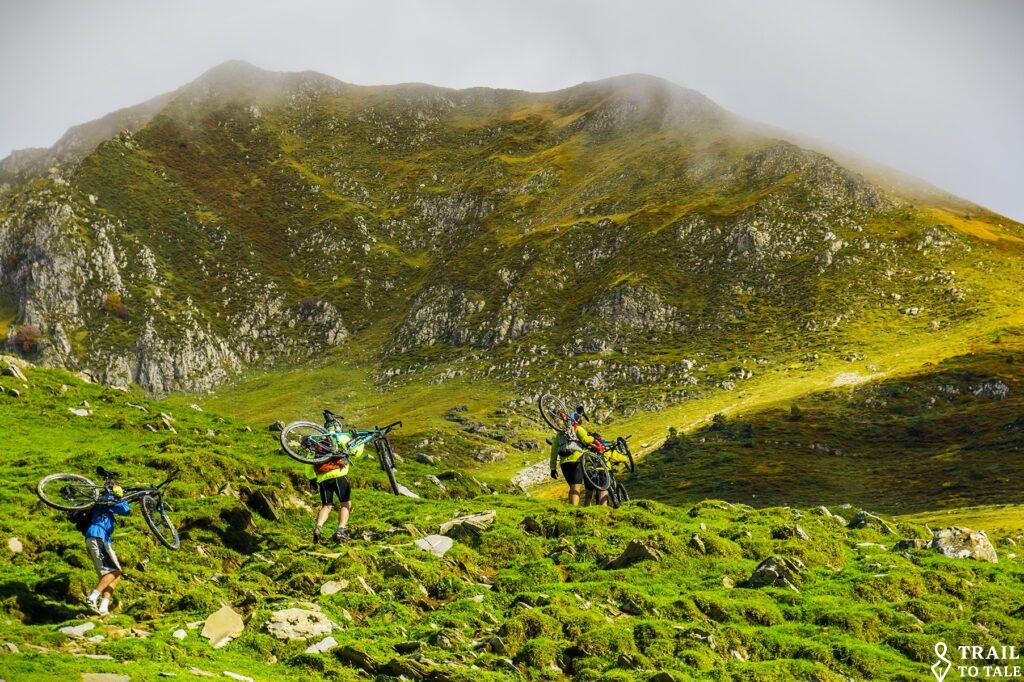
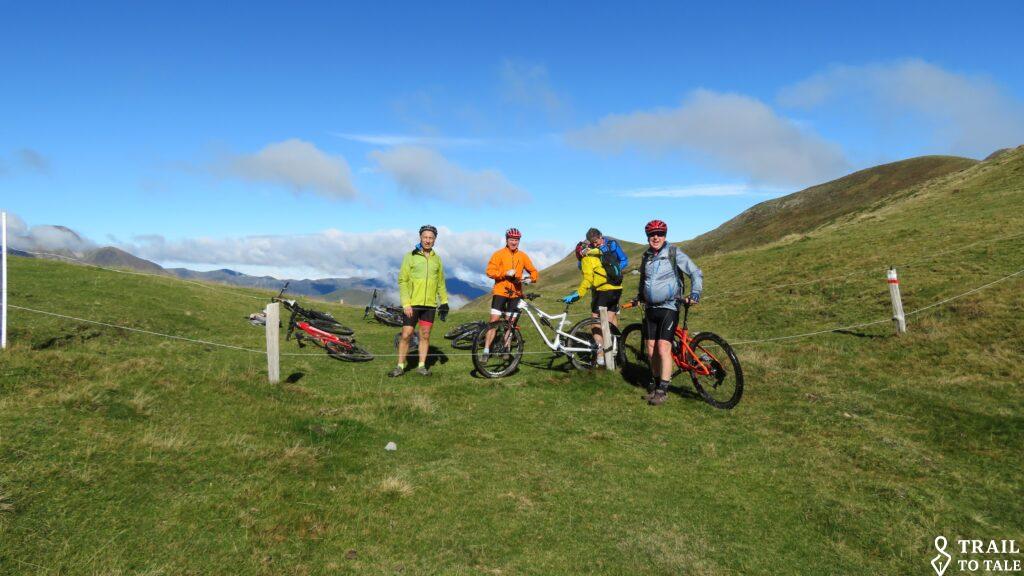
On day 4 of the trip, a long valley ended at a very steep, grass-covered slope which was not rideable, requiring an ascent by serious pushing of the bikes uphill for almost 2 hours. Reaching the top of the ridge we were surprised by a low 2-wire fence indicating the Spanish/French border. After lifting the bikes over and enjoying the far view towards the French peaks, we enjoyed a long, bumpy downhill finally ending up at an asphalt road only to stat a steep serpentine uphill to the Col de Larrau (one of the passes on the 2007 Tour de France) and returning back only Spanish territory again. Weather can change fast from calm and sparkling sunshine to heavy wind and horizontal rain. However, we were lucky most of the time as we got caught in the misty rain only once. The overall pleasant fall temperatures and the low humidity contributed to the enjoyment of the daily rides. The favorable climatic conditions, however, did not ease the pressure on some softer body part caused by the extended hours in the saddle.
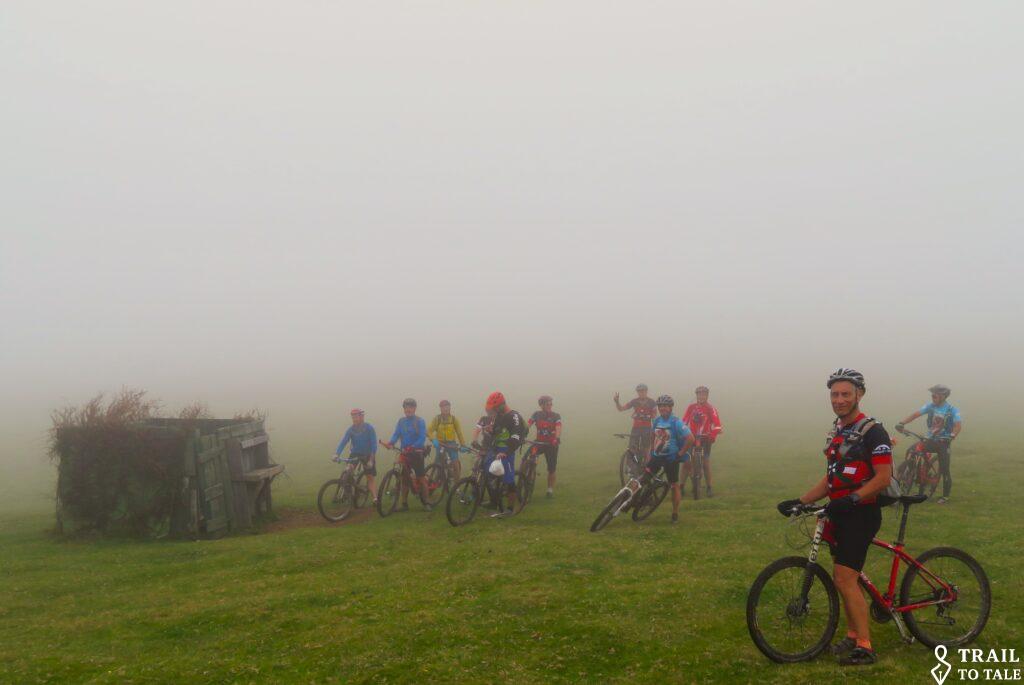
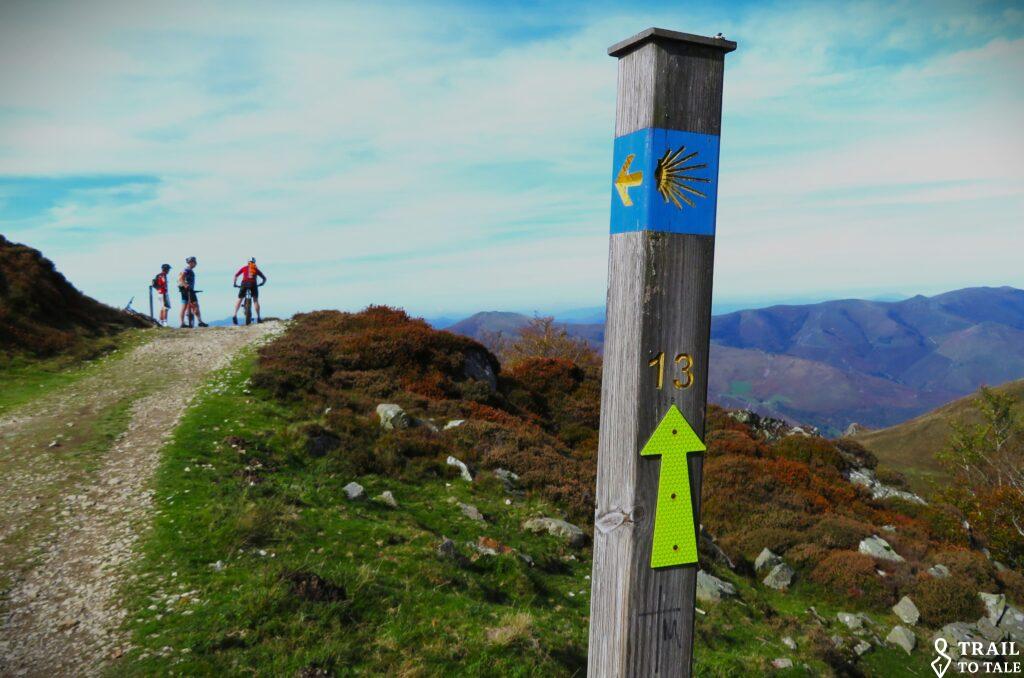
While the majority of the rides followed animal trails, we also came across some well-marked and popular walking trails with numerous enthusiastic trekkers. These were pilgrims on the “Way of St. James”, a UNESCO World Heritage Site. It leads from France through northern Spain to Santiago de Compostela over almost 1050 kilometers and thus is part of the “First Cultural Route of Europe”.
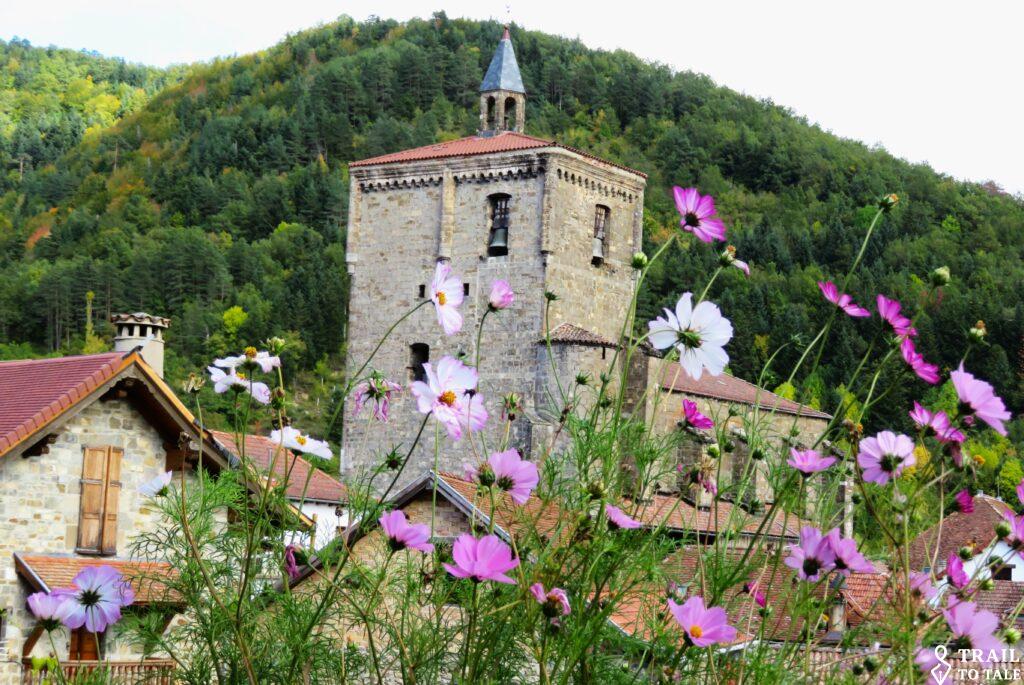
Many of the small villages we passed boasted churches and monasteries dating back many centuries.
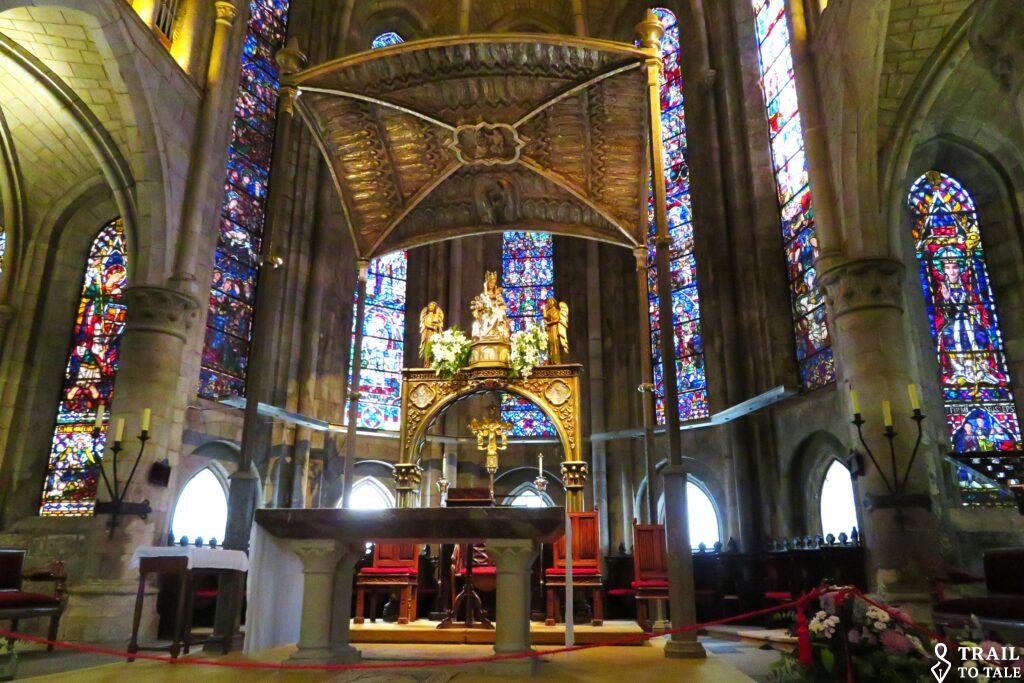
One is Roncesvalles, which offers a special daily pilgrim’s mass. In addition, it is a symbolic place, whose fame crossed all Europe in the Middle Ages due, above all, to the songs about the deeds of the figure of Charlemagne and his nephew Roldan in the epic battle of Roncesvalles.
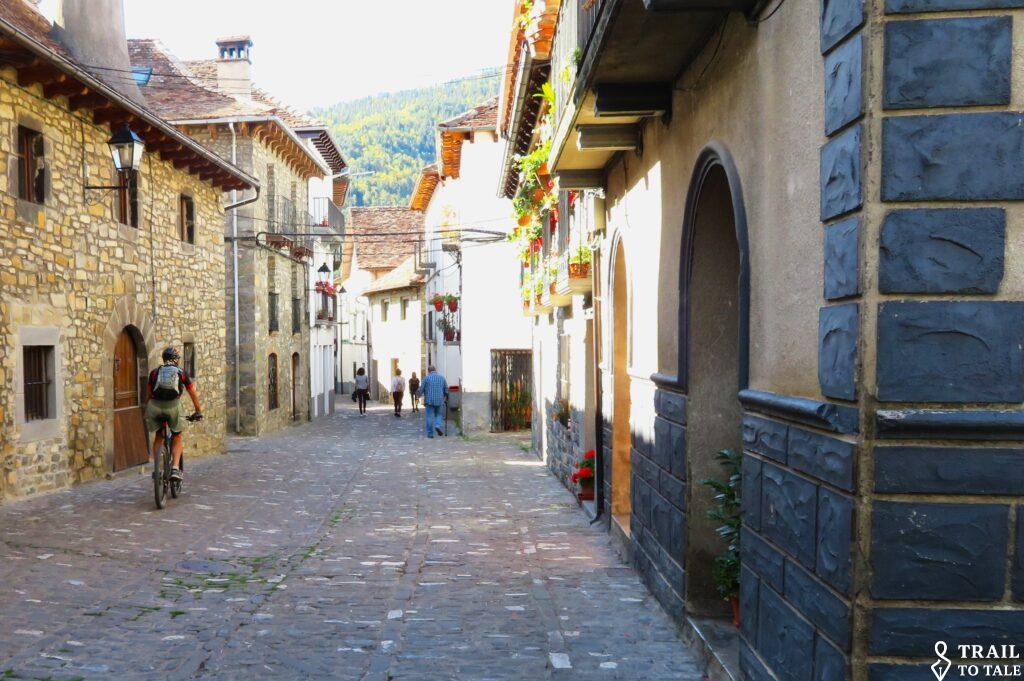
Cobblestone pavements in the narrow alleys of the villages were lined with rustic houses decorated with beautiful flowers in front of their windows. Compared to earlier trips where simple homestays, dormitories, or tents hosted the group, this time cozy family guesthouses provided comfortable shelter during the nights. While the food on the previous sides was meant primarily to provide the required energy to compensate for the daily calories’ consumption, this time we felt really spoilt by local delicacies: freshly brewed coffee with warm croissants for breakfast, baguettes with cured ham and air-dried salami and fruit for lunch, tapas and olives, fresh salad, vegetables, and meat rounded off with tasty cheese accompanied by local wine made up dinner.
The bottom line; Spanish food is a great treat with absolutely no danger of “Delhi Belly”, which in the lesser developed parts of the globe, is not an abnormal experience during similar adventures in earlier years.
Although the rides were a challenge, no bike breakdown was recorded. Even the number of punctures was below average. Most importantly, besides a few minor bruises caused by some spectacular stunts “over the handle bars” no serious accident occurred.
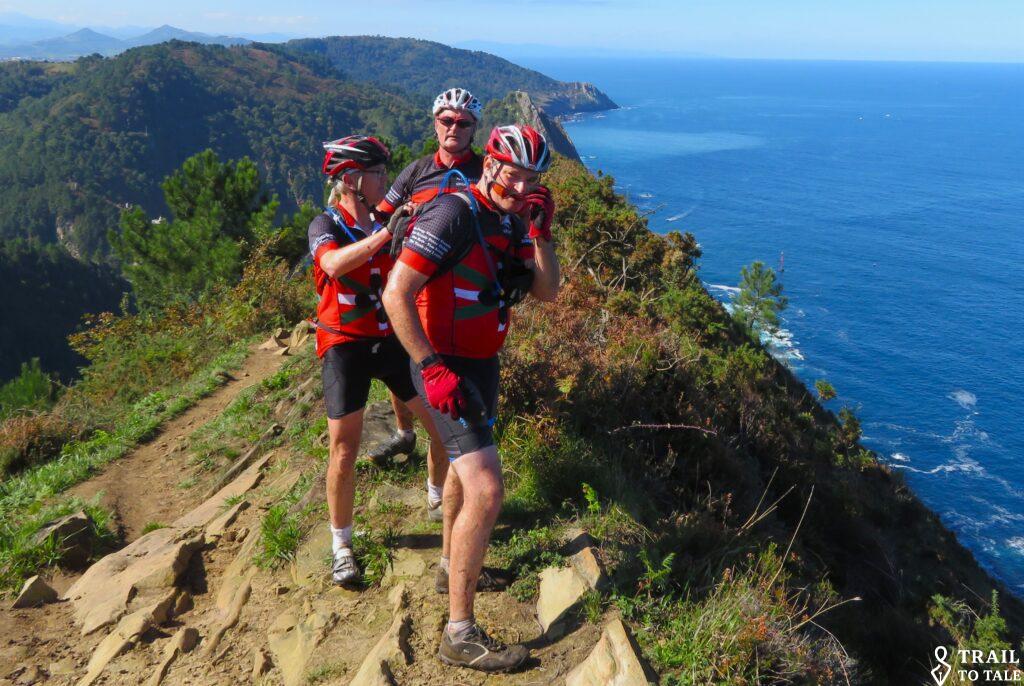
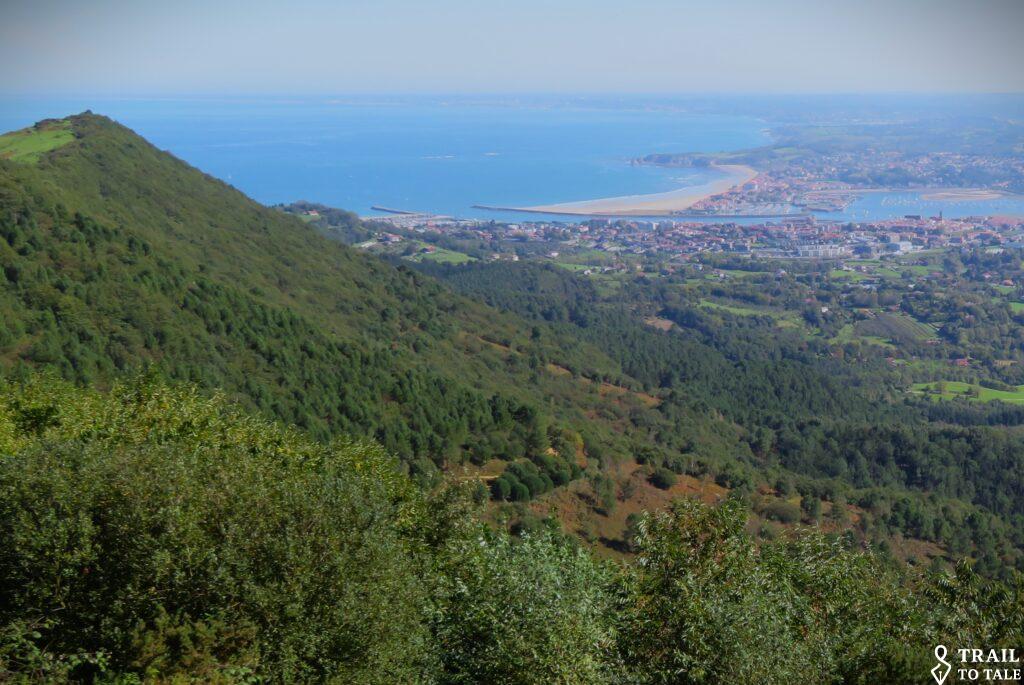
The final day was a stunningly beautiful ride on the cliffs above the Atlantic. The far view into the Bay of Biscay with the white sands of the distant French city of Biarritz in the North, the contours of the Pyrenees towards the north east, and the dark blue waters with white crests washing the coast of northern Spain below us was overwhelming.
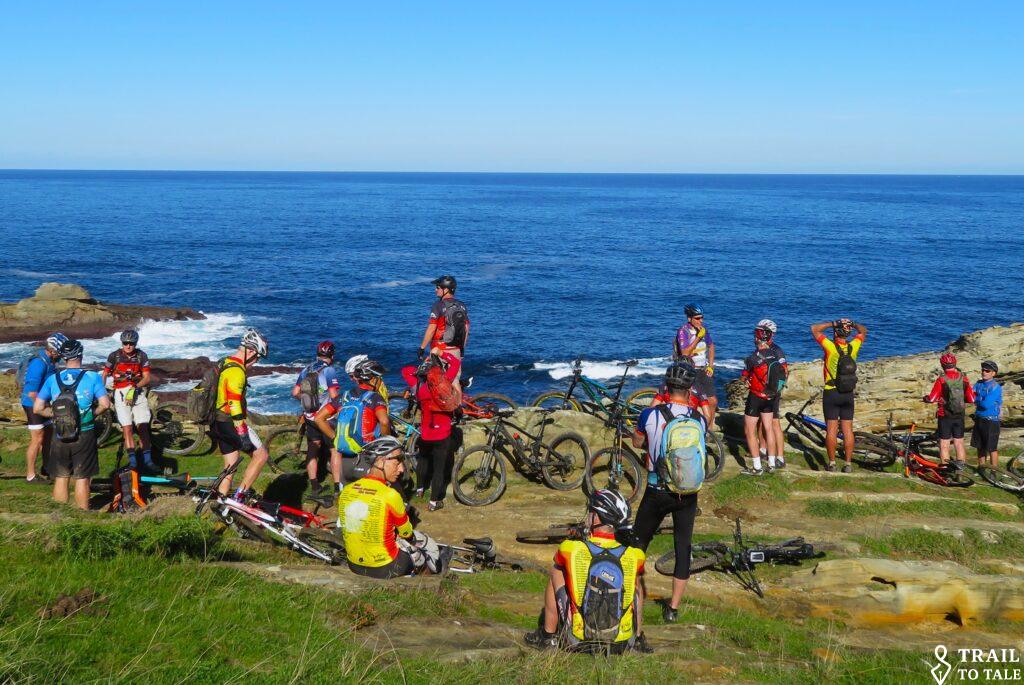
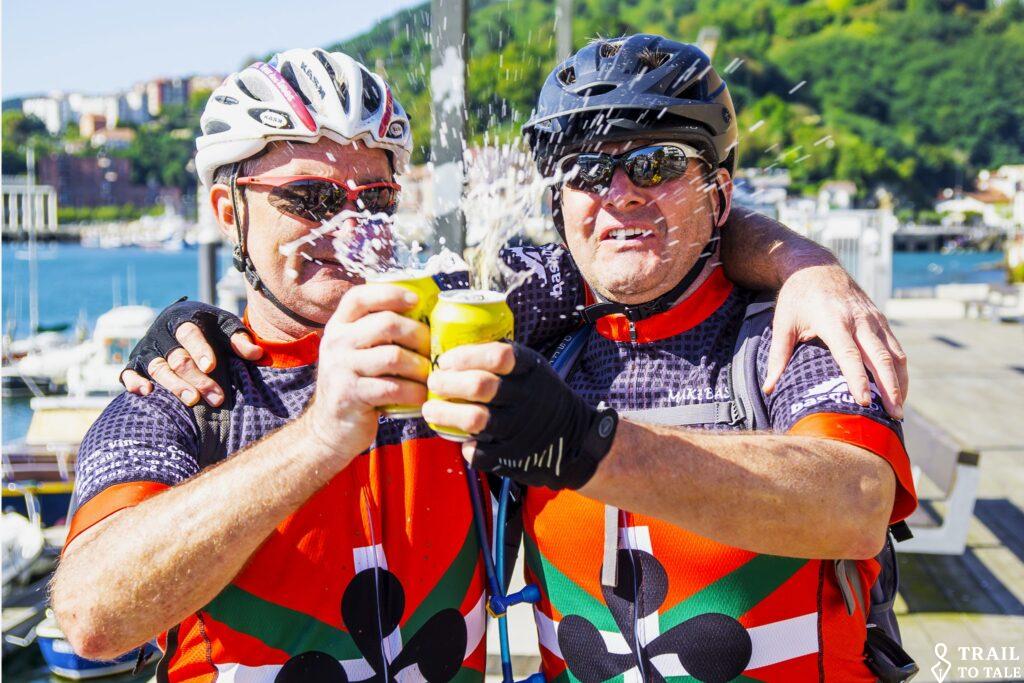
Ending up in the old historic part of “San Juan”, a small fishing village outside San Sebastian, where the waiting beer was cold and plentiful, was like a “grand finale”. While enjoying the local amber brew “Keler” all reflected on another memorable week of physical workout and enjoyment in a very scenic, diversified, and interesting part of the world celebrating unique brotherly friendship. ON ON to more foreign shores in the upcoming years!
‘The Big Chilli‘ Magazine, Edition September 2018 – now enhanced with some additional Photos
Leave a reply
You must be logged in to post a comment.